What does Matthew 27:62 mean?
"¶ Now the next day, that followed the day of the preparation, the chief priests and Pharisees came together unto Pilate," - Matthew 27:62
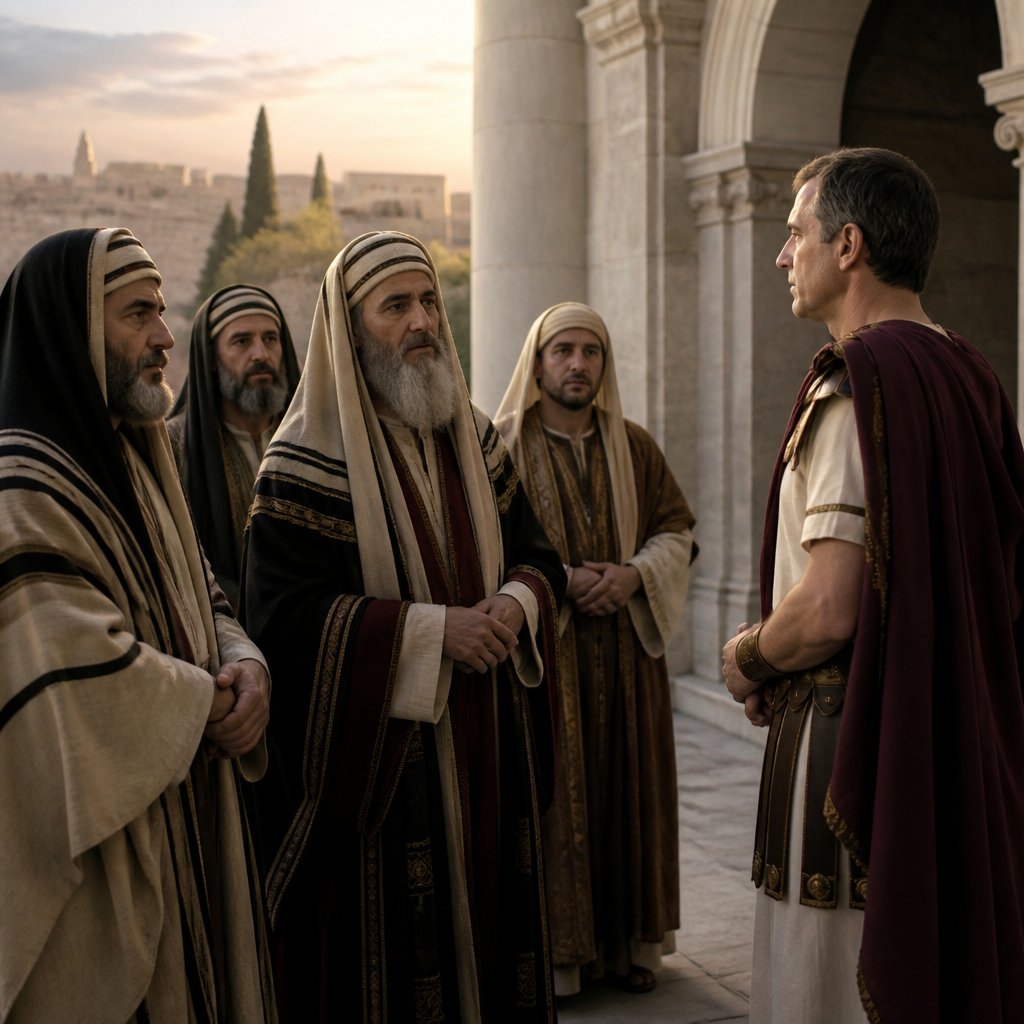
Matthew 27:62 in the King James Version (KJV) reads: "Now the next day, that followed the day of the preparation, the chief priests and Pharisees came together unto Pilate,"
This verse takes place immediately after the crucifixion of Jesus. It is the day after the Sabbath, which was the day of preparation for the Passover. The chief priests and Pharisees, who were the religious leaders of the Jewish community, come together and go to Pilate, the Roman governor, with a request.
The context of this verse is crucial to understanding its significance. Jesus has just been crucified, and the religious leaders, who had conspired to have him put to death, are worried about something. They understood that Jesus had spoken about rising from the dead after three days (Matthew 16:21, Matthew 17:23, Matthew 20:19), and they are seeking to prevent any possible disruption to their power and control.
The fact that the chief priests and Pharisees are going to Pilate, a Roman official, shows the desperation of their situation. They had pressured Pilate into sentencing Jesus to death, and now they are worried that his followers might come and steal the body to fabricate a resurrection. This reveals their deep-seated fear and insecurity, as they had initially thought that killing Jesus would end the threat to their religious authority.
One important theme in this verse is the contrast between the religious leaders and Jesus. Throughout the Gospels, Jesus has constantly been at odds with the religious authorities. He criticized their hypocrisy and their failure to truly understand and practice the law of God. By going to Pilate and seeking a guard for Jesus' tomb, the religious leaders are acting in direct opposition to the teachings and actions of Jesus, who consistently championed love, compassion, and humility.
Furthermore, this verse demonstrates the fulfillment of Jesus' prophecies. He had foretold his own death and resurrection, and the actions of the chief priests and Pharisees are a tacit acknowledgment of their understanding of his predictions. Their efforts to secure the tomb with a guard reflect their acknowledgment of the power of Jesus' words and their fear of the potential fulfillment of his prophecies.
Symbolism can be found in the fact that the religious leaders seek to place a guard at the tomb of Jesus. The guard represents their attempts to control and suppress the truth. They are afraid of the potential impact of Jesus' resurrection, and they are attempting to maintain their authority through force and manipulation. This contrasts with the message and mission of Jesus, who came to bring liberation and salvation to all people through love and forgiveness.
In conclusion, Matthew 27:62 is a significant verse in the Gospel of Matthew that highlights the fear and desperation of the religious leaders in the aftermath of Jesus' crucifixion. It illustrates the contrast between their actions and the teachings of Jesus, and it foreshadows the fulfillment of his prophecies. This verse serves as a reminder of the power of truth and the futility of attempts to suppress it, as well as the ultimate triumph of Jesus' message of love and redemption.
Have questions about Matthew 27:62?
Dive deeper into this scripture with Bible Chat — an AI-powered tool for exploring God's Word through conversation. Ask questions, get context, and grow in your understanding of the Bible.
Get Our Apps


Matthew 27:62 Artwork

Matthew 27:62 - "¶ Now the next day, that followed the day of the preparation, the chief priests and Pharisees came together unto Pilate,"
"¶ Now the next day, that followed the day of the preparation, the chief priests and Pharisees came together unto Pilate," - Matthew 27:62
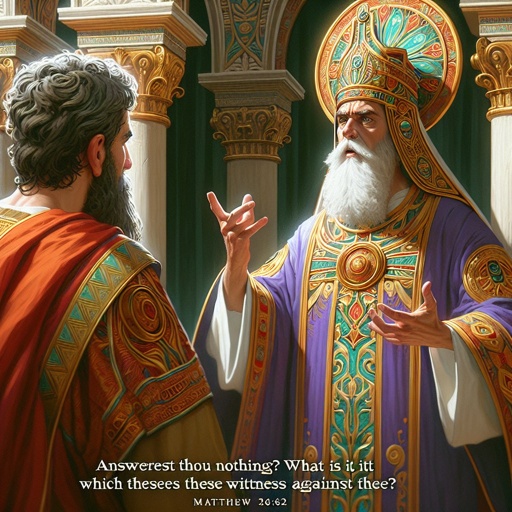
Matthew 26:62 - "And the high priest arose, and said unto him, Answerest thou nothing? what is it which these witness against thee?"

Matthew 27:46

Matthew 27:35

Matthew 24:27

Matthew 27:26
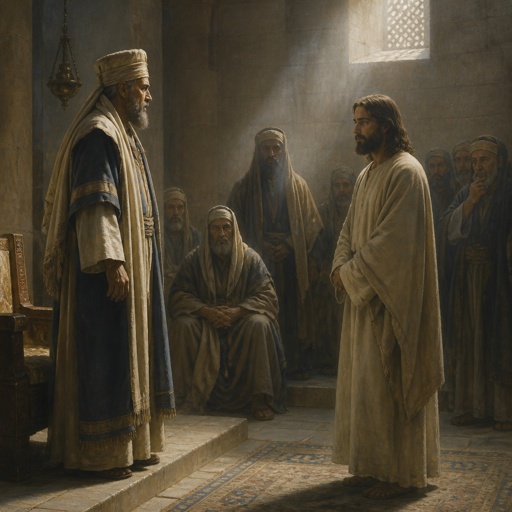
"And the high priest arose, and said unto him, Answerest thou nothing? what is it which these witness against thee?" - Matthew 26:62

Matthew 27:26

Matthew 27: 38

Matthew 27:27 - "Then the soldiers of the governor took Jesus into the common hall, and gathered unto him the whole band of soldiers."

Matthew 7:24-27

Matthew 27:16 - "And they had then a notable prisoner, called Barabbas."

Matthew 27:36 - "And sitting down they watched him there;"

Matthew 27:18 - "For he knew that for envy they had delivered him."

Matthew 22:27 - "And last of all the woman died also."

Matthew 27:39 - "¶ And they that passed by reviled him, wagging their heads,"

Matthew 27:8 - "Wherefore that field was called, The field of blood, unto this day."

Matthew 27:28 - "And they stripped him, and put on him a scarlet robe."

Matthew 27:7 - "And they took counsel, and bought with them the potter's field, to bury strangers in."

Matthew 27:10 - "And gave them for the potter's field, as the Lord appointed me."

Matthew 27:41 - "Likewise also the chief priests mocking him, with the scribes and elders, said,"

Matthew 18:27 - "Then the lord of that servant was moved with compassion, and loosed him, and forgave him the debt."

Matthew 27:52 - "And the graves were opened; and many bodies of the saints which slept arose,"

Matthew 27:12 - "And when he was accused of the chief priests and elders, he answered nothing."

Matthew 27:61 - "And there was Mary Magdalene, and the other Mary, sitting over against the sepulchre."

Matthew 20:27 - "And whosoever will be chief among you, let him be your servant:"

Matthew 27:30 - "And they spit upon him, and took the reed, and smote him on the head."

Matthew 27:59 - "And when Joseph had taken the body, he wrapped it in a clean linen cloth,"

Matthew 14:27 - "But straightway Jesus spake unto them, saying, Be of good cheer; it is I; be not afraid."