What does Matthew 27:54 mean?
"Now when the centurion, and they that were with him, watching Jesus, saw the earthquake, and those things that were done, they feared greatly, saying, Truly this was the Son of God." - Matthew 27:54
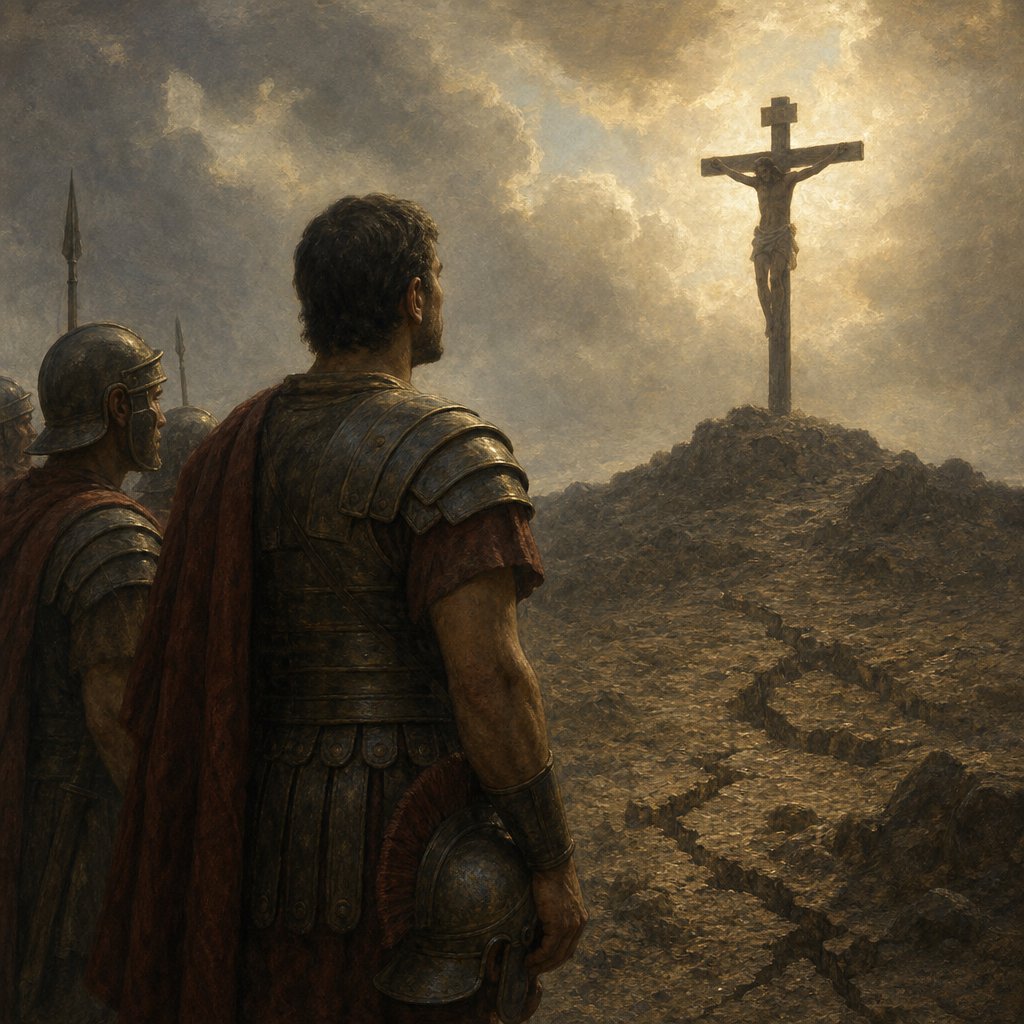
Matthew 27:54 in the KJV reads, “Now when the centurion, and they that were with him, watching Jesus, saw the earthquake, and those things that were done, they feared greatly, saying, Truly this was the Son of God.”
In its immediate context, this sentence stands at the climax of the crucifixion narrative. Jesus has already cried with a loud voice and “yielded up the ghost,” and Matthew has just reported signs that accompany His death: “the veil of the temple was rent in twain from the top to the bottom; and the earth did quake, and the rocks rent; and the graves were opened.” The verse then turns from cosmic and temple-centered signs to a human response from an unlikely group: Roman soldiers on duty. These men are not disciples, not worshippers at the temple, not sympathetic bystanders; they are “watching Jesus,” stationed to oversee an execution. Matthew places their confession directly after the portents, showing that what happens around the cross is not merely spectacle but testimony, pressing itself upon witnesses and demanding an interpretation.
The centurion represents the authority of the Gentile world, the occupying power that presides over Judea and carries out crucifixion as a public declaration of Rome’s judgment. That the confession comes from him and “they that were with him” is significant: it is not a private realization but a spoken conclusion from those charged with enforcing the sentence. The crucifixion is meant to declare that Jesus is condemned; instead, their words reverse the intended message. Matthew has shown Jewish leaders mocking Jesus’ claim, and passersby challenging Him to come down from the cross. Yet at the moment of His death, those outside Israel’s covenant community are the ones who say, “Truly this was the Son of God.” In Matthew’s Gospel, this has a broad theological resonance, because from the beginning Jesus is presented as “Emmanuel,” “God with us,” and His story repeatedly anticipates the reach of His kingship beyond Israel. The soldiers’ words become an early echo of the Gospel’s closing commission to “teach all nations,” suggesting that the cross itself is the pivot on which the message turns outward.
The phrase “they feared greatly” is also weighty. In Scripture, fear is often the immediate human response to divine manifestation, a kind of moral and spiritual shock when ordinary categories collapse under the presence of God’s power. Here, their fear is not simply terror at a natural disaster; Matthew connects it to “those things that were done,” the whole cluster of signs and events surrounding Jesus’ death. The earthquake functions as a symbol of God’s intervention. Throughout the Bible, earthquakes accompany decisive moments of divine judgment or revelation, as though creation itself answers when God acts. In this setting, the earth’s trembling is a sign that the crucifixion is not the mere death of another condemned man, but an event that involves heaven and earth. The soldiers are forced to reckon with the possibility that they have participated in something far larger than a political execution.
The confession, “Truly this was the Son of God,” carries several layers of meaning in Matthew. On one level it identifies Jesus’ unique relation to God. Earlier in the Gospel, “Son of God” is spoken at pivotal revelations: at Jesus’ baptism the voice from heaven declares, “This is my beloved Son,” and at the transfiguration, “This is my beloved Son, in whom I am well pleased; hear ye him.” In those scenes, God testifies to Jesus. At the cross, a Gentile centurion testifies. The title thus frames the whole narrative: the Father’s declaration at the beginning and the soldier’s confession at the end bracket Jesus’ public ministry and lead the reader to interpret everything through the identity of Jesus as God’s Son.
On another level, the title challenges the ironies of the crucifixion scene. Jesus has been mocked as “King of the Jews,” crowned with thorns, and derided: “If thou be the Son of God, come down from the cross.” The temptation is to equate sonship with the display of immediate power and self-rescue. Matthew 27:54 answers that mockery by showing that Jesus is recognized as Son of God not because He escapes suffering, but in the very moment He completes it. The signs do not announce His defeat; they interpret His death as an act of divine significance. The centurion’s “Truly” underscores that what seems most unbelievable—the Son of God dying under Roman execution—is precisely what is being affirmed as true.
Symbolically, the soldiers “watching Jesus” invites reflection on how the cross becomes the place where observers are judged and transformed by what they see. Throughout Matthew, people watch Jesus and come to varied conclusions: some worship, some doubt, some oppose. Here, watching culminates in confession. It suggests that the cross is revelation. Jesus’ identity is not merely taught by words; it is unveiled in His obedient suffering and in God’s response to it. The soldier’s confession is therefore not only about Jesus; it is also an indictment of the blindness that can exist among those who possess religious privilege yet reject Him. Matthew often emphasizes this reversal: outsiders, the marginalized, and Gentiles perceive what insiders miss.
The verse also serves as a narrative hinge between death and what follows. Matthew will proceed to burial and resurrection, but already at the moment of death there is a witness who speaks a truth that anticipates the vindication to come. The centurion’s confession does not yet include the resurrection, but it marks that Jesus’ death itself is not empty tragedy. It is an event attended by divine signs and capable of eliciting faith—or at least a stunned acknowledgment—from hardened men accustomed to death. This prepares the reader to see the resurrection not as an isolated miracle but as the continuation of a sequence in which God is publicly attesting His Son.
In sum, Matthew 27:54 is significant because it shows the crucifixion as an apocalypse in miniature: the earth quakes, the human heart trembles, and an unlikely witness speaks a central confession of Christian faith. The Roman centurion, standing where empire and violence appear to have the final word, is made to say that the crucified Jesus is “the Son of God.” Matthew uses that moment to declare that the cross is not the collapse of Jesus’ claim, but its confirmation, and that God’s testimony about His Son is so forceful that even those tasked with executing Him cannot watch without being confronted by the truth of who He is.
Have questions about Matthew 27:54?
Dive deeper into this scripture with Bible Chat — an AI-powered tool for exploring God's Word through conversation. Ask questions, get context, and grow in your understanding of the Bible.
Get Our Apps


Matthew 27:54 Artwork

Matthew 27:54 - "Now when the centurion, and they that were with him, watching Jesus, saw the earthquake, and those things that were done, they feared greatly, saying, Truly this was the Son of God."
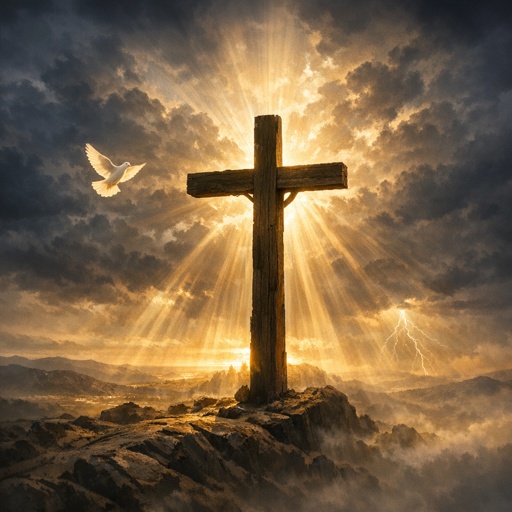
"Now when the centurion, and they that were with him, watching Jesus, saw the earthquake, and those things that were done, they feared greatly, saying, Truly this was the Son of God." - Matthew 27:54
"Now when the centurion, and they that were with him, watching Jesus, saw the earthquake, and those things that were done, they feared greatly, saying, Truly this was the Son of God." - Matthew 27:54

Matthew 26:54 - "But how then shall the scriptures be fulfilled, that thus it must be?"
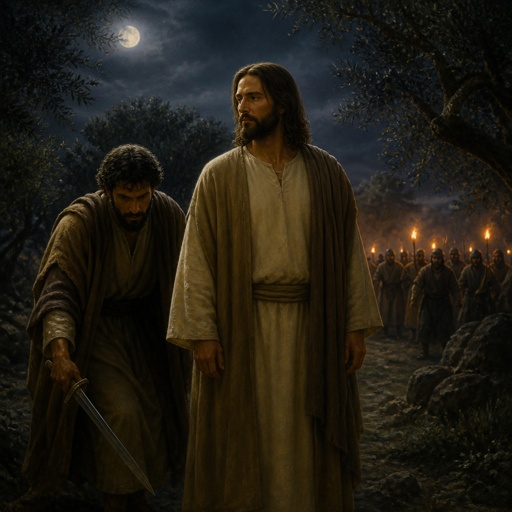
"But how then shall the scriptures be fulfilled, that thus it must be?" - Matthew 26:54
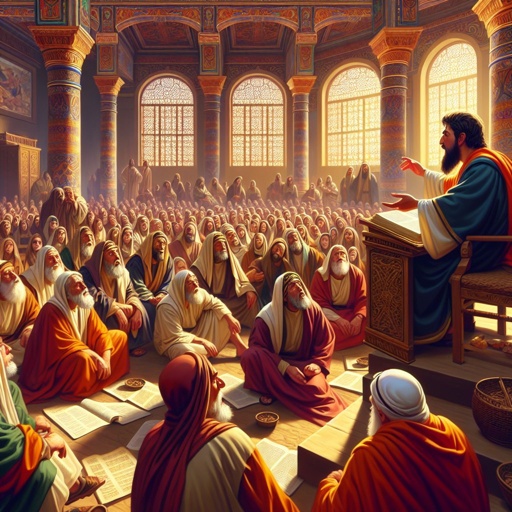
Matthew 13:54 - "And when he was come into his own country, he taught them in their synagogue, insomuch that they were astonished, and said, Whence hath this man this wisdom, and these mighty works?"

Matthew 27:46

Matthew 27:35

Matthew 24:27

Matthew 27:26

Matthew 27:26

Matthew 27: 38

Matthew 27:27 - "Then the soldiers of the governor took Jesus into the common hall, and gathered unto him the whole band of soldiers."

Matthew 7:24-27

Matthew 27:16 - "And they had then a notable prisoner, called Barabbas."

Matthew 27:36 - "And sitting down they watched him there;"

Matthew 27:18 - "For he knew that for envy they had delivered him."

Matthew 22:27 - "And last of all the woman died also."

Matthew 27:39 - "¶ And they that passed by reviled him, wagging their heads,"

Matthew 27:8 - "Wherefore that field was called, The field of blood, unto this day."

Matthew 27:28 - "And they stripped him, and put on him a scarlet robe."

Matthew 27:7 - "And they took counsel, and bought with them the potter's field, to bury strangers in."

Matthew 27:10 - "And gave them for the potter's field, as the Lord appointed me."

Matthew 27:41 - "Likewise also the chief priests mocking him, with the scribes and elders, said,"

Matthew 18:27 - "Then the lord of that servant was moved with compassion, and loosed him, and forgave him the debt."

Matthew 27:52 - "And the graves were opened; and many bodies of the saints which slept arose,"

Matthew 27:12 - "And when he was accused of the chief priests and elders, he answered nothing."

Matthew 27:61 - "And there was Mary Magdalene, and the other Mary, sitting over against the sepulchre."

Matthew 20:27 - "And whosoever will be chief among you, let him be your servant:"

Matthew 27:30 - "And they spit upon him, and took the reed, and smote him on the head."