What does Matthew 27:50 mean?
"¶ Jesus, when he had cried again with a loud voice, yielded up the ghost." - Matthew 27:50
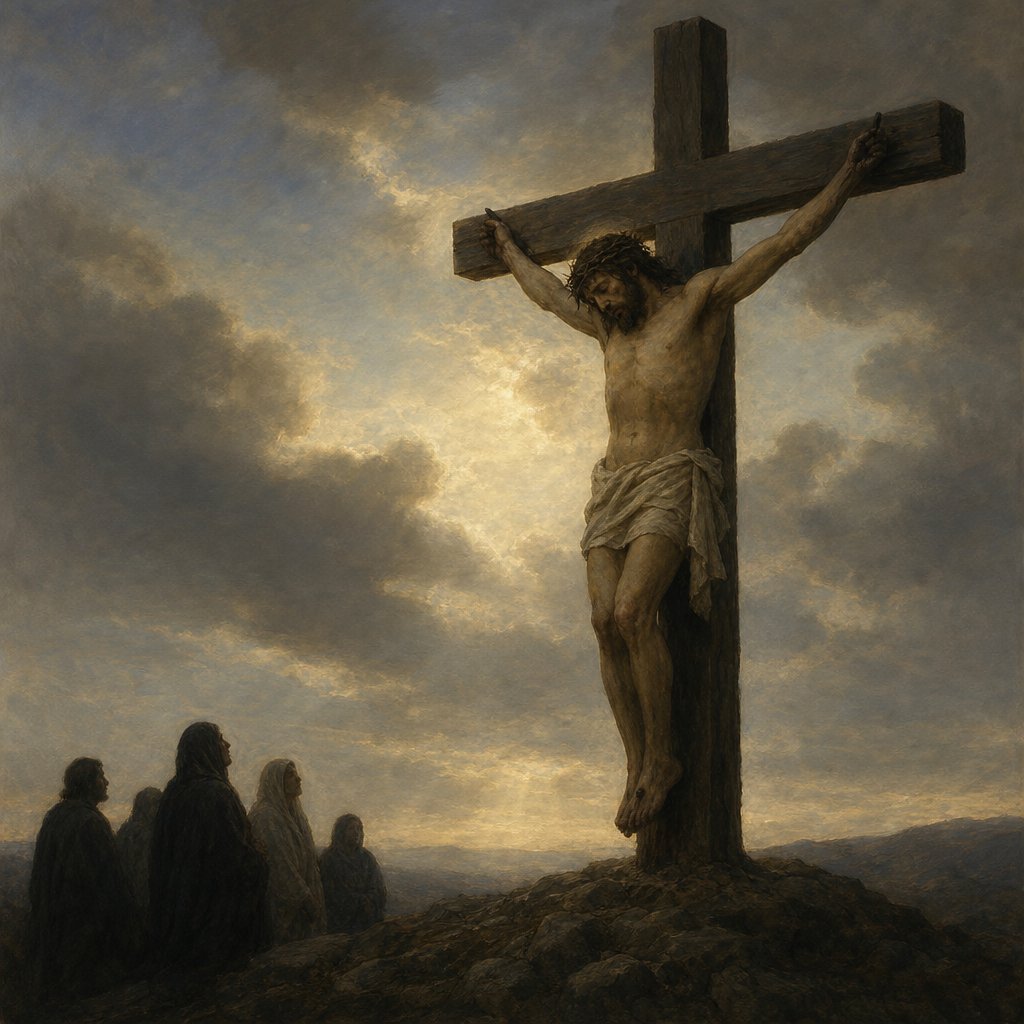
Matthew 27:50 in the King James Bible reads, “Jesus, when he had cried again with a loud voice, yielded up the ghost.” In a single, plain sentence the verse gathers up the climax of the crucifixion narrative: the death of Jesus is not presented as a mere fading away under suffering, but as a deliberate, fully conscious act that completes what the cross was meant to accomplish. The words are spare, yet they are loaded with context, theological weight, and a kind of solemn symbolism that Matthew expects the reader to feel, especially when the verse is read in the flow of all that has led up to it.
The immediate context is Matthew’s account of the last hours of Jesus upon the cross. Before verse 50, Matthew has already described the mocking, the darkness over the land, and Jesus’ cry from Psalm 22: “My God, my God, why hast thou forsaken me?” (Matthew 27:46). That cry is not an accidental detail; it sets the emotional and prophetic atmosphere. Psalm 22 is a lament that begins in desolation and ends in vindication and proclamation. By placing Jesus’ cry on Jesus’ lips and then moving to “yielded up the ghost,” Matthew frames the death of Jesus as the turning point of a righteous sufferer whose agony is real, whose abandonment is voiced, and whose end is not defeat but the passage into the divine purpose promised in Scripture. Verse 50 comes as the decisive moment: the suffering reaches its appointed end and is concluded in a way that signals completion rather than collapse.
The phrase “cried again with a loud voice” matters because it portrays strength and intention at the moment of death. Crucifixion was designed to grind life down slowly; it was common for victims to weaken into silence. Matthew, however, emphasizes a “loud voice.” In the narrative world of the Gospel, this functions as a sign that Jesus remains in command of himself even while being killed. It is consistent with the larger theme in Matthew that Jesus is not merely a tragic figure overtaken by events, but the One who knowingly walks into what he has foretold. Earlier, he had spoken repeatedly of his death and resurrection as something that “must” happen (compare Matthew 16:21; 17:22–23; 20:18–19). When Matthew says Jesus “yielded up the ghost,” he uses language that implies giving up, surrendering, releasing. The emphasis is not that life was simply taken from him, but that he gave it over. Matthew’s wording presents Jesus’ death as an act: he yields. This does not diminish the reality of the violence done to him; rather, it highlights that even in being slain he is fulfilling his own declared mission.
“Yielded up the ghost” also carries symbolic and theological resonance. In the KJV, “ghost” refers to the spirit, the breath of life. The verse evokes the foundational biblical idea that human life is bound up with breath, and that death is the departure of that breath. Yet because Matthew chooses “yielded up,” the departure is depicted as purposeful: Jesus releases his spirit. The line therefore sits at the intersection of humanity and divinity in Matthew’s portrayal of Christ. He truly dies; the verse is unambiguous about that. The Gospel does not treat the crucifixion as appearance or illusion. At the same time, the manner of expression presses the reader to see a mystery: the One who is being executed is also the One who gives himself.
In Matthew’s broader themes, this moment is tied to fulfillment. Matthew’s Gospel is especially concerned with what is “fulfilled” in Jesus, often quoting or echoing the Scriptures. Even where Matthew does not quote a specific line in verse 50, the narrative suggests that the death of Jesus is the culmination of the story that the Law and the Prophets have been pointing toward. The cry, the yielding, the sequence of events—all of it declares that the crucifixion is not random. It is the appointed hour in which the righteous Servant suffers and the kingdom purposes advance through what looks like utter loss. This is one reason the verse is so understated: Matthew can afford to be restrained because, in his telling, the significance will be demonstrated by what follows immediately.
Indeed, Matthew 27:50 is inseparable from the signs that come in the verses that follow: the veil of the temple is rent, the earth quakes, rocks rend, graves open, and the centurion confesses, “Truly this was the Son of God” (Matthew 27:51–54). The verse about yielding up the ghost stands like a door hinge between suffering and revelation. Symbolically, the moment of death is presented as the moment when barriers are torn and hidden realities break out into the open. The rending of the veil—coming right on the heels of verse 50—interprets the death as having access-and-approach implications: something about the relationship between God and man is being dramatically altered. Matthew does not pause to explain the theology in abstract terms at that point; he narrates it as cosmic and temple-centered upheaval. Jesus’ yielding up the ghost is thus not merely the end of a life; it is the event that triggers a new state of affairs.
There is also a royal and judicial dimension. Throughout the chapter Jesus is treated as a king in mockery: the robe, the crown of thorns, the title over his head, and the taunts about saving himself. Verse 50 shows what sort of kingship Matthew is presenting. Jesus does not answer the mockers by coming down from the cross. He answers by finishing the path of obedience all the way to death. The king reigns not by escaping suffering but by passing through it. In that light, “yielded up the ghost” becomes the paradoxical enthronement moment: the mocked King completes his work precisely in the act of dying, and the creation responds as though a great verdict has been rendered.
The verse also invites reflection on sacrifice. Matthew has already recorded Jesus’ words at the supper: “this is my blood of the new testament, which is shed for many for the remission of sins” (Matthew 26:28). Matthew 27:50 is the narrative realization of that earlier statement. The life that was spoken of as being given is now, in the plainest language, given up. The shedding of blood and the yielding of the spirit belong together as the completion of the offering. Without importing other texts, Matthew’s own account has prepared the reader to see this death as purposeful, covenantal, and “for many.”
Even the simplicity of the verse contributes to its meaning. Matthew does not embellish the moment with sentiment. He gives the fact with solemn directness. That restraint itself is a kind of reverence: the Gospel writer stands at the edge of the most momentous event in his narrative and speaks almost quietly, allowing the weight of the event—and the signs that attend it—to communicate what human language strains to express. The loud cry indicates that Jesus is not extinguished in weakness; the yielding indicates that death does not finally master him as a helpless victim; and the immediate divine signs indicate that heaven and earth treat this death as the turning point of history.
So the significance of Matthew 27:50, in the KJV’s phrasing, is that it portrays Jesus’ death as real, voluntary in the sense of being yielded, and climactic in God’s redemptive purpose. It marks the moment when the suffering Messiah completes his appointed work, and it stands as the pivot after which Matthew shows creation shaking, the temple veil tearing, and witnesses beginning to confess what the cross means. In Matthew’s telling, when Jesus “yielded up the ghost,” it was not merely an ending. It was an accomplished act, the closing of one great chapter of promise and the opening of what the following signs declare: access, judgment, and revelation centered on the crucified Son of God.
Have questions about Matthew 27:50?
Dive deeper into this scripture with Bible Chat — an AI-powered tool for exploring God's Word through conversation. Ask questions, get context, and grow in your understanding of the Bible.
Get Our Apps


Matthew 27:50 Artwork

Matthew 27:50 - "¶ Jesus, when he had cried again with a loud voice, yielded up the ghost."
"¶ Jesus, when he had cried again with a loud voice, yielded up the ghost." - Matthew 27:50
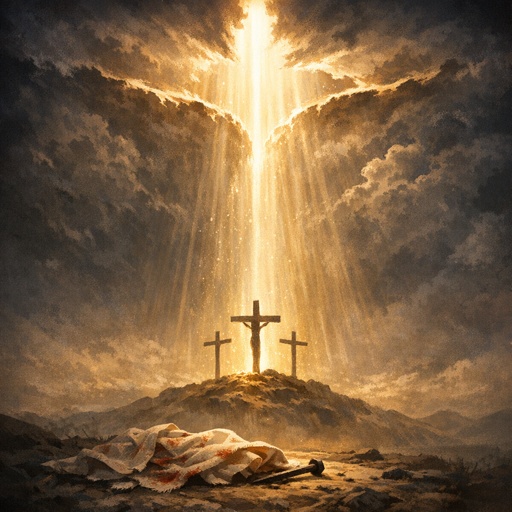
"¶ Jesus, when he had cried again with a loud voice, yielded up the ghost." - Matthew 27:50

Matthew 13:50 - "And shall cast them into the furnace of fire: there shall be wailing and gnashing of teeth."

Matthew 12:50 - "For whosoever shall do the will of my Father which is in heaven, the same is my brother, and sister, and mother."

Jeremiah 50:27 - "Slay all her bullocks; let them go down to the slaughter: woe unto them! for their day is come, the time of their visitation."

Matthew 24:50 - "The lord of that servant shall come in a day when he looketh not for him, and in an hour that he is not aware of,"

Matthew 26:50 - "And Jesus said unto him, Friend, wherefore art thou come? Then came they, and laid hands on Jesus, and took him."

Matthew 27:46

Matthew 27:35

Matthew 24:27

Matthew 27:26

Matthew 27:26

Matthew 27: 38
"And shall cast them into the furnace of fire: there shall be wailing and gnashing of teeth." - Matthew 13:50

Matthew 27:27 - "Then the soldiers of the governor took Jesus into the common hall, and gathered unto him the whole band of soldiers."

Matthew 7:24-27

Matthew 27:16 - "And they had then a notable prisoner, called Barabbas."

Matthew 27:36 - "And sitting down they watched him there;"

Matthew 27:18 - "For he knew that for envy they had delivered him."

Matthew 22:27 - "And last of all the woman died also."

Matthew 27:39 - "¶ And they that passed by reviled him, wagging their heads,"

Matthew 27:8 - "Wherefore that field was called, The field of blood, unto this day."

Matthew 27:28 - "And they stripped him, and put on him a scarlet robe."
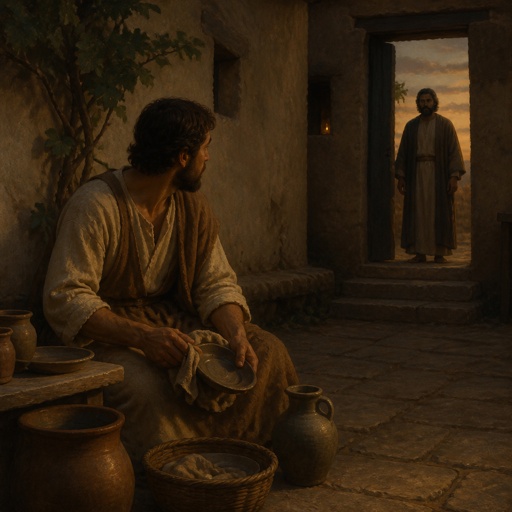
"The lord of that servant shall come in a day when he looketh not for him, and in an hour that he is not aware of," - Matthew 24:50

Matthew 27:7 - "And they took counsel, and bought with them the potter's field, to bury strangers in."

Matthew 27:10 - "And gave them for the potter's field, as the Lord appointed me."

Matthew 18:27 - "Then the lord of that servant was moved with compassion, and loosed him, and forgave him the debt."

Matthew 27:41 - "Likewise also the chief priests mocking him, with the scribes and elders, said,"

Matthew 27:52 - "And the graves were opened; and many bodies of the saints which slept arose,"