What does Matthew 27:20 mean?
"But the chief priests and elders persuaded the multitude that they should ask Barabbas, and destroy Jesus." - Matthew 27:20
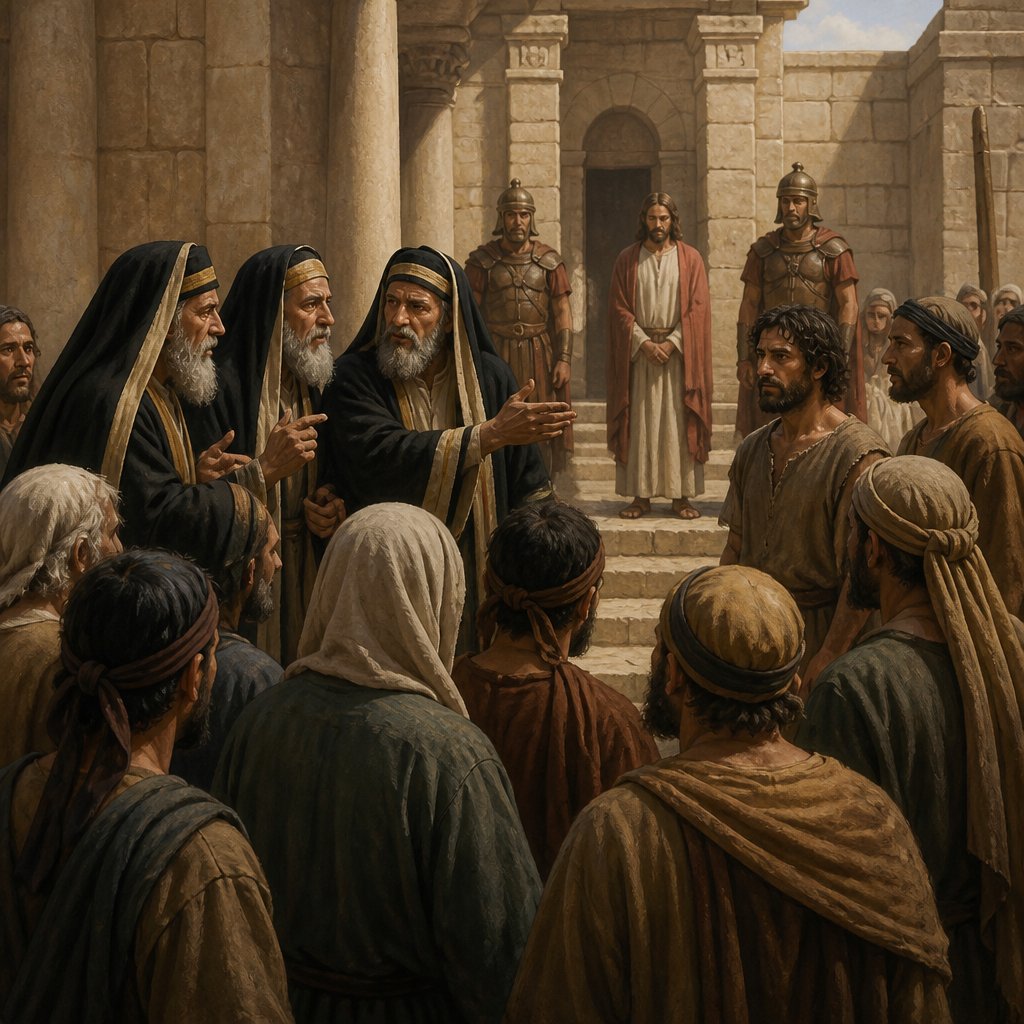
The verse Matthew 27:20 from the King James Version (KJV) of the Bible reads, "But the chief priests and elders persuaded the multitude that they should ask Barabbas, and destroy Jesus."
This verse is part of the narrative of Jesus' trial and crucifixion, a pivotal moment in the Christian faith. The context of this verse occurs after Jesus has been arrested and brought before the chief priests and elders for trial. The religious leaders, threatened by Jesus' teachings and his growing influence, conspire to have him put to death. They manipulate the crowd, who had previously praised Jesus as he entered Jerusalem, into calling for the release of a notorious criminal, Barabbas, instead of Jesus. This manipulation ultimately leads to Jesus being condemned to death by crucifixion.
One of the central themes of this verse is the contrast between the innocence of Jesus and the guilt of Barabbas. Jesus, who is described throughout the Gospels as a teacher of love, compassion, and righteousness, is unjustly condemned to die. In contrast, Barabbas is a known criminal and insurrectionist, yet the crowd is swayed to demand his release instead of Jesus. This juxtaposition highlights the unjust nature of Jesus' crucifixion and the sinful nature of humanity.
Another key theme in this verse is the concept of manipulation and the abuse of power. The chief priests and elders use their influence and authority to sway the crowd to choose Barabbas over Jesus. This reflects a broader theme of corruption and the abuse of power within religious and political institutions. It also serves as a warning against the dangers of mob mentality and the detrimental impact of succumbing to the pressures of popular opinion.
Symbolism is also present in this verse, particularly in the representation of Barabbas and Jesus. Barabbas, whose name means "son of the father," can be seen as a symbol of humanity, mired in sin and in need of redemption. Jesus, on the other hand, represents the sacrificial lamb who takes on the sins of humanity and offers salvation through his death and resurrection. The choice between Barabbas and Jesus can be interpreted as a symbolic representation of the choice between sin and redemption, darkness and light, selfishness and selflessness.
From a broader theological perspective, this verse is significant in the narrative of Jesus' crucifixion as it emphasizes the role of human agency in the rejection and crucifixion of Jesus. It highlights the moral culpability of the religious leaders and the crowd in contributing to the unjust death of Jesus, a central tenet of the Christian belief in the atonement.
In conclusion, Matthew 27:20 from the King James Version of the Bible is a crucial verse in the narrative of Jesus' trial and crucifixion. It addresses themes of innocence and guilt, manipulation and power, and serves as a symbolic representation of the choice between sin and redemption. It also carries theological significance in emphasizing human agency in the crucifixion of Jesus. As such, this verse has a profound impact on Christian theology and has been a source of reflection and meditation for believers throughout history.
Have questions about Matthew 27:20?
Dive deeper into this scripture with Bible Chat — an AI-powered tool for exploring God's Word through conversation. Ask questions, get context, and grow in your understanding of the Bible.
Get Our Apps


Matthew 27:20 Artwork

Matthew 27:20 - "But the chief priests and elders persuaded the multitude that they should ask Barabbas, and destroy Jesus."

"But the chief priests and elders persuaded the multitude that they should ask Barabbas, and destroy Jesus." - Matthew 27:20

Matthew 27:20-23 - "But the chief priests and the elders persuaded the crowd to ask for Barabbas and to have Jesus executed. “Which of the two do you want me to release to you?” asked the governor. “Barabbas,” they answered. “What shall I do, then, with Jesus who is called the Messiah?” Pilate asked. They all answered, “Crucify him!” “Why? What crime has he committed?” asked Pilate. But they shouted all the louder, “Crucify him!”"
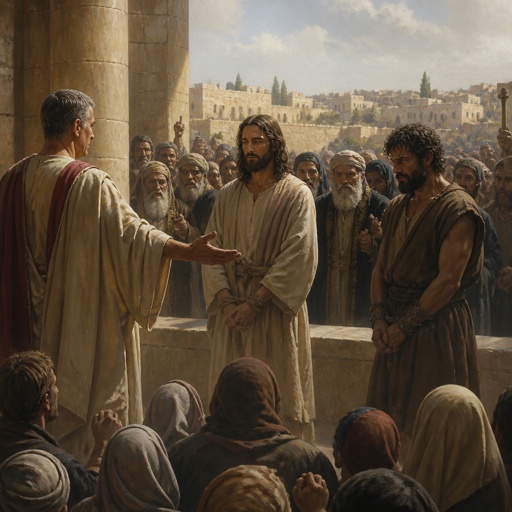
"But the chief priests and the elders persuaded the crowd to ask for Barabbas and to have Jesus executed. “Which of the two do you want me to release to you?” asked the governor. “Barabbas,” they answered. “What shall I do, then, with Jesus who is called the Messiah?” Pilate asked. They all answered, “Crucify him!” “Why? What crime has he committed?” asked Pilate. But they shouted all the louder, “Crucify him!”" - Matthew 27:20-23

Matthew 20:27 - "And whosoever will be chief among you, let him be your servant:"

"And whosoever will be chief among you, let him be your servant:" - Matthew 20:27

Matthew 27:46

Matthew 27:35

Matthew 24:27

Matthew 27:26

Matthew 27:26

Matthew 27: 38

Exodus 27:20

Exodus 27:20

John 20:27

Exodus 27:20

John 20:27

Matthew 27:27 - "Then the soldiers of the governor took Jesus into the common hall, and gathered unto him the whole band of soldiers."

Matthew 7:24-27

Exodus 27:19-20

Matthew 27:16 - "And they had then a notable prisoner, called Barabbas."

Matthew 27:36 - "And sitting down they watched him there;"

Matthew 27:18 - "For he knew that for envy they had delivered him."

Matthew 22:27 - "And last of all the woman died also."

Matthew 27:39 - "¶ And they that passed by reviled him, wagging their heads,"

Matthew 17:20

Matthew 18:20

matthew 20:3

Matthew 18:20

Matthew 18:20