What does Matthew 26:9 mean?
"For this ointment might have been sold for much, and given to the poor." - Matthew 26:9
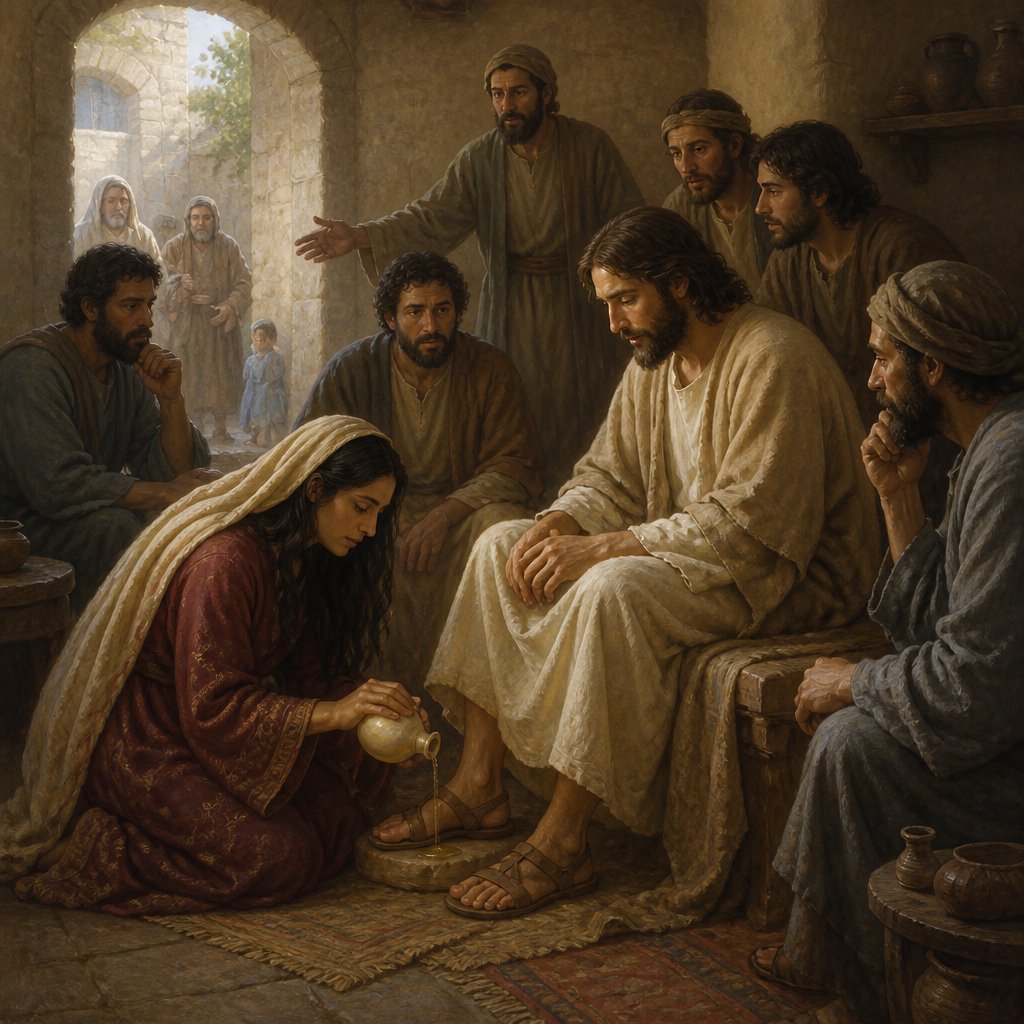
Matthew 26:9 in the King James Version of the Bible reads, "For this ointment might have been sold for much, and given to the poor." This verse is part of a larger passage that tells the story of a woman who anoints Jesus with expensive ointment, much to the irritation of the disciples.
The context of this verse is important for understanding its meaning and significance. In the preceding verses, a woman comes to Jesus and anoints his head with costly ointment. The disciples, particularly Judas Iscariot, are indignant about this act, arguing that the ointment could have been sold for a high price and the money given to the poor. Jesus responds by defending the woman's actions, praising her for her devotion and explaining that she has anointed him for his burial.
The themes of this passage are several. First, it explores the tension between devotion to Jesus and concern for the poor. The disciples' reaction raises the question of whether it is more important to use resources for the benefit of others or to express devotion to God. Jesus' response suggests that there may be times when devotion to him takes precedence over other considerations.
Another theme is the value of sacrificial giving. The woman's lavish gift of ointment is contrasted with the disciples' concern for the poor, highlighting the difference between ordinary acts of charity and extraordinary acts of sacrifice. Jesus praises the woman for her sacrificial giving, suggesting that her act of devotion is more significant than any material aid she could have provided to the poor.
The symbolism in this verse is rich and multifaceted. The ointment itself symbolizes devotion, commitment, and sacrifice. By anointing Jesus with this precious substance, the woman demonstrates her deep love and reverence for him. Her action foreshadows the ultimate sacrifice of Jesus' death and burial, as he himself interprets it. In this sense, the ointment becomes a symbol not only of the woman's devotion, but also of Jesus' impending sacrifice for the salvation of humanity.
The response of the disciples, particularly Judas Iscariot, also carries symbolic significance. Judas, who is ultimately responsible for betraying Jesus, represents those who are more concerned with material wealth and social justice than with spiritual matters. His criticism of the woman's actions serves as a warning against allowing worldly concerns to overshadow devotion to God.
In a broader theological context, this passage illuminates the nature of discipleship and the demands it places on individuals. It challenges believers to consider the depth of their commitment to Jesus and the ways in which they express their devotion to him. It also raises important questions about the relationship between faith and works, suggesting that acts of sacrificial giving and devotion are integral to the life of faith.
Overall, Matthew 26:9 is a rich and complex verse that speaks to the themes of devotion, sacrifice, and discipleship. It challenges readers to consider the nature of their own commitment to Jesus and the ways in which they express their devotion to him. It also raises important questions about the relationship between faith and works, and the value of sacrificial giving. As such, it continues to offer profound insights and challenges to believers today.
Have questions about Matthew 26:9?
Dive deeper into this scripture with Bible Chat — an AI-powered tool for exploring God's Word through conversation. Ask questions, get context, and grow in your understanding of the Bible.
Get Our Apps


Matthew 26:9 Artwork

Matthew 26:9 - "For this ointment might have been sold for much, and given to the poor."
"For this ointment might have been sold for much, and given to the poor." - Matthew 26:9

Matthew 9:26 - "And the fame hereof went abroad into all that land."
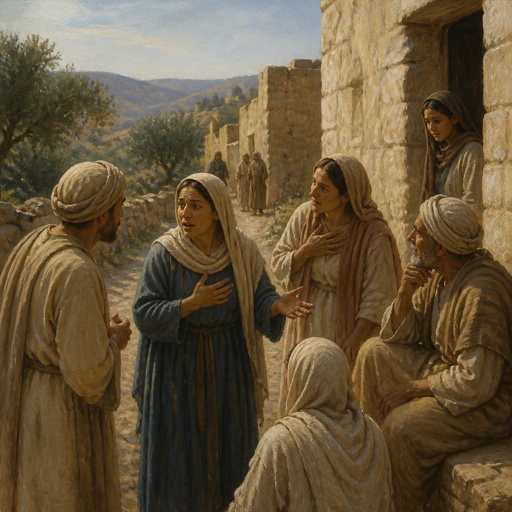
"And the fame hereof went abroad into all that land." - Matthew 9:26

Matthew 26:25

Matthew 26:15

Matthew 19:26

Matthew 26:15

Matthew 27:26

Matthew 27:26

Matthew 26:53

Matthew 26:65

Matthew 26:41

Matthew 26:53

Matthew 26:26 - "¶ And as they were eating, Jesus took bread, and blessed it, and brake it, and gave it to the disciples, and said, Take, eat; this is my body."

Matthew 22:26 - "Likewise the second also, and the third, unto the seventh."

Matthew 26:54 - "But how then shall the scriptures be fulfilled, that thus it must be?"

Genesis 26:9

Matthew 26:6 - "¶ Now when Jesus was in Bethany, in the house of Simon the leper,"

Matthew 26:4 - "And consulted that they might take Jesus by subtilty, and kill him."

Matthew 9:21

Matthew 26:5 - "But they said, Not on the feast day, lest there be an uproar among the people."

Matthew 26:16 - "And from that time he sought opportunity to betray him."

Matthew 9:21-22

Matthew 26:72 - "And again he denied with an oath, I do not know the man."

Matthew 11:26 - "Even so, Father: for so it seemed good in thy sight."

Matthew 26:20 - "Now when the even was come, he sat down with the twelve."

Matthew 26:30 - "And when they had sung an hymn, they went out into the mount of Olives."

Matthew 26:66 - "What think ye? They answered and said, He is guilty of death."

Matthew 9:21-22