What does Matthew 26:39 mean?
"And he went a little further, and fell on his face, and prayed, saying, O my Father, if it be possible, let this cup pass from me: nevertheless not as I will, but as thou wilt." - Matthew 26:39
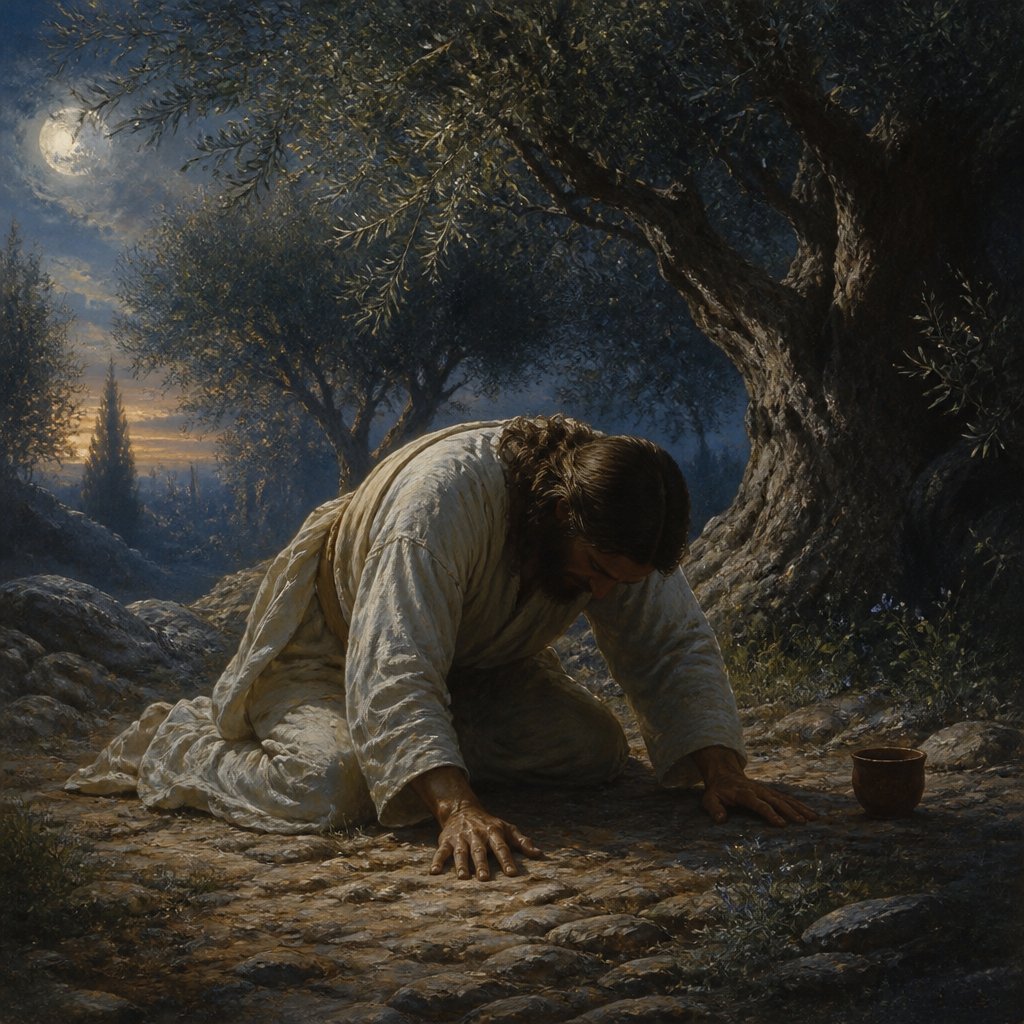
The Bible verse Matthew 26:39 from the King James Version reads, "And he went a little further, and fell on his face, and prayed, saying, O my Father, if it be possible, let this cup pass from me: nevertheless not as I will, but as thou wilt." This verse takes place during the Garden of Gethsemane scene in the New Testament, where Jesus is praying before his impending crucifixion.
This verse is a crucial moment in the life of Jesus as it shows his human side and his willingness to surrender to the will of God. The setting of the Garden of Gethsemane is significant as it is the place where Jesus went to pray with his disciples before his betrayal and arrest. It symbolizes a place of anguish, struggle, and deep emotional turmoil for Jesus as he faces the weight of his impending crucifixion and the burden of the sins of humanity.
The verse begins with Jesus going a little further from his disciples, symbolizing his need for solitude and closeness to God in prayer. This act of distancing himself from his disciples represents his deep personal struggle and the need for undisturbed communion with his heavenly Father. It serves as a reminder of the importance of seeking solitude and prayer in times of distress and confusion.
The act of falling on his face in prayer highlights Jesus' humility and submission to God. It symbolizes his complete surrender and reverence for the will of God. This posture of prostration before God signifies Jesus' deep respect and submission to the divine authority, acknowledging the sovereignty of God and his dependence on Him.
The prayer itself reveals Jesus' human emotions and his plea for the alleviation of his suffering. His words, "O my Father, if it be possible, let this cup pass from me," express his genuine human desire to be spared from the agony and suffering that await him. The metaphor of "this cup" symbolizes the suffering, pain, and impending death that Jesus knows he must endure for the salvation of humanity. It serves as a powerful symbol of the sacrifice that Jesus is willing to make for the redemption of mankind.
However, the most significant aspect of this verse is Jesus' ultimate surrender to the will of God, as he says, "nevertheless not as I will, but as thou wilt." This statement embodies the central theme of submission and obedience to the divine will. It exemplifies Jesus' unwavering faith and trust in God's plan, despite his own human desires and fears. It serves as a profound example of the perfect alignment of Jesus' will with the will of God, demonstrating his complete obedience and devotion to the Father.
The context of this verse within the broader narrative of the crucifixion emphasizes the profound sacrifice and love of Jesus for humanity. It serves as a pivotal moment in the unfolding of God's redemptive plan for the world, highlighting the necessity of Jesus' suffering and his willingness to endure it for the salvation of mankind.
In conclusion, Matthew 26:39 from the King James Version provides a deep insight into the inner turmoil and spiritual struggle of Jesus as he faces the imminent crucifixion. It conveys the themes of submission, surrender, and obedience to the will of God, as well as the profound sacrifice and love of Jesus for humanity. The symbolism and context of this verse further enhance its significance, making it a powerful and compelling portrayal of Jesus' humanity and divinity.
Have questions about Matthew 26:39?
Dive deeper into this scripture with Bible Chat — an AI-powered tool for exploring God's Word through conversation. Ask questions, get context, and grow in your understanding of the Bible.
Get Our Apps


Matthew 26:39 Artwork

Matthew 26:39 - "And he went a little further, and fell on his face, and prayed, saying, O my Father, if it be possible, let this cup pass from me: nevertheless not as I will, but as thou wilt."
"And he went a little further, and fell on his face, and prayed, saying, O my Father, if it be possible, let this cup pass from me: nevertheless not as I will, but as thou wilt." - Matthew 26:39

Matthew 22:37-39

Numbers 26:39 - "Of Shupham, the family of the Shuphamites: of Hupham, the family of the Huphamites."

Matthew 27:39 - "¶ And they that passed by reviled him, wagging their heads,"

Matthew 21:39 - "And they caught him, and cast him out of the vineyard, and slew him."

Job 39:26 - "Doth the hawk fly by thy wisdom, and stretch her wings toward the south?"

Matthew 22:39 - "And the second is like unto it, Thou shalt love thy neighbour as thyself."

Matthew 13:39 - "The enemy that sowed them is the devil; the harvest is the end of the world; and the reapers are the angels."

Matthew 15:39 - "And he sent away the multitude, and took ship, and came into the coasts of Magdala."

Matthew 25:39 - "Or when saw we thee sick, or in prison, and came unto thee?"

Exodus 39:26 - "A bell and a pomegranate, a bell and a pomegranate, round about the hem of the robe to minister in; as the LORD commanded Moses."

"Of Shupham, the family of the Shuphamites: of Hupham, the family of the Huphamites." - Numbers 26:39

"¶ And they that passed by reviled him, wagging their heads," - Matthew 27:39

Matthew 26:25

Matthew 26:15

Matthew 19:26

Matthew 26:15

Matthew 27:26

Matthew 27:26

Matthew 26:53

Matthew 26:41

Matthew 26:65

Matthew 26:53

Leviticus 26:39 - "And they that are left of you shall pine away in their iniquity in your enemies' lands; and also in the iniquities of their fathers shall they pine away with them."

Matthew 10:39 - "He that findeth his life shall lose it: and he that loseth his life for my sake shall find it."

Matthew 24:39 - "And knew not until the flood came, and took them all away; so shall also the coming of the Son of man be."

Job 39:26-30 - "Job 39:26-30: Does the hawk fly by your wisdom, and stretch her wings toward the south? Does the eagle mount up at your command, and make her nest on high? She dwells and abides on the rock, upon the crag of the rock, and the strong place. From there she spies out the prey: her eyes behold it afar off. Her young ones also suck up blood: and where the slain are, there is she."

Ezekiel 39:26 - "After that they have borne their shame, and all their trespasses whereby they have trespassed against me, when they dwelt safely in their land, and none made them afraid."

Matthew 26:26 - "¶ And as they were eating, Jesus took bread, and blessed it, and brake it, and gave it to the disciples, and said, Take, eat; this is my body."