What does Matthew 26:30 mean?
"And when they had sung an hymn, they went out into the mount of Olives." - Matthew 26:30
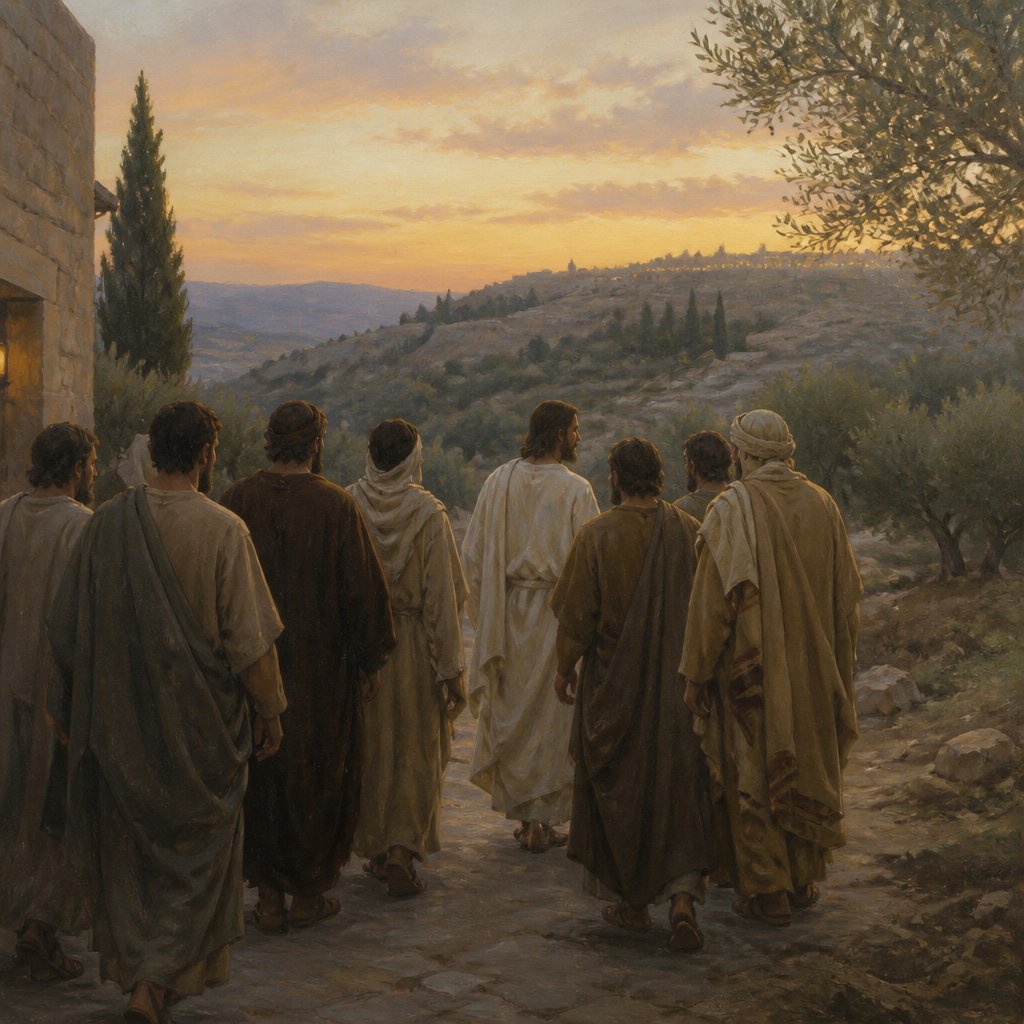
Matthew 26:30 in the King James Version of the Bible reads, "And when they had sung an hymn, they went out into the mount of Olives." This verse comes at the end of the Last Supper, a crucial event in the life of Jesus Christ, and marks the beginning of the events leading to His crucifixion. In order to fully understand the meaning and significance of this verse, it's important to examine the context in which it appears, as well as the historical and cultural significance of the Mount of Olives.
The Last Supper itself was a highly significant event, as it was the final meal that Jesus shared with His disciples before His crucifixion. During this meal, Jesus instituted the sacrament of the Lord's Supper, also known as communion, where He broke bread and offered wine, symbolizing His body and blood. This act has since been commemorated by Christians as a way of remembering and honoring the sacrifice that Jesus made for humanity.
After they had finished the Last Supper, the verse states that the disciples sang a hymn and then went out to the mount of Olives. The act of singing a hymn was a common practice in Jewish culture, particularly in the celebration of Passover, which was the occasion of the Last Supper. The hymn that they sang was likely a traditional Jewish psalm or song of praise, which would have had deep spiritual significance for both Jesus and His disciples.
The mention of the Mount of Olives is also significant, as it was a place of great importance in the life of Jesus. The Mount of Olives is a mountain ridge located to the east of Jerusalem, and it features prominently in the Bible as the location of several key events in Jesus' life. It was on the Mount of Olives that Jesus gave the Olivet Discourse, a prophetic sermon about the end times, and where He was later arrested before His crucifixion. For Jesus and His disciples, the Mount of Olives held deep spiritual and symbolic significance, as it was a place of prayer, reflection, and communion with God.
In this verse, the act of singing a hymn and then going out to the mount of Olives can be seen as a continuation of the spiritual and emotional preparation for the events that were about to unfold. Jesus and His disciples were likely processing the significance of the Last Supper, preparing themselves for the trials and tribulations that awaited them, and seeking solace and guidance from God.
The hymn itself may have served as a source of comfort and strength, helping to uplift the spirits of Jesus and His disciples in the face of the impending challenges. Music has long been recognized as a powerful form of expression and a means of connecting with the divine, and it's likely that the act of singing a hymn had a profound impact on the emotional and spiritual state of those present.
Furthermore, the decision to go out to the mount of Olives holds great significance in light of the events that followed. It was on the Mount of Olives that Jesus prayed in anguish, knowing that His arrest and crucifixion were imminent. It was also from the Mount of Olives that Jesus ascended to heaven after His resurrection. Thus, the mention of the mount of Olives in this verse foreshadows the pivotal role that this location would play in the unfolding of the redemptive plan of God.
In considering the broader themes and symbolism of this verse, we can see a significant emphasis on spiritual preparation, communion with God, and the acknowledgment of the challenges that lie ahead. The act of singing a hymn and then going out to the mount of Olives can be seen as a testament to the resilience and faith of Jesus and His disciples in the face of adversity. It speaks to the importance of spiritual sustenance and fortitude in times of trial, and the need to turn to God for guidance and strength.
Overall, Matthew 26:30 encapsulates the profound spiritual and emotional significance of the Last Supper and the events leading to Jesus' crucifixion. It serves as a powerful reminder of the enduring faith and dedication of Jesus and His disciples, as well as the transformative power of music and prayer in times of struggle. The verse also points to the Mount of Olives as a sacred and pivotal location in the unfolding of God's redemptive plan.
Have questions about Matthew 26:30?
Dive deeper into this scripture with Bible Chat — an AI-powered tool for exploring God's Word through conversation. Ask questions, get context, and grow in your understanding of the Bible.
Get Our Apps


Matthew 26:30 Artwork

Matthew 26:30 - "And when they had sung an hymn, they went out into the mount of Olives."
"And when they had sung an hymn, they went out into the mount of Olives." - Matthew 26:30

Exodus 26:30

Matthew 6:30

Matthew 5:30

Matthew 5:30

Matthew 24:30-31

Matthew 24:30-31

Matthew 24:30-31

Matthew 24:30-31

Matthew 24:30-31

Matthew 24:30-31

Matthew 24:30-31

Matthew 24:30-31

Matthew 24:30-31

Matthew 24:30-31

Matthew 26:25

Matthew 26:15

Matthew 19:26

Matthew 26:15

Matthew 27:26

Matthew 27:26

Matthew 26:53

Matthew 26:65

Matthew 26:41

Matthew 26:53

Genesis 26:30 - "And he made them a feast, and they did eat and drink."

Proverbs 30:26 - "The conies are but a feeble folk, yet make they their houses in the rocks;"

Exodus 30:26 - "And thou shalt anoint the tabernacle of the congregation therewith, and the ark of the testimony,"

Numbers 26:30 - "These are the sons of Gilead: of Jeezer, the family of the Jeezerites: of Helek, the family of the Helekites:"