What does Matthew 26:26 mean?
"¶ And as they were eating, Jesus took bread, and blessed it, and brake it, and gave it to the disciples, and said, Take, eat; this is my body." - Matthew 26:26
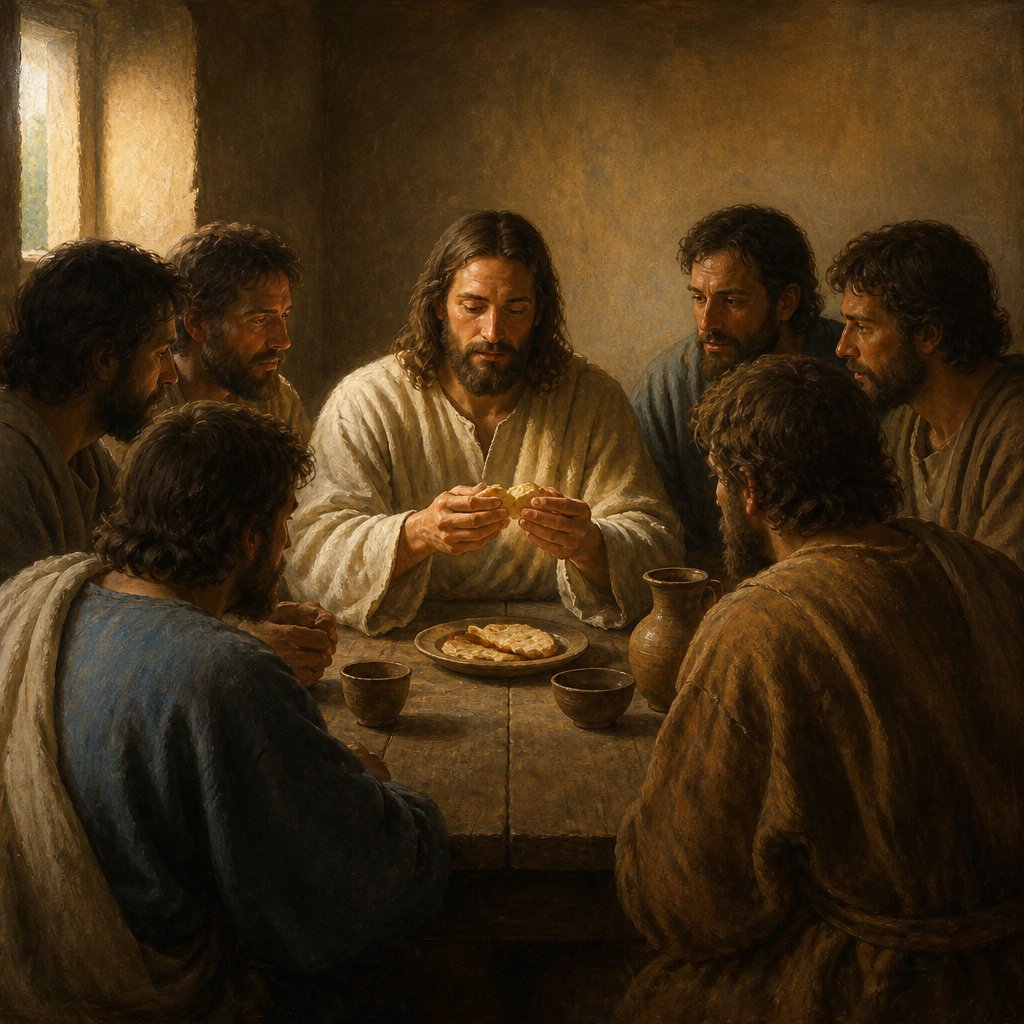
Matthew 26:26 in the King James Version reads, "And as they were eating, Jesus took bread, and blessed it, and brake it, and gave it to the disciples, and said, Take, eat; this is my body." This verse is part of the narrative of the Last Supper, which took place just before Jesus was betrayed and ultimately crucified.
The Last Supper is a significant event in the life of Jesus and plays a crucial role in Christian theology. In this verse, Jesus takes bread, blesses it, breaks it, and gives it to his disciples, telling them that it is his body. This act symbolizes the impending sacrifice of Jesus' body on the cross for the atonement of sins.
One of the main themes present in this verse is the concept of sacrifice. Jesus' act of giving his body in the form of bread to his disciples is a prefiguration of his ultimate sacrifice on the cross. In Christian theology, the bread and wine of the Last Supper are seen as symbols of Jesus' body and blood, and the act of partaking in the Lord's Supper is a commemoration of his sacrificial death.
Another important theme in this verse is the concept of communion. Through the act of sharing bread and wine, Jesus establishes a spiritual connection between himself and his disciples, as well as all future believers. This communion symbolizes the intimacy and unity that believers have with Jesus and with one another as members of the body of Christ.
The context of this verse is also significant. The Last Supper took place during the Jewish festival of Passover, which commemorated the Israelites' deliverance from slavery in Egypt. Jesus, as the ultimate Passover Lamb, is symbolically offered as a sacrifice for the deliverance of humanity from the bondage of sin. By using the imagery of the Passover meal, Jesus ties his own sacrificial death to the Jewish tradition, thereby providing continuity between the Old Testament and the New Testament.
In addition to the themes of sacrifice and communion, this verse also conveys the concept of the Eucharist. In many Christian traditions, the act of partaking in the Lord's Supper is believed to be a means of grace, through which believers receive spiritual nourishment and strength. The words of Jesus, "Take, eat; this is my body," are seen as imbuing the bread with a sacred significance, making it a tangible embodiment of his presence among believers.
Furthermore, the symbolism of bread holds theological significance in the Christian tradition. In the Lord's Prayer, Jesus instructs his followers to pray for daily bread, which serves as a symbol of all their physical needs. In the context of the Last Supper, the bread becomes a symbol of spiritual nourishment, representing the sustenance and sustenance that believers receive from partaking in the body of Christ.
Overall, Matthew 26:26 is a richly layered verse that conveys profound theological truths. It speaks to the sacrificial death of Jesus, the importance of communion among believers, and the spiritual nourishment that comes from partaking in the Eucharist. The verse is deeply rooted in the historical and religious context of the Last Supper and holds symbolic significance for Christians as a central ritual of their faith.
Have questions about Matthew 26:26?
Dive deeper into this scripture with Bible Chat — an AI-powered tool for exploring God's Word through conversation. Ask questions, get context, and grow in your understanding of the Bible.
Get Our Apps


Matthew 26:26 Artwork

Matthew 26:26 - "¶ And as they were eating, Jesus took bread, and blessed it, and brake it, and gave it to the disciples, and said, Take, eat; this is my body."

Matthew 26:26-28 - "And as they were eating, Jesus took bread, and blessed it, and brake it, and gave it to the disciples, and said, Take, eat; this is my body. And he took the cup, and gave thanks, and gave it to them, saying, Drink ye all of it; For this is my blood of the new testament, which is shed for many for the remission of sins."
"¶ And as they were eating, Jesus took bread, and blessed it, and brake it, and gave it to the disciples, and said, Take, eat; this is my body." - Matthew 26:26
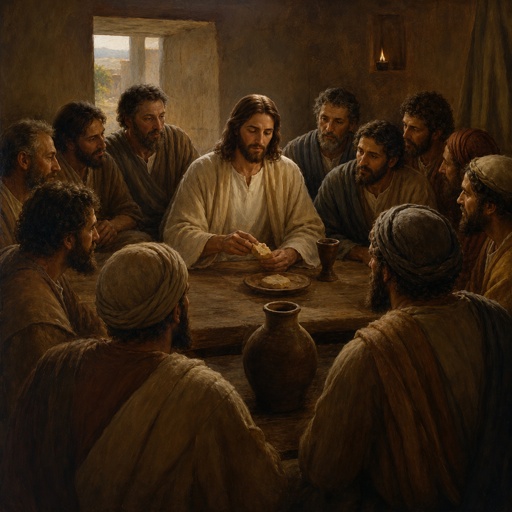
"And as they were eating, Jesus took bread, and blessed it, and brake it, and gave it to the disciples, and said, Take, eat; this is my body. And he took the cup, and gave thanks, and gave it to them, saying, Drink ye all of it; For this is my blood of the new testament, which is shed for many for the remission of sins." - Matthew 26:26-28

Matthew 26:25

Matthew 26:15

Matthew 19:26

Matthew 26:15

Matthew 27:26

Matthew 27:26

Matthew 26:53

Matthew 26:41

Matthew 26:65

Matthew 26:53

Matthew 22:26 - "Likewise the second also, and the third, unto the seventh."

Matthew 9:26 - "And the fame hereof went abroad into all that land."

Matthew 26:54 - "But how then shall the scriptures be fulfilled, that thus it must be?"

Matthew 26:6 - "¶ Now when Jesus was in Bethany, in the house of Simon the leper,"

Matthew 26:4 - "And consulted that they might take Jesus by subtilty, and kill him."

Matthew 26:5 - "But they said, Not on the feast day, lest there be an uproar among the people."

Matthew 26:16 - "And from that time he sought opportunity to betray him."

Matthew 26:72 - "And again he denied with an oath, I do not know the man."

Matthew 11:26 - "Even so, Father: for so it seemed good in thy sight."

Matthew 26:30 - "And when they had sung an hymn, they went out into the mount of Olives."

Matthew 26:20 - "Now when the even was come, he sat down with the twelve."

Matthew 26:66 - "What think ye? They answered and said, He is guilty of death."

Matthew 26:9 - "For this ointment might have been sold for much, and given to the poor."

Matthew 26:28 - "For this is my blood of the new testament, which is shed for many for the remission of sins."

Matthew 26:19 - "And the disciples did as Jesus had appointed them; and they made ready the passover."

Matthew 26:11 - "For ye have the poor always with you; but me ye have not always."