What does Matthew 25:39 mean?
"Or when saw we thee sick, or in prison, and came unto thee?" - Matthew 25:39
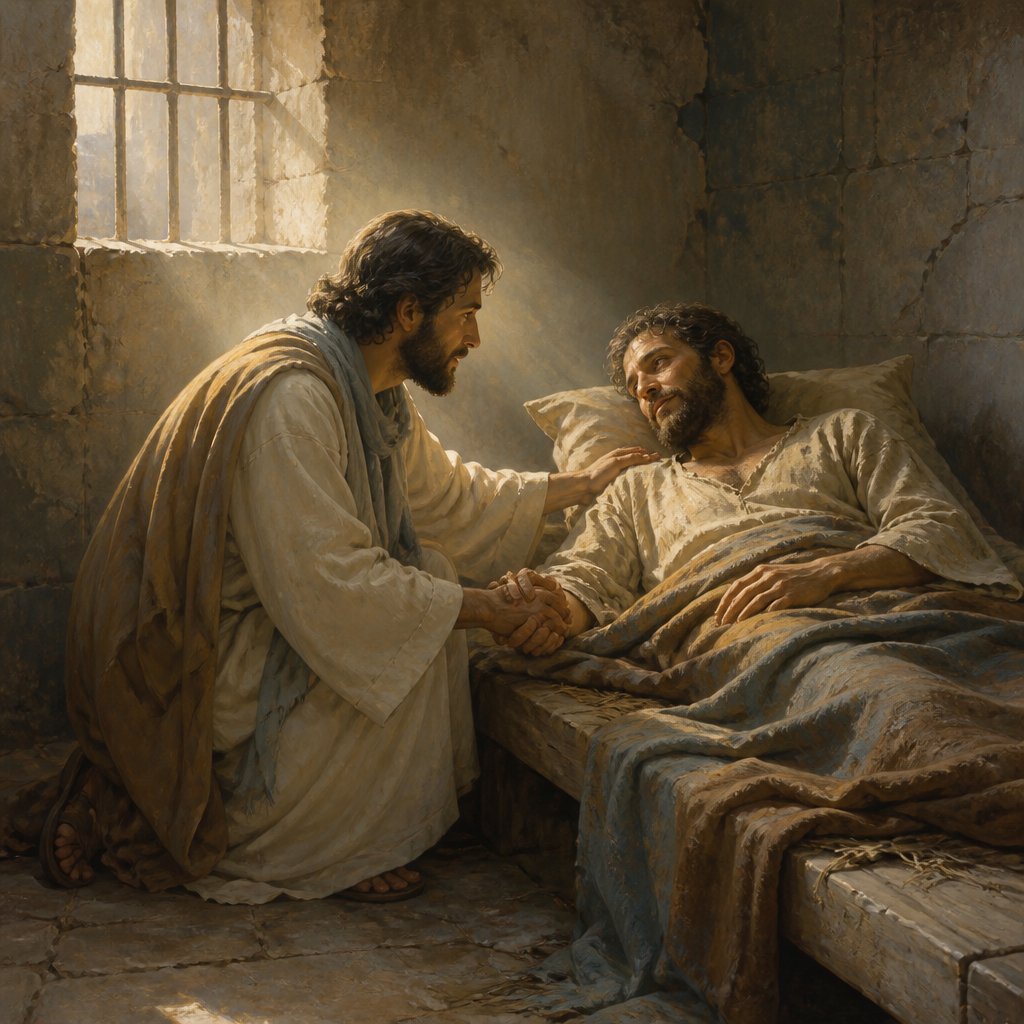
The Bible verse Matthew 25:39 from the King James Version (KJV) states: "Or when saw we thee sick, or in prison, and came unto thee?" This verse is part of a larger passage often referred to as the "Parable of the Sheep and the Goats" in which Jesus speaks about the final judgment and the criteria upon which individuals will be judged.
In this parable, Jesus uses the imagery of separating sheep from goats to illustrate the final judgment. The righteous are likened to sheep who will inherit the kingdom of God because they fed the hungry, welcomed strangers, clothed the naked, and visited the sick and imprisoned. The unrighteous, portrayed as goats, are condemned for not doing these things. The verse in question, Matthew 25:39, is a response from the unrighteous who question when they ever saw Jesus in need and did not help him.
The context of this verse is important to understand the deeper meaning behind it. In the preceding verses, Jesus explains that when He returns in glory, He will separate the righteous from the unrighteous, just as a shepherd separates the sheep from the goats. The righteous, who are unaware that they are serving Christ when they care for others, will be welcomed into eternal life. Meanwhile, the unrighteous, who neglect to care for others, neglect Christ, and will face eternal punishment.
The deeper meaning of this passage lies in the understanding that our treatment of others, especially the vulnerable and marginalized, is directly connected to our relationship with Christ. Jesus identifies Himself with the marginalized and, by serving others, we are, in fact, serving Him. This passage emphasizes the importance of compassion, empathy, and selflessness, and it challenges us to recognize the presence of Christ in those in need.
The theme of this verse is about compassion and service to others, emphasizing the significance of caring for the less fortunate. It teaches that true devotion to God is demonstrated through selfless acts of kindness and love towards others. This aligns with the broader teachings of Jesus regarding love, compassion, and the kingdom of God.
The symbolism in this verse is powerful. The imagery of sheep and goats conveys the idea of a clear division, and the actions of caring for the needy symbolize the character and heart of the righteous. This parable serves as a reminder that our actions on earth have eternal significance and that true righteousness is evidenced through our attitudes and actions towards others.
Additionally, the response of the unrighteous in Matthew 25:39 serves as a warning to those who are complacent or indifferent towards the needs of others. It challenges us to examine our own lives and consider how we are serving Christ through our interactions with those around us.
In conclusion, Matthew 25:39 from the King James Version of the Bible conveys a powerful message about the importance of compassion and service to others, as well as the eternal significance of our actions. It challenges us to embody the love and selflessness of Christ in our daily lives and to recognize His presence in the least of these. This passage serves as a call to action for believers to actively engage in acts of kindness, justice, and mercy, and to uphold the values of the kingdom of God.
Have questions about Matthew 25:39?
Dive deeper into this scripture with Bible Chat — an AI-powered tool for exploring God's Word through conversation. Ask questions, get context, and grow in your understanding of the Bible.
Get Our Apps


Matthew 25:39 Artwork

Matthew 25:39 - "Or when saw we thee sick, or in prison, and came unto thee?"
"Or when saw we thee sick, or in prison, and came unto thee?" - Matthew 25:39

Job 39:13-25

Matthew 22:37-39

Matthew 27:39 - "¶ And they that passed by reviled him, wagging their heads,"

Matthew 25:25

Exodus 25:39 - "Of a talent of pure gold shall he make it, with all these vessels."

Matthew 21:39 - "And they caught him, and cast him out of the vineyard, and slew him."

Matthew 22:39 - "And the second is like unto it, Thou shalt love thy neighbour as thyself."

Matthew 13:39 - "The enemy that sowed them is the devil; the harvest is the end of the world; and the reapers are the angels."

Matthew 25: 14-25

Job 39:19-25 – "Do you give the horse its strength or clothe its neck with a flowing mane?"

Matthew 15:39 - "And he sent away the multitude, and took ship, and came into the coasts of Magdala."

Job 39:25 - "He saith among the trumpets, Ha, ha; and he smelleth the battle afar off, the thunder of the captains, and the shouting."

"¶ And they that passed by reviled him, wagging their heads," - Matthew 27:39

Exodus 39:25 - "And they made bells of pure gold, and put the bells between the pomegranates upon the hem of the robe, round about between the pomegranates;"

Leviticus 25:39 - "¶ And if thy brother that dwelleth by thee be waxen poor, and be sold unto thee; thou shalt not compel him to serve as a bondservant:"

Matthew 26:25

Matthew 16:25

Matthew 25:21

Matthew 25:23

matthew 25:31

Matthew 25:21

Matthew 10:39 - "He that findeth his life shall lose it: and he that loseth his life for my sake shall find it."

Matthew 25:23

Matthew 21:25

Matthew 24:39 - "And knew not until the flood came, and took them all away; so shall also the coming of the Son of man be."

Matthew 25:25 - "And I was afraid, and went and hid thy talent in the earth: lo, there thou hast that is thine."

Matthew 25:11-13

Matthew 6:25 – 34