What does Matthew 21:39 mean?
"And they caught him, and cast him out of the vineyard, and slew him." - Matthew 21:39
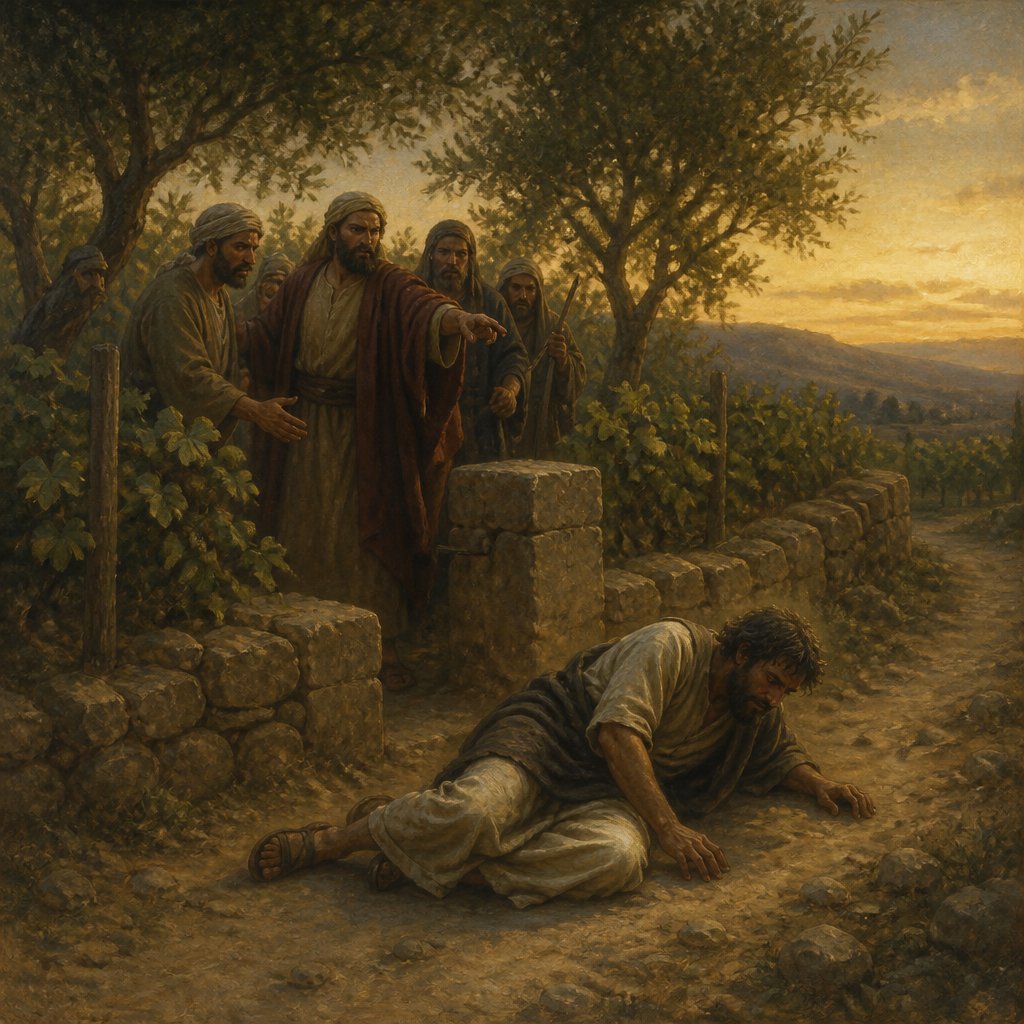
Matthew 21:39 in the King James Version of the Bible reads, “And they caught him, and cast him out of the vineyard, and slew him.” This verse is part of a parable told by Jesus to the chief priests and elders in the temple, as recorded in the Gospel of Matthew. In this parable, Jesus uses the metaphor of a vineyard to illustrate the rejection and eventual death of the prophets and, ultimately, himself.
In order to fully understand the depth and significance of this verse, it is important to consider the context in which it is presented. In the preceding verses, Jesus tells the parable of the landowner who plants a vineyard, prepares it, and leases it to tenants. When the landowner sends his servants to receive the fruit of the vineyard, the tenants mistreat and kill them. Finally, the landowner sends his son, whom the tenants also kill, thinking that they will inherit the vineyard. The parable ends with the landowner casting out the tenants and giving the vineyard to others (Matthew 21:33-41).
This parable is a clear allegory for the rejection of the prophets by the religious leaders of Israel and the impending rejection and crucifixion of Jesus. The vineyard represents Israel, the landowner represents God, the servants represent the prophets, and the son represents Jesus. The mistreatment and killing of the servants symbolize the persecution and death of the prophets throughout Israel's history, and the killing of the son foreshadows Jesus' impending crucifixion.
The specific verse in question, Matthew 21:39, is the climax of the parable, where the tenants catch the son, cast him out of the vineyard, and kill him. This verse highlights the rejection and betrayal of Jesus by the religious leaders of Israel. The act of casting him out of the vineyard signifies their refusal to acknowledge Jesus as the son of God and their subsequent willingness to hand him over to be crucified.
Symbolism plays a crucial role in the interpretation of this verse. The vineyard, as previously mentioned, represents Israel, which has been entrusted by God to bear fruit and bring forth righteousness. However, the tenants, representing the religious leaders, have failed in their responsibility to care for the vineyard and have instead oppressed and killed those sent to them. The killing of the son outside the vineyard symbolizes the rejection and crucifixion of Jesus, the ultimate act of rebellion and betrayal by the religious leaders.
This verse also foreshadows the events that will soon unfold in Jesus' life. His betrayal, rejection, and crucifixion are alluded to in this parable, as well as the subsequent consequences for the religious leaders and the nation of Israel. Ultimately, this parable serves as a warning to the religious leaders of Israel, as well as a prophetic message about the fate of Jesus and the implications for those who reject him.
The overarching theme of this verse and the parable as a whole is the idea of rejection and betrayal. Jesus uses this parable to address the rejection of the prophets and ultimately himself by the religious leaders of Israel. The consequences of this rejection are made clear, not only in the immediate context of Jesus' crucifixion but also in the broader historical and spiritual implications for the nation of Israel.
In conclusion, Matthew 21:39 in the King James Version of the Bible is a powerful and poignant verse that forms a critical part of Jesus' parable about the rejection and betrayal of the prophets and himself. Through the use of symbolism and allegory, this verse conveys a profound message about the consequences of rejecting God's messengers and, ultimately, his son. It serves as a sobering reminder of the importance of acknowledging Jesus' authority and the peril of rejecting him.
Have questions about Matthew 21:39?
Dive deeper into this scripture with Bible Chat — an AI-powered tool for exploring God's Word through conversation. Ask questions, get context, and grow in your understanding of the Bible.
Get Our Apps


Matthew 21:39 Artwork

Matthew 21:39 - "And they caught him, and cast him out of the vineyard, and slew him."

"And they caught him, and cast him out of the vineyard, and slew him." - Matthew 21:39

Matthew 22:37-39

Matthew 27:39 - "¶ And they that passed by reviled him, wagging their heads,"

Matthew 22:39 - "And the second is like unto it, Thou shalt love thy neighbour as thyself."

Matthew 13:39 - "The enemy that sowed them is the devil; the harvest is the end of the world; and the reapers are the angels."

Matthew 15:39 - "And he sent away the multitude, and took ship, and came into the coasts of Magdala."

Matthew 25:39 - "Or when saw we thee sick, or in prison, and came unto thee?"

Joshua 21:39 - "Heshbon with her suburbs, Jazer with her suburbs; four cities in all."

Genesis 39:21 - "¶ But the LORD was with Joseph, and shewed him mercy, and gave him favour in the sight of the keeper of the prison."

Job 39:21 - "He paweth in the valley, and rejoiceth in his strength: he goeth on to meet the armed men."

"¶ And they that passed by reviled him, wagging their heads," - Matthew 27:39

Matthew 10:39 - "He that findeth his life shall lose it: and he that loseth his life for my sake shall find it."

Matthew 24:39 - "And knew not until the flood came, and took them all away; so shall also the coming of the Son of man be."

Matthew 9:21

Matthew 9:21-22

Matthew 21

Matthew 9:21-22

Matthew 9:21-22

Matthew 9:21-22

Matthew 9:21-22

Matthew 25:21

Matthew 25:21

Matthew 12:39 - "But he answered and said unto them, An evil and adulterous generation seeketh after a sign; and there shall no sign be given to it, but the sign of the prophet Jonas:"

Matthew 23:39 - "For I say unto you, Ye shall not see me henceforth, till ye shall say, Blessed is he that cometh in the name of the Lord."

Matthew 5:39 - "But I say unto you, That ye resist not evil: but whosoever shall smite thee on thy right cheek, turn to him the other also."

Matthew 21:31

Matthew 21:25

Matthew 2:21

Matthew 21:1-11