What does Matthew 21:37 mean?
"But last of all he sent unto them his son, saying, They will reverence my son." - Matthew 21:37
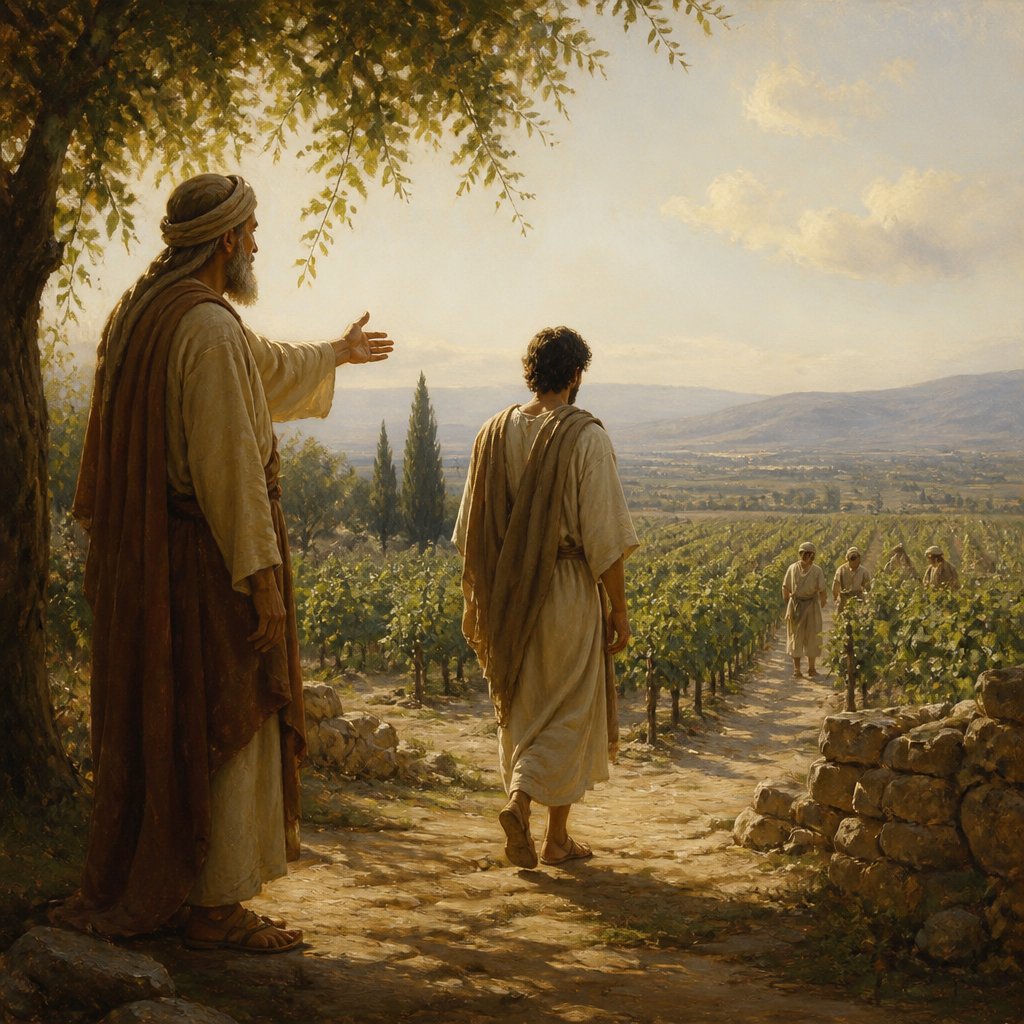
The Bible verse Matthew 21:37 from the King James Version (KJV) reads: "But last of all he sent unto them his son, saying, They will reverence my son."
This verse is part of the Parable of the Wicked Husbandmen, which is found in the Gospel of Matthew, chapter 21, verses 33-46. In this parable, Jesus tells the story of a man who planted a vineyard, leased it to tenants, and then went away. When the time came to collect the fruit from the vineyard, the man sent several of his servants to the tenants to receive what was owed to him. However, the tenants mistreated and killed the servants. Finally, the man sent his son to collect the fruit, thinking that the tenants would respect his son. However, the tenants saw the son as an heir to the vineyard and subsequently killed him in order to take possession of the vineyard.
The context of this parable is important in understanding its meaning and significance. Jesus tells this parable to the chief priests and elders of the people, as well as the Pharisees, in the Temple in Jerusalem. He uses this parable to illustrate the rejection of the prophets and, ultimately, the rejection and crucifixion of the Son of God, Jesus Christ, by the religious leaders of the time. This parable serves as a warning to the religious leaders about the consequences of their rejection of Jesus as the Messiah.
The themes present in this parable are numerous and deeply significant. One of the primary themes is the rejection of God's messengers and, ultimately, His Son. The vineyard represents Israel, the tenants represent the religious leaders, and the servants represent the prophets sent by God. Throughout the history of Israel, God sent prophets to call the people to repentance and faithfulness, yet they were often rejected and mistreated. This culminates in the rejection and crucifixion of Jesus, the Son of God, by the religious leaders.
Another important theme in this parable is the concept of stewardship and accountability. The man who planted the vineyard represents God, who entrusts His people with the responsibility of stewarding His creation. The tenants were expected to care for the vineyard and provide the owner with the fruit. However, they failed in their stewardship and acted selfishly, seeking to take possession of the vineyard for themselves. This theme serves as a warning to all believers about the importance of faithfully stewarding God's blessings and resources.
The symbolism in this parable is rich and profound. The vineyard symbolizes God's people and His Kingdom, the tenants symbolize the religious leaders and their rejection of God's messengers, and the son represents Jesus Christ, the ultimate expression of God's love and authority. The killing of the son represents the crucifixion of Jesus on the cross, which ultimately leads to the redemption and salvation of all who believe in Him.
In Matthew 21:37, the statement, "They will reverence my son," reflects the expectation of the father who sends his son to the tenants. The father believed that the tenants would show respect and reverence for his son, but instead, they plot to kill him in order to seize the inheritance. This parallels the rejection of Jesus by the religious leaders, who viewed Him as a threat to their own power and authority.
In conclusion, Matthew 21:37 and the Parable of the Wicked Husbandmen convey powerful truths about the rejection of God's messengers, the concept of stewardship and accountability, and the rejection and crucifixion of Jesus Christ. This parable serves as a sobering warning about the consequences of rejecting God and His Son. It also points to the redemptive work of Jesus on the cross, which ultimately brings salvation to all who believe in Him. As believers, we are called to faithfully steward the resources and blessings that God has entrusted to us and to honor and reverence His Son, Jesus Christ.
Have questions about Matthew 21:37?
Dive deeper into this scripture with Bible Chat — an AI-powered tool for exploring God's Word through conversation. Ask questions, get context, and grow in your understanding of the Bible.
Get Our Apps


Matthew 21:37 Artwork

Matthew 21:37 - "But last of all he sent unto them his son, saying, They will reverence my son."
"But last of all he sent unto them his son, saying, They will reverence my son." - Matthew 21:37

Matthew 12:36-37

matthew 12:36-37

Matthew 9:37-38

Matthew 22:37-39

Matthew 12:36-37

Joshua 21:37 - "Kedemoth with her suburbs, and Mephaath with her suburbs; four cities."

Psalms 37:21 - "The wicked borroweth, and payeth not again: but the righteous sheweth mercy, and giveth."

Matthew 24:37 - "But as the days of Noe were, so shall also the coming of the Son of man be."

Matthew 9:37 - "Then saith he unto his disciples, The harvest truly is plenteous, but the labourers are few;"

Matthew 12:37 - "For by thy words thou shalt be justified, and by thy words thou shalt be condemned."

Matthew 13:37 - "He answered and said unto them, He that soweth the good seed is the Son of man;"

Matthew 26:37 - "And he took with him Peter and the two sons of Zebedee, and began to be sorrowful and very heavy."

Matthew 27:37 - "And set up over his head his accusation written, THIS IS JESUS THE KING OF THE JEWS."

Matthew 9:21

Matthew 9:21-22

Matthew 21

Job 37:21 - "And now men see not the bright light which is in the clouds: but the wind passeth, and cleanseth them."

Matthew 5:37 - "But let your communication be, Yea, yea; Nay, nay: for whatsoever is more than these cometh of evil."

Matthew 9:21-22

Matthew 9:21-22

Matthew 9:21-22

Matthew 9:21-22

Genesis 37:21 - "And Reuben heard it, and he delivered him out of their hands; and said, Let us not kill him."

Matthew 25:21

Matthew 25:21

Matthew 15:37 - "And they did all eat, and were filled: and they took up of the broken meat that was left seven baskets full."

Matthew 21:31

Matthew 21:25