What does Matthew 21:21 mean?
"Jesus answered and said unto them, Verily I say unto you, If ye have faith, and doubt not, ye shall not only do this which is done to the fig tree, but also if ye shall say unto this mountain, Be thou removed, and be thou cast into the sea; it shall be done." - Matthew 21:21
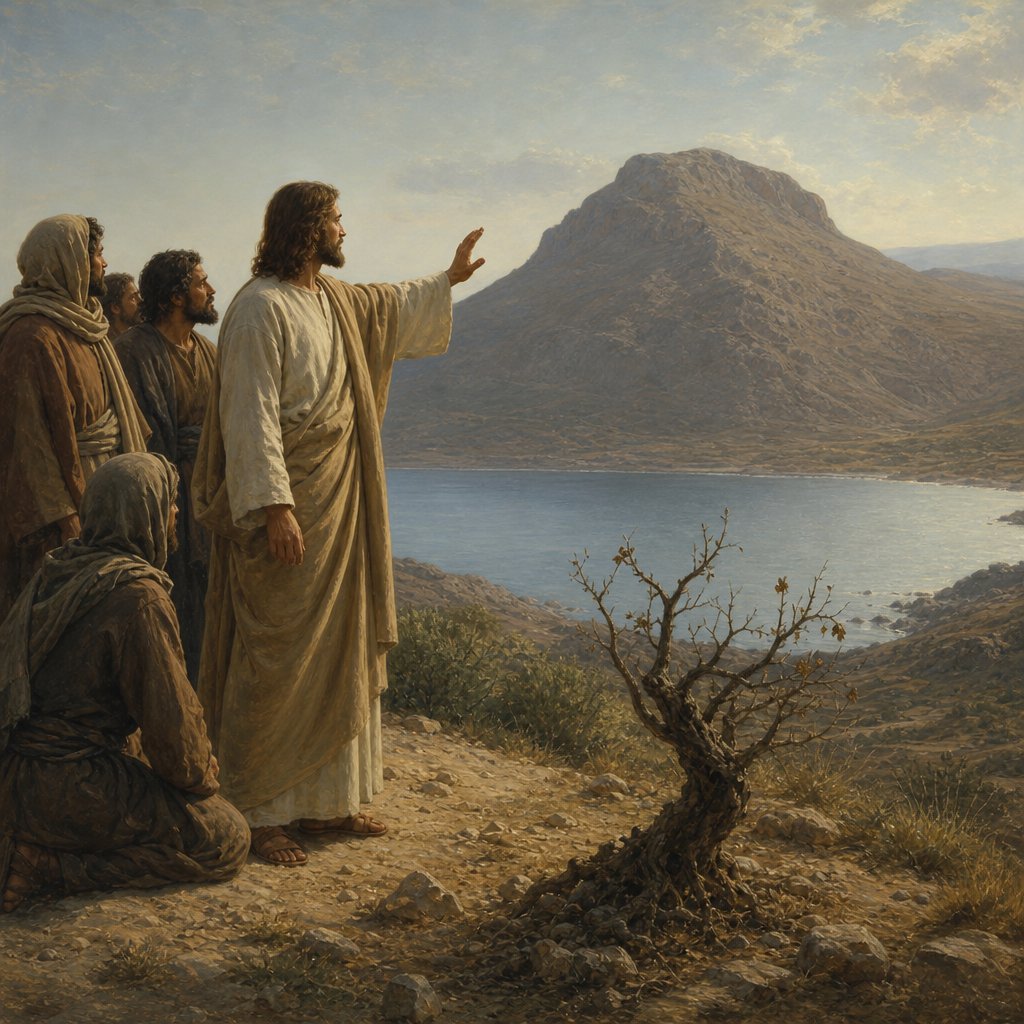
Matthew 21:21 in the KJV reads, “Jesus answered and said unto them, Verily I say unto you, If ye have faith, and doubt not, ye shall not only do this which is done to the fig tree, but also if ye shall say unto this mountain, Be thou removed, and be thou cast into the sea; it shall be done.”
The verse stands inside a very specific moment in the Lord’s final week before the crucifixion, after His entry into Jerusalem and in close connection with His actions in the temple. Immediately before this saying, Jesus has spoken judgment over a fig tree that had leaves but bore no fruit, and the tree withered away. The disciples marvel at what they have seen, and Jesus turns their astonishment into instruction. In that setting the “fig tree” is not merely a curiosity of nature but a sign. It is a living picture of profession without performance, outward show without inward reality, and the certainty of divine judgment upon barrenness. The point is sharpened by where Jesus is headed and what He has just confronted: a religious environment filled with visible “leaves” of activity and ceremony, yet lacking the “fruit” that God requires.
Against that backdrop, “If ye have faith, and doubt not” is not presented as a vague motivational slogan but as the posture by which God’s will is embraced and carried out. Faith here is not a mere optimism that events will turn out well; it is a settled reliance upon God that refuses to be divided by “doubt not,” meaning a hesitating, double-minded inner contest that undercuts confident dependence. The Lord is not teaching that human beings possess a magical power of speech; He is teaching what becomes possible when a man is aligned with God in trust so that prayer, obedience, and God’s purposes meet. The marvel is not that disciples can wield creation at whim, but that God is able to act mightily through those who truly trust Him.
When Jesus says, “ye shall not only do this which is done to the fig tree,” He refers directly to what they have just witnessed: a word spoken with divine authority, and an immediate, visible result. Yet He expands the horizon: “but also if ye shall say unto this mountain, Be thou removed, and be thou cast into the sea; it shall be done.” The language is deliberately extreme. A “mountain” is the natural emblem of what is massive, immovable, and humanly impossible to shift. In Scripture’s world, mountains also evoke obstacles, strongholds, and what stands between the worshipper and the fulfillment of God’s purposes. In this immediate narrative, the disciples are facing the towering realities of opposition in Jerusalem, the hardness of many hearts, the coming arrest and death of Christ, and the birth of a mission that will confront the world. Jesus meets their sense of impossibility with a promise: true faith is not stopped by what looks unmovable, because God is not limited by size, resistance, or circumstance. “Be thou removed, and be thou cast into the sea” paints the most dramatic reversal imaginable: what seems fixed is not merely shifted a little, but utterly displaced and overwhelmed.
The “sea” in biblical imagery often suggests depth, uncontrollable forces, and what swallows up what is thrown into it. To cast a mountain into the sea is to picture not incremental improvement but decisive divine intervention. Yet the verse does not exist in isolation; it leans into the next verse’s emphasis on prayer: “And all things, whatsoever ye shall ask in prayer, believing, ye shall receive.” In other words, Matthew 21:21 is tightly bound to the theme of believing prayer. The “saying” to the mountain is not a charm but an image of faith speaking in the context of dependence upon God. The emphasis on “it shall be done” underlines God’s faithfulness to act, not man’s independent command over reality.
The fig tree and the mountain also function together as twin symbols that deepen the meaning. The fig tree represents a life or a religious system that appears alive but lacks fruit; it is judged and withers. The mountain represents what looms over the disciple as impossible; it is removed. In both cases the Lord’s word is effective, and in both cases the disciples are being taught that God’s kingdom is not mere appearance. Fruitlessness will not endure simply because it is clothed in leaves, and obstacles will not endure simply because they look permanent. The kingdom of God exposes the barren and overcomes the impossible.
The significance of Matthew 21:21, then, is that it calls the disciple to a faith that is real, undivided, and active—a faith that does not merely admire Christ’s power but learns to live in reliance upon God in the face of judgment, hypocrisy, and daunting opposition. It also warns against mistaking outward signs for inward reality: the withered fig tree stands as a sobering reminder that God seeks fruit, and the promise about the mountain stands as a strengthening reminder that God can accomplish what no human effort can. In the shadow of Jerusalem’s conflict and the cross that is near, Jesus is preparing His followers to understand that what will carry them is not visible strength but faith without doubt, expressed in believing dependence upon God, by which the Lord both judges what is false and removes what hinders His purpose.
Have questions about Matthew 21:21?
Dive deeper into this scripture with Bible Chat — an AI-powered tool for exploring God's Word through conversation. Ask questions, get context, and grow in your understanding of the Bible.
Get Our Apps


Matthew 21:21 Artwork

Matthew 21:21 Philippians 4:6-7 Ephesians 6:10-18 Put the words on the photo

Matthew 21:21 Philippians 4:6-7 Ephesians 6:10-18
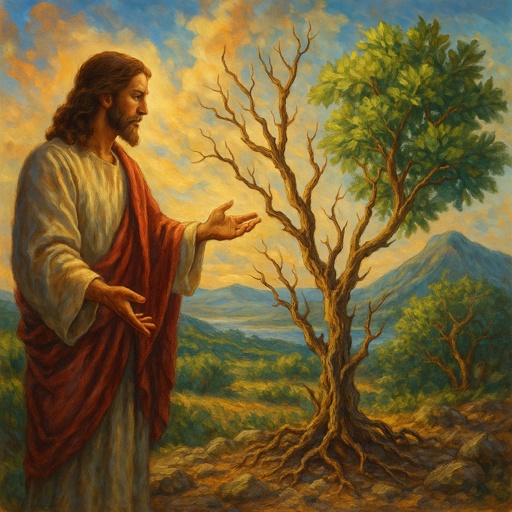
"Jesus answered and said unto them, Verily I say unto you, If ye have faith, and doubt not, ye shall not only do this which is done to the fig tree, but also if ye shall say unto this mountain, Be thou removed, and be thou cast into the sea; it shall be done." - Matthew 21:21

Matthew 21:21 - "Jesus answered and said unto them, Verily I say unto you, If ye have faith, and doubt not, ye shall not only do this which is done to the fig tree, but also if ye shall say unto this mountain, Be thou removed, and be thou cast into the sea; it shall be done."
"Jesus answered and said unto them, Verily I say unto you, If ye have faith, and doubt not, ye shall not only do this which is done to the fig tree, but also if ye shall say unto this mountain, Be thou removed, and be thou cast into the sea; it shall be done." - Matthew 21:21

Matthew 9:21

Matthew 9:21-22

Matthew 21

Matthew 9:21-22

Matthew 9:21-22

Matthew 9:21-22

Matthew 9:21-22

Matthew 25:21

Matthew 25:21

Matthew 21:31

Matthew 21:25

Matthew 2:21

Matthew 21:1-11

Matthew 14:13-21

Matthew 17:14-21

Matthew 12:21 - "And in his name shall the Gentiles trust."

Matthew 17:21 - "Howbeit this kind goeth not out but by prayer and fasting."

Matthew 6:21 - "For where your treasure is, there will your heart be also."

Matthew 21:6 - "And the disciples went, and did as Jesus commanded them,"

Matthew 21:11 - "And the multitude said, This is Jesus the prophet of Nazareth of Galilee."

Matthew 21:18 - "Now in the morning as he returned into the city, he hungered."

Matthew 15:21 - "¶ Then Jesus went thence, and departed into the coasts of Tyre and Sidon."

Matthew 21:14 - "And the blind and the lame came to him in the temple; and he healed them."

Matthew 21:29 - "He answered and said, I will not: but afterward he repented, and went."

Matthew 23:21 - "And whoso shall swear by the temple, sweareth by it, and by him that dwelleth therein."