What does Matthew 21:1-11 mean?
"As they approached Jerusalem, and were come to Bethphage, unto the mount of Olives, then sent Jesus two disciples, Saying unto them, Go into the village over against you, and straightway ye shall find an ass tied, and a colt with her: loose them, and bring them unto me. And if any man say ought unto you, ye shall say, The Lord hath need of them; and straightway he will send them. All this was done, that it might be fulfilled which was spoken by the prophet, saying, Tell ye the daughter of Sion, Behold, thy King cometh unto thee, meek, and sitting upon an ass, and a colt the foal of an ass. And the disciples went, and did as Jesus commanded them, And brought the ass, and the colt, and put on them their clothes, and they set him thereon. And a very great multitude spread their garments in the way; others cut down branches from the trees, and strawed them in the way. And the multitudes that went before, and that followed, cried, saying, Hosanna to the son of David: Blessed is he that cometh in the name of the Lord; Hosanna in the highest. And when he was come into Jerusalem, all the city was moved, saying, Who is this? And the multitude said, This is Jesus the prophet of Nazareth of Galilee." - Matthew 21:1-11
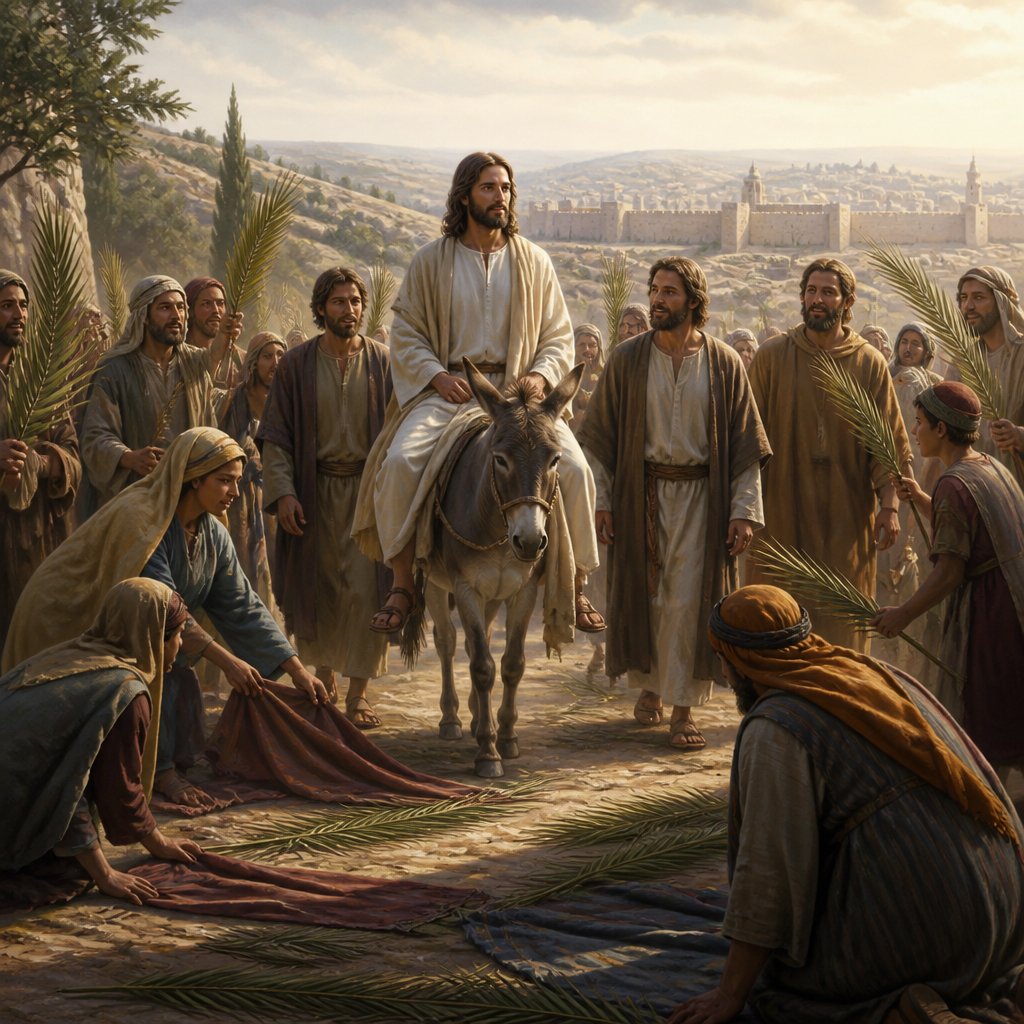
Matthew 21:1-11 in the King James Version (KJV) recounts the triumphal entry of Jesus into Jerusalem. This passage marks the beginning of the events that lead to Jesus' crucifixion and resurrection, which are central to the Christian faith. Let us delve into this passage to explore its deeper meaning, context, and symbolism.
The passage begins with Jesus instructing his disciples to fetch a donkey and a colt from a nearby village. This act fulfills the prophecy in Zechariah 9:9, which states, "Rejoice greatly, O daughter of Zion; shout, O daughter of Jerusalem: behold, thy King cometh unto thee: he is just, and having salvation; lowly, and riding upon an ass, and upon a colt the foal of an ass." By riding into Jerusalem on a donkey, Jesus is symbolically fulfilling the prophecy and declaring himself as the promised Messiah.
As Jesus enters the city, a large crowd gathers, spreading their cloaks on the road and cutting branches from the trees to spread on the path, creating a scene of royal welcome. The people hailed Jesus with shouts of "Hosanna to the Son of David: Blessed is he that cometh in the name of the Lord; Hosanna in the highest." This declaration of "Hosanna" means "save now" or "save, we pray," expressing the people's hope and expectation of Jesus as the long-awaited deliverer of Israel.
The context of this passage is crucial to understanding its significance. Jesus' entry into Jerusalem during the Jewish festival of Passover was a time of heightened political and religious tension. The people of Israel were under Roman occupation, and many Jews were looking for a messianic figure to lead them to freedom. Jesus' entry was a deliberate and symbolic statement of his identity as the promised Messiah, with the potential to challenge the political and religious authorities.
Symbolically, the donkey on which Jesus rode represents humility and peace. In contrast to a warhorse, a donkey was a symbol of peace and gentleness, reflecting Jesus' nature as the Prince of Peace. The act of riding a donkey also echoes the prophecy of the peaceful reign of the Messiah in Zechariah 9:9. The use of donkey and colt demonstrates the fulfillment of the Old Testament prophecies and Jesus' intentional claim to be the promised King and Savior.
The enthusiastic crowd's use of palm branches and their cries of "Hosanna" also carry symbolic significance. In Jewish tradition, palm branches were a symbol of victory and triumph, often associated with the feast of Tabernacles and the deliverance of Israel. The people's proclamation of "Hosanna" reflects their longing for salvation and their recognition of Jesus as the one who can bring deliverance and restoration to their nation.
Furthermore, the declaration of "Son of David" in the crowd's praise is significant. This title is deeply rooted in the messianic expectation of the Jews, as the Messiah was believed to be a descendant of King David. By acknowledging Jesus as the Son of David, the crowd is affirming their belief in his messianic identity and kingly authority.
The juxtaposition of Jesus' humble entry on a donkey with the grandiose expectations of the people is noteworthy. The crowd's expectation of a triumphant and conquering king who would deliver them from Roman oppression contrasts with Jesus' intention to fulfill his mission through sacrifice and humility. This sets the stage for the dramatic events that follow, leading to Jesus' crucifixion and ultimate victory through his resurrection.
In conclusion, Matthew 21:1-11 captures the pivotal moment of Jesus' triumphal entry into Jerusalem, depicting his fulfillment of Old Testament prophecies and his intentional claim to be the promised Messiah. The passage is rich in symbolic imagery and theological significance, underscoring Jesus' humble yet triumphant nature as the Prince of Peace and the long-awaited Savior. It sets the stage for the unfolding of the events that lead to Jesus' sacrificial death and resurrection, ultimately fulfilling God's redemptive plan for humanity.
Have questions about Matthew 21:1-11?
Dive deeper into this scripture with Bible Chat — an AI-powered tool for exploring God's Word through conversation. Ask questions, get context, and grow in your understanding of the Bible.
Get Our Apps


Matthew 21:1-11 Artwork

Matthew 21:1-11
"As they approached Jerusalem and came to Bethphage on the Mount of Olives, Jesus sent two disciples, saying to them, “Go to the village ahead of you, and at once you will find a donkey tied there, with her colt by her. Untie them and bring them to me. If anyone says anything to you, say that the Lord needs them, and he will send them right away.” This took place to fulfill what was spoken through the prophet: “Say to Daughter Zion, ‘See, your king comes to you, gentle and riding on a donkey, and on a colt, the foal of a donkey.’” The disciples went and did as Jesus had instructed them. They brought the donkey and the colt and placed their cloaks on them for Jesus to sit on. A very large crowd spread their cloaks on the road, while others cut branches from the trees and spread them on the road. The crowds that went ahead of him and those that followed shouted, “Hosanna to the Son of David!” “Blessed is he who comes in the name of the Lord!” “Hosanna in the highest heaven!” When Jesus entered Jerusalem, the whole city was stirred and asked, “Who is this?” The crowds answered, “This is Jesus, the prophet from Nazareth in Galilee.”" - Matthew 21:1-11

Matthew 21:1-11 - "As they approached Jerusalem and came to Bethphage on the Mount of Olives, Jesus sent two disciples, saying to them, “Go to the village ahead of you, and at once you will find a donkey tied there, with her colt by her. Untie them and bring them to me. If anyone says anything to you, say that the Lord needs them, and he will send them right away.” This took place to fulfill what was spoken through the prophet: “Say to Daughter Zion, ‘See, your king comes to you, gentle and riding on a donkey, and on a colt, the foal of a donkey.’” The disciples went and did as Jesus had instructed them. They brought the donkey and the colt and placed their cloaks on them for Jesus to sit on. A very large crowd spread their cloaks on the road, while others cut branches from the trees and spread them on the road. The crowds that went ahead of him and those that followed shouted, “Hosanna to the Son of David!” “Blessed is he who comes in the name of the Lord!” “Hosanna in the highest heaven!” When Jesus entered Jerusalem, the whole city was stirred and asked, “Who is this?” The crowds answered, “This is Jesus, the prophet from Nazareth in Galilee.”"

Matthew 21:11 - "And the multitude said, This is Jesus the prophet of Nazareth of Galilee."

Matthew 21

Matthew 21:31

Matthew 21:25

Matthew 11:1

Matthew 11:1
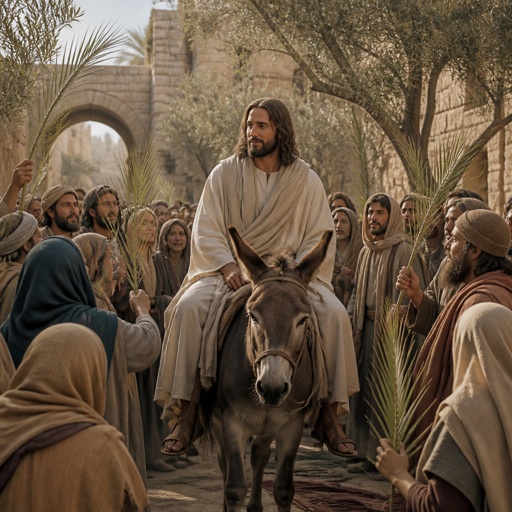
"And the multitude said, This is Jesus the prophet of Nazareth of Galilee." - Matthew 21:11

Matthew 11:3

Matthew 21:1 - "And when they drew nigh unto Jerusalem, and were come to Bethphage, unto the mount of Olives, then sent Jesus two disciples,"

Acts 1:1-11

Acts 1:1-11

Matthew 1:11 - "And Josias begat Jechonias and his brethren, about the time they were carried away to Babylon:"

Matthew 11:21 - "Woe unto thee, Chorazin! woe unto thee, Bethsaida! for if the mighty works, which were done in you, had been done in Tyre and Sidon, they would have repented long ago in sackcloth and ashes."

Matthew 4:1-11…Jesus in the wilderness to be tempted there by the devil

Matthew 4:1-11..Jesus in the wilderness to be tempted there by the devil

Matthew 4:1-11…Jesus in the wilderness to be tempted there by the devil

Matthew 9:21

Matthew 9:21-22

1 Chronicles 21:11 - "So Gad came to David, and said unto him, Thus saith the LORD, Choose thee"

Matthew 1:21 - "And she shall bring forth a son, and thou shalt call his name JESUS: for he shall save his people from their sins."

Matthew 9:21-22

Matthew 9:21-22

Matthew 9:21-22

Matthew 9:21-22

1 Chronicles 11:21 - "Of the three, he was more honourable than the two; for he was their captain: howbeit he attained not to the first three."

1 Corinthians 11:21 - "For in eating every one taketh before other his own supper: and one is hungry, and another is drunken."

Matthew 25:21