What does Matthew 20:26-27 mean?
"Matthew 20:26-27: "But it shall not be so among you: but whosoever will be great among you, let him be your minister; And whosoever will be chief among you, let him be your servant:"" - Matthew 20:26-27
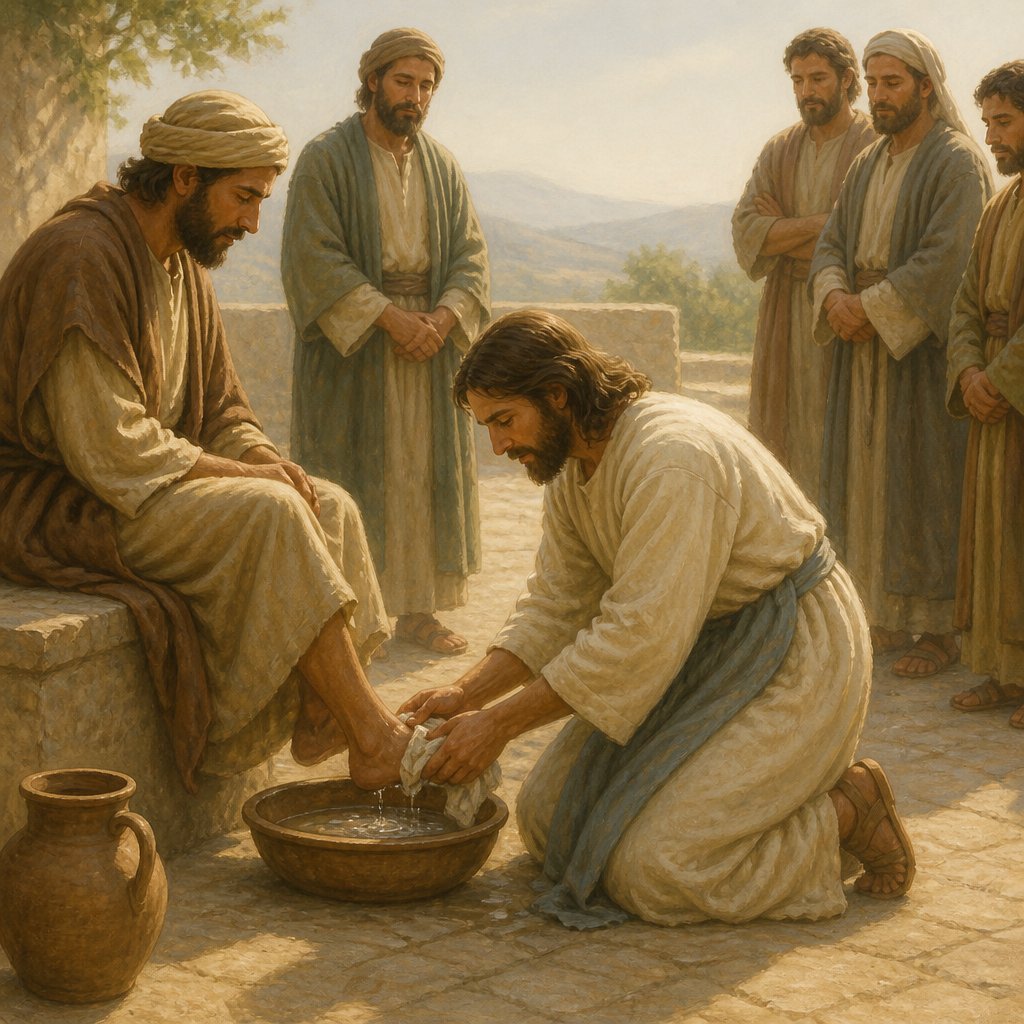
Matthew 20:26-27 in the King James Version of the Bible reads, "But it shall not be so among you: but whosoever will be great among you, let him be your minister; And whosoever will be chief among you, let him be your servant."
These verses come from a passage in the Gospel of Matthew where Jesus is teaching his disciples about humility and servanthood. The context of this passage is important to understanding its meaning. Just before these verses, Jesus has been approached by the mother of James and John, who asked Jesus to grant her sons positions of authority in his kingdom. This request angered the other disciples, and so Jesus took the opportunity to instruct them on the true nature of leadership in the kingdom of God.
In these verses, Jesus is challenging the traditional understanding of leadership and authority. He emphasizes that true greatness is not found in holding power over others, but in serving and ministering to them. This idea of servant leadership is one of the central themes of the Christian faith and is a concept that is repeated throughout the New Testament.
The first part of the verse, "But it shall not be so among you: but whosoever will be great among you, let him be your minister," is a direct contrast to the world's understanding of greatness. In the world, greatness is often associated with power, wealth, and authority. However, Jesus is teaching that in the kingdom of God, true greatness is found in serving others. The word "minister" here is translated from the Greek word diakonos, which means "servant" or "one who executes the commands of another." Jesus is calling his disciples to have a mindset of service and selflessness, putting the needs of others above their own.
The second part of the verse, "And whosoever will be chief among you, let him be your servant," reinforces and emphasizes this idea. Jesus is essentially saying that the one who wants to be the greatest should be willing to take on the role of a servant. This is a radical and revolutionary concept, especially in a culture that valued hierarchy and authority.
The themes of humility, selflessness, and servant leadership are echoed throughout the New Testament, particularly in the teachings of Jesus and the example of his own life. In the Gospel of Mark, Jesus states, "For even the Son of Man came not to be served but to serve, and to give his life as a ransom for many" (Mark 10:45). This verse further emphasizes that Jesus, the Son of God, came to serve rather than to be served. This is the ultimate example of humility and selflessness.
The apostle Paul also expounds on the concept of servant leadership in his letters to the early Christian communities. In his letter to the Philippians, Paul encourages the believers to have the same mindset as Christ, who humbled himself and became obedient, even to the point of death on a cross (Philippians 2:5-8). Paul presents Jesus as the ultimate example of humility and self-sacrifice, and calls on believers to follow his example in their own lives.
In addition to the themes of humility and servant leadership, there is also symbolism in these verses. Jesus uses the idea of servanthood to symbolize the way in which his followers are to relate to one another and to the world. The act of serving others is a symbol of love, compassion, and selflessness. It is a tangible expression of the values of the kingdom of God, and it demonstrates to the world the radical nature of the Christian faith.
In conclusion, Matthew 20:26-27 from the King James Version of the Bible carries a powerful message about humility and servant leadership. Jesus challenges his disciples to reject the world's understanding of greatness and instead embrace a mindset of service and selflessness. This concept of servant leadership is a central theme in the Christian faith and is exemplified by the life and teachings of Jesus and reiterated throughout the New Testament. The symbolism of servanthood conveys the values of the kingdom of God and serves as a powerful example of love and compassion in action.
Have questions about Matthew 20:26-27?
Dive deeper into this scripture with Bible Chat — an AI-powered tool for exploring God's Word through conversation. Ask questions, get context, and grow in your understanding of the Bible.
Get Our Apps


Matthew 20:26-27 Artwork
"It shall not be so among you. But whoever would be great among you must be your servant, and whoever would be first among you must be your slave." - Matthew 20:26-27

Matthew 27:26

Matthew 27:26

Matthew 20:26 - "But it shall not be so among you: but whosoever will be great among you, let him be your minister;"

Matthew 20:27 - "And whosoever will be chief among you, let him be your servant:"

Matthew 26:20 - "Now when the even was come, he sat down with the twelve."

Matthew 26:27 - "And he took the cup, and gave thanks, and gave it to them, saying, Drink ye all of it;"

Matthew 27:20 - "But the chief priests and elders persuaded the multitude that they should ask Barabbas, and destroy Jesus."

Matthew 27:26 - "¶ Then released he Barabbas unto them: and when he had scourged Jesus, he delivered him to be crucified."

"And whosoever will be chief among you, let him be your servant:" - Matthew 20:27

"Now when the even was come, he sat down with the twelve." - Matthew 26:20

"But it shall not be so among you: but whosoever will be great among you, let him be your minister;" - Matthew 20:26

"And he took the cup, and gave thanks, and gave it to them, saying, Drink ye all of it;" - Matthew 26:27

"But the chief priests and elders persuaded the multitude that they should ask Barabbas, and destroy Jesus." - Matthew 27:20

"¶ Then released he Barabbas unto them: and when he had scourged Jesus, he delivered him to be crucified." - Matthew 27:26

Matthew 20:26-28 - "It shall not be so among you. But whoever would be great among you must be your servant, and whoever would be first among you must be your slave, even as the Son of Man came not to be served but to serve, and to give his life as a ransom for many."

Matthew 27:46

Matthew 27:35

Matthew 24:27

Proverbs 7:26-27

John 19:26-27

Matthew 26:25

Matthew 26:15

Matthew 19:26

Matthew 26:15

Matthew 27: 38

Matthew 26:53

Matthew 26:41

Matthew 26:65

Matthew 26:53