What does Matthew 1:21 mean?
"And she shall bring forth a son, and thou shalt call his name JESUS: for he shall save his people from their sins." - Matthew 1:21
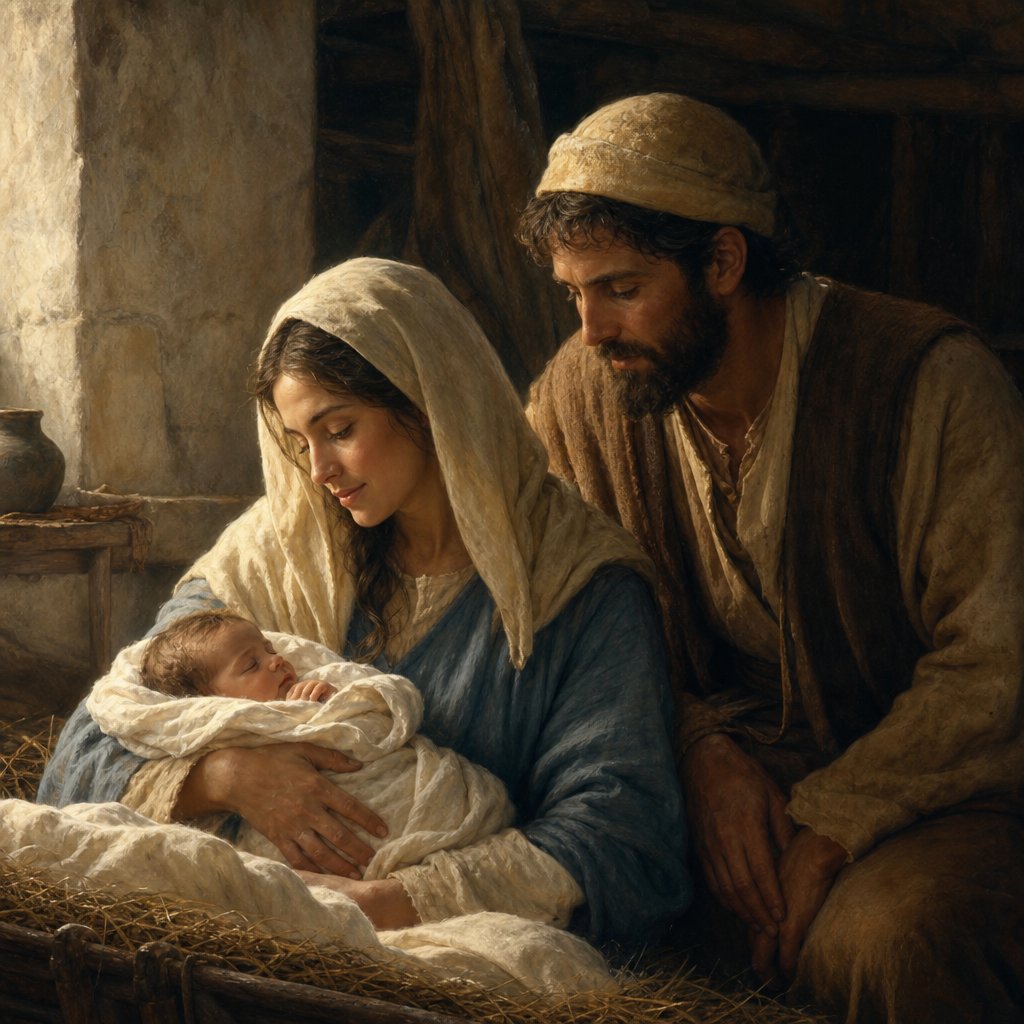
“Matthew 1:21” in the King James Version reads, “And she shall bring forth a son, and thou shalt call his name JESUS: for he shall save his people from their sins.”
In its immediate context, this sentence comes as an angelic announcement to Joseph at the most vulnerable moment of the narrative. Joseph has discovered that Mary is with child before they have come together, and though he is described just prior as “a just man,” he is also resolved to put her away privily. Into that tension of justice and mercy, reputation and righteousness, God speaks by an angel “in a dream,” not merely to soothe Joseph’s fears but to interpret the pregnancy itself as God’s act: the child is conceived “of the Holy Ghost,” and the events are not scandal to be managed but salvation being unfolded. Matthew’s Gospel begins, significantly, not with Jesus teaching or working miracles, but with God naming what is happening and why it matters. This verse is the heart of that explanation.
The first weighty phrase is, “she shall bring forth a son.” It affirms the real humanity of Christ. The salvation Matthew announces is not an abstract rescue but one that enters human life through birth, family, lineage, and the ordinary fact of a mother bringing forth a child. Matthew has just given a genealogy, anchoring this son in the line of Abraham and David, and then immediately shows that the child’s origin is also divine. The verse therefore sits at the meeting point of two truths Matthew wants held together from the beginning: Jesus is truly born into Israel’s story, and yet his coming is God’s direct intervention.
Next comes the command, “thou shalt call his name JESUS.” In Scripture, naming is never mere labeling; it often carries vocation, destiny, and divine purpose. Here, the name is not chosen by preference but given by heaven, and Joseph is commanded to bestow it, drawing him into real legal fatherhood and covenantal responsibility. Joseph cannot control the circumstances, but he can obey. By naming the child as commanded, he receives the child, shelters Mary, and participates in God’s plan. The very act of naming becomes Joseph’s first act of faith and submission.
The name itself is the verse’s central symbol. “JESUS” is not explained by etymology in the text but by meaning: “for he shall save.” Matthew interprets the name through the mission. The point is not simply that Jesus will be a deliverer in some general sense, but that his identity is inseparable from saving. The verse does not present salvation as one of his works among many; it gives salvation as the reason for the name and thus as the core of who he is revealed to be.
Then the angel declares the purpose clause: “for he shall save his people from their sins.” This is where Matthew 1:21 becomes extraordinarily specific and sets the tone for the entire Gospel. Many in Israel longed for rescue from oppression, enemies, and national shame, and Matthew’s Gospel certainly has a kingdom theme and speaks often of deliverance. Yet here, at the first mention of what the Messiah will do, the target is not Rome or political bondage but “their sins.” The deepest problem is identified as moral and spiritual estrangement, not merely external hardship. The Messiah comes first as a Savior before he is seen as a King, and the battleground is the human heart and conscience. The verse therefore interprets history’s most celebrated birth as God’s answer to humanity’s most hidden ruin.
The phrase “his people” carries covenant resonance. In Matthew’s opening chapters, Jesus is presented as the fulfillment of Israel’s story, and “his people” naturally echoes God’s language about Israel as a chosen people. Yet Matthew’s Gospel will also widen the horizon until “all nations” are brought into view at the end. Read from the beginning, “his people” signals a special relationship: the Savior claims a people as his own, and his saving work creates and defines that people. They are “his” not because they are sinless but precisely because he saves them “from their sins.” The belonging is grounded in his redeeming action rather than their merit.
The words “from their sins” are also carefully chosen. The verse does not say merely that he will save them from the consequences of sins, though that is implied, nor only that he will save them from enemies who sin against them. It goes to the source: their own sins. That makes the promise both humbling and hopeful. It humbles because it identifies sin as the primary captivity, and it includes “their” sins, not someone else’s. It comforts because it presents salvation as God’s initiative and Christ’s mission: what people cannot undo in themselves, he comes to save them from. In Matthew’s later narrative, this salvation will be shown not as a slogan but through Jesus’s authority to forgive sins, his calls to repentance, his compassion toward the unclean and guilty, and ultimately his suffering and death, where Matthew will repeatedly emphasize fulfillment and purpose. Matthew 1:21 is, in seed form, the Gospel’s meaning: God has come near to deal with sin.
Placed beside the very next verse’s citation of prophecy about “Emmanuel, which being interpreted is, God with us,” Matthew 1:21 gains further depth. “God with us” explains the presence; “he shall save” explains the purpose of that presence. The symbolism is profound: God is not with his people merely to observe them, instruct them, or judge them from proximity, but to rescue them by entering their condition. The birth narrative is therefore not sentimental; it is theological. A child is born because salvation must be accomplished in the midst of human life, under the law, within Israel’s story, and in a way that addresses sin at its root.
The verse’s significance also includes its implicit portrait of what salvation is. It is personal, because it concerns “their sins.” It is moral and spiritual, because sin is the issue. It is divine in authority, because the mission is announced from heaven and attached to a God-given name. And it is certain in tone: “he shall save.” Matthew begins with a promise spoken as inevitability, not possibility. The Gospel will include human resistance, misunderstanding, and suffering, but from the outset the reader is told what cannot fail: the child’s identity and mission are fixed by God.
In prose, Matthew 1:21 is the Gospel in miniature. It tells of a real birth and a commanded name, and then opens that name like a window onto God’s intent: the child called JESUS is given because God intends salvation, and the salvation aimed at is deliverance from sin. The verse anchors Christmas in redemption, ties Christ’s identity to his saving work, draws Joseph into obedient faith, and declares that the Messiah’s first and deepest victory will be over the sins of his people.
Have questions about Matthew 1:21?
Dive deeper into this scripture with Bible Chat — an AI-powered tool for exploring God's Word through conversation. Ask questions, get context, and grow in your understanding of the Bible.
Get Our Apps


Matthew 1:21 Artwork

Matthew 1:21 - "And she shall bring forth a son, and thou shalt call his name JESUS: for he shall save his people from their sins."
"And she shall bring forth a son, and thou shalt call his name JESUS: for he shall save his people from their sins." - Matthew 1:21

Matthew 21

Matthew 21:31

Matthew 21:25

Matthew 21:1-11

Matthew 21:1 - "And when they drew nigh unto Jerusalem, and were come to Bethphage, unto the mount of Olives, then sent Jesus two disciples,"

Matthew 9:21

Matthew 9:21-22

Matthew 9:21-22

Matthew 9:21-22

Matthew 9:21-22

Matthew 9:21-22

Matthew 25:21

Matthew 25:21

Matthew 2:21

Matthew 14:13-21

Matthew 17:14-21

Matthew 21:21 Philippians 4:6-7 Ephesians 6:10-18 Put the words on the photo

Matthew 12:21 - "And in his name shall the Gentiles trust."

Matthew 21:6 - "And the disciples went, and did as Jesus commanded them,"

Matthew 17:21 - "Howbeit this kind goeth not out but by prayer and fasting."

Matthew 6:21 - "For where your treasure is, there will your heart be also."

Matthew 21:11 - "And the multitude said, This is Jesus the prophet of Nazareth of Galilee."

Matthew 21:18 - "Now in the morning as he returned into the city, he hungered."

Matthew 21:21 Philippians 4:6-7 Ephesians 6:10-18

Matthew 15:21 - "¶ Then Jesus went thence, and departed into the coasts of Tyre and Sidon."

Matthew 21:14 - "And the blind and the lame came to him in the temple; and he healed them."

Matthew 21:29 - "He answered and said, I will not: but afterward he repented, and went."

Matthew 23:21 - "And whoso shall swear by the temple, sweareth by it, and by him that dwelleth therein."