What does Matthew 19:17 mean?
"And he said unto him, Why callest thou me good? there is none good but one, that is, God: but if thou wilt enter into life, keep the commandments." - Matthew 19:17
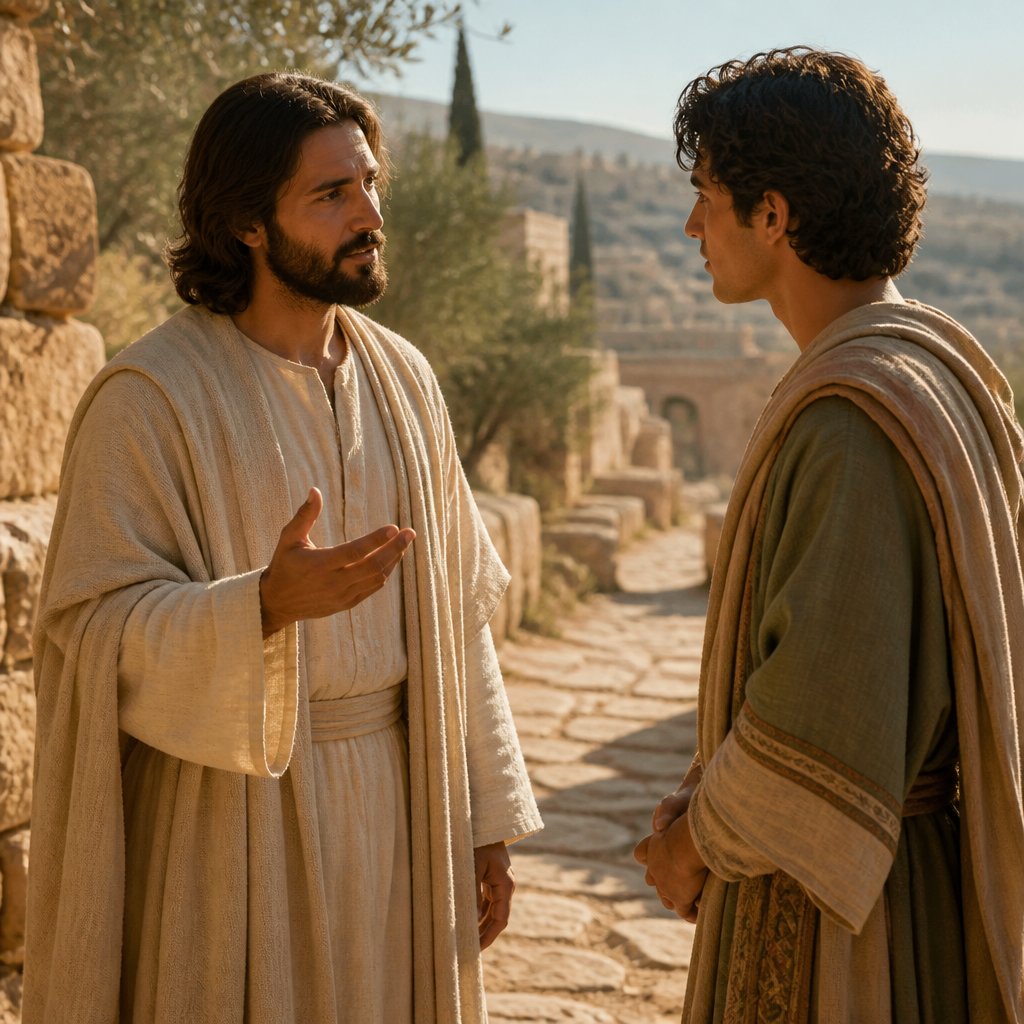
Matthew 19:17 from the King James Version (KJV) of the Bible reads:
"And he said unto him, Why callest thou me good? there is none good but one, that is, God: but if thou wilt enter into life, keep the commandments."
This verse is part of a larger passage in which a rich young ruler comes to Jesus and asks what he must do to inherit eternal life. This encounter is recorded in the Synoptic Gospels of Matthew, Mark, and Luke, each of which provides slightly different details about the interaction. In this particular verse, the rich young ruler is addressing Jesus as "Good Master" and asking him what good thing he must do to inherit eternal life.
This verse speaks to several important themes within Christianity, including the nature of goodness, the role of commandments in salvation, and the divinity of Jesus.
One of the central themes of this verse is the nature of goodness. Jesus questions why the rich young ruler is calling him good, as there is only one who is truly good, and that is God. This statement is significant because it challenges the understanding of human goodness and emphasizes that only God is ultimately good. It also prompts the rich young ruler to consider the source of goodness and recognize God as the ultimate standard of goodness. This theme of goodness aligns with the broader biblical teaching that all have sinned and fall short of the glory of God (Romans 3:23), and that true goodness comes from God alone.
Another important theme in this verse is the role of commandments in achieving eternal life. Jesus tells the rich young ruler that if he wants to enter into life, he must keep the commandments. This statement reflects the Jewish understanding of the law as a means of righteousness and obedience to God. It also speaks to the broader Christian understanding of the importance of obedience to God's commands as an expression of faith and love for God. This theme underscores the idea that salvation is not based on merit or personal achievement, but on a response of obedience to God's will.
Additionally, this verse has significance in affirming the divinity of Jesus. In questioning why the rich young ruler calls him good, Jesus is implicitly pointing to his own divine nature. By asserting that only God is truly good, Jesus is inviting the rich young ruler to consider his own identity and recognize that he is more than just a "good teacher" or "good master." This theme of Jesus' divinity is central to the Christian faith, as it affirms that Jesus is not just a moral example or religious leader, but the Son of God who offers salvation and eternal life.
In terms of the historical and literary context, this verse is situated within the larger narrative of Jesus' ministry and his interactions with various individuals seeking spiritual guidance. In the broader context of the Gospels, this encounter with the rich young ruler serves as a powerful teaching moment in which Jesus addresses important theological and ethical issues.
In terms of symbolism, the rich young ruler can be seen as representative of those who come to Jesus seeking answers and guidance on the path to eternal life. His question about what good thing he must do reflects a common human concern about moral achievement and assurance of salvation. Jesus' response challenges the ruler to reconsider his understanding of goodness and righteousness, and to recognize the true source of life and goodness in God.
In conclusion, Matthew 19:17 is a rich and multifaceted verse that touches on important themes of goodness, commandments, and the divinity of Jesus. It offers valuable insights into the nature of salvation and the significance of obedience to God's will. It is a verse that invites contemplation and reflection on the nature of true goodness and the path to eternal life.
Have questions about Matthew 19:17?
Dive deeper into this scripture with Bible Chat — an AI-powered tool for exploring God's Word through conversation. Ask questions, get context, and grow in your understanding of the Bible.
Get Our Apps


Matthew 19:17 Artwork

Matthew 19:17 - "And he said unto him, Why callest thou me good? there is none good but one, that is, God: but if thou wilt enter into life, keep the commandments."
"And he said unto him, Why callest thou me good? there is none good but one, that is, God: but if thou wilt enter into life, keep the commandments." - Matthew 19:17

Matthew 19:16-17

Matthew 17:19 - "Then came the disciples to Jesus apart, and said, Why could not we cast him out?"

"Then came the disciples to Jesus apart, and said, Why could not we cast him out?" - Matthew 17:19

"Then came the disciples to Jesus apart, and said, Why could not we cast him out?" - Matthew 17:19

Matthew 17:17-18

Matthew 17:17-18

matthew 28:19

Matthew 19:26

matthew 28:19

Matthew 17:20

Matthew 6:17

Matthew 17:20

Luke 10:17-19

Matthew 19:13

Luke 10:17-19

Matthew 19:19 - "Honour thy father and thy mother: and, Thou shalt love thy neighbour as thyself."

Matthew 19:16-17 - "Just then a man came up to Jesus and asked, “Teacher, what good thing must I do to get eternal life?” “Why do you ask me about what is good?” Jesus replied. “There is only One who is good. If you want to enter life, keep the commandments.”"

Matthew 28:19-20

Genesis 17-19

Genesis 19-17

Matthew 3:13-17

Matthew 17:14-15

Matthew 6:17-18

Matthew 17:14-21

Matthew 28: 19-20

Matthew 28:19-20

Matthew 28:19-20

Philippians 3:17-19