What does Matthew 18:30 mean?
"And he would not: but went and cast him into prison, till he should pay the debt." - Matthew 18:30
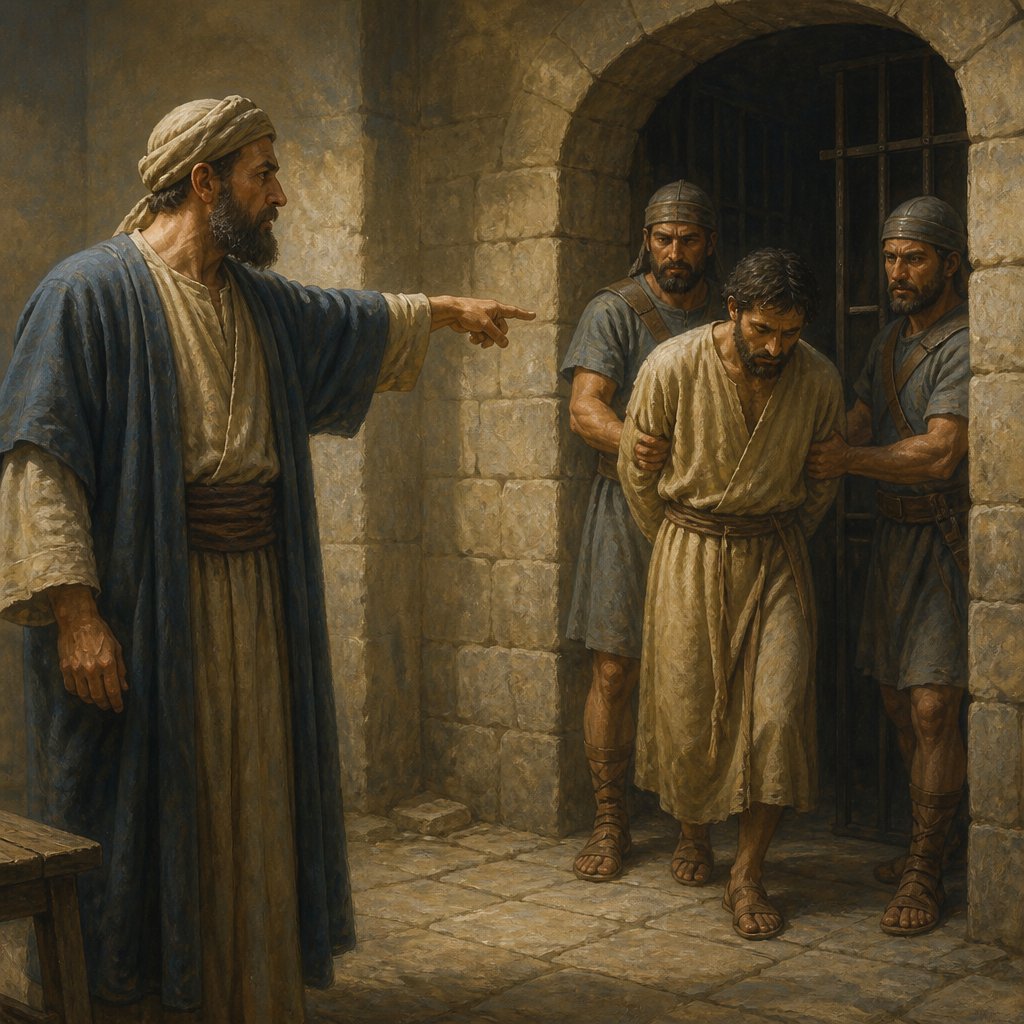
Matthew 18:30 (KJV) says, "And he would not: but went and cast him into prison, till he should pay the debt." This verse comes from the parable of the unforgiving servant, a powerful and convicting story told by Jesus to emphasize the importance of forgiveness. In this parable, a king forgives the immense debt of a servant, only for that servant to turn around and refuse to forgive a much smaller debt owed to him by a fellow servant.
This particular verse falls within the conversation between the king and the unforgiving servant after the king has learned about the servant's actions. The king, furious at the servant's lack of mercy, delivers a swift and harsh punishment - casting the servant into prison until he could pay back the entire debt. This verse serves as a sobering reminder of the consequences of withholding forgiveness and mercy.
The context of this verse is crucial to understanding its significance. The parable of the unforgiving servant is found in the 18th chapter of the Gospel of Matthew, in a section where Jesus is teaching his disciples about the importance of humility, forgiveness, and the kingdom of heaven. The chapter begins with the disciples asking Jesus who the greatest in the kingdom of heaven is, and Jesus responds by calling a little child to him and teaching that whoever humbles themselves like a child is the greatest in the kingdom of heaven (Matthew 18:1-4).
The parable of the unforgiving servant comes immediately after Jesus' teaching on how to handle a brother who sins against you - emphasizing the importance of forgiveness and reconciliation within the community of believers. The parable itself is a powerful illustration of God's mercy and the expectation for us to extend that same mercy to others. The king in the parable represents God, who forgives us of an insurmountable debt (our sin) through the sacrifice of Jesus Christ on the cross. The unforgiving servant represents us, who, having received such tremendous mercy, are expected to extend that same mercy to others.
The themes present in this verse and the surrounding parable include forgiveness, mercy, grace, and justice. The parable illustrates the immense debt of sin that we owe to God and the overwhelming mercy and grace that he extends to us through Jesus' sacrifice. It also highlights the expectation for us, as recipients of this mercy, to extend the same forgiveness and mercy to others. The contrast between the king's forgiveness and the servant's refusal to forgive serves as a powerful reminder of the consequences of harboring unforgiveness and the call to emulate the mercy we have received.
Symbolism is also present in this verse, as the casting of the servant into prison represents the consequences of withholding forgiveness. This image serves as a warning of the spiritual imprisonment that results from a heart hardened against mercy and forgiveness. The debt itself is symbolic of our sin, and the impossibility of paying it back on our own. The king's act of forgiveness represents God's offer of salvation and grace, and the servant's refusal to extend that same forgiveness symbolizes our own struggle with extending grace to others.
Overall, Matthew 18:30 (KJV) presents a convicting reminder of the importance of forgiveness and mercy. It challenges us to examine our own hearts and consider the immense mercy and grace that God has extended to us, and how we are called to extend that same mercy to others. It also serves as a warning of the consequences of harboring unforgiveness and the spiritual imprisonment that results. This verse carries a powerful message that is relevant for all believers, calling us to embody the mercy and grace that we have received from God.
Have questions about Matthew 18:30?
Dive deeper into this scripture with Bible Chat — an AI-powered tool for exploring God's Word through conversation. Ask questions, get context, and grow in your understanding of the Bible.
Get Our Apps


Matthew 18:30 Artwork

Matthew 18:30 - "And he would not: but went and cast him into prison, till he should pay the debt."
"And he would not: but went and cast him into prison, till he should pay the debt." - Matthew 18:30

Matthew 6:30

Matthew 5:30

Matthew 5:30

Genesis 18-30

Matthew 24:30-31

Matthew 24:30-31

Matthew 24:30-31

Matthew 24:30-31

Matthew 24:30-31

Matthew 24:30-31

Matthew 24:30-31

Matthew 24:30-31

Matthew 24:30-31

Matthew 24:30-31

Matthew 11:30 - "For my yoke is easy, and my burden is light."

Matthew 10:30 - "But the very hairs of your head are all numbered."

1 Samuel 30:18

Matthew 19:30 - "But many that are first shall be last; and the last shall be first."

Matthew 26:30 - "And when they had sung an hymn, they went out into the mount of Olives."

Matthew 18:6

Matthew 27:30 - "And they spit upon him, and took the reed, and smote him on the head."

Matthew 18:10

Matthew 18:6

Matthew 6:18

Matthew 18:20

Matthew 12:30 - "He that is not with me is against me; and he that gathereth not with me scattereth abroad."

Matthew 8:30 - "And there was a good way off from them an herd of many swine feeding."

Matthew 22:30 - "For in the resurrection they neither marry, nor are given in marriage, but are as the angels of God in heaven."