What does Matthew 18:24 mean?
"And when he had begun to reckon, one was brought unto him, which owed him ten thousand talents." - Matthew 18:24
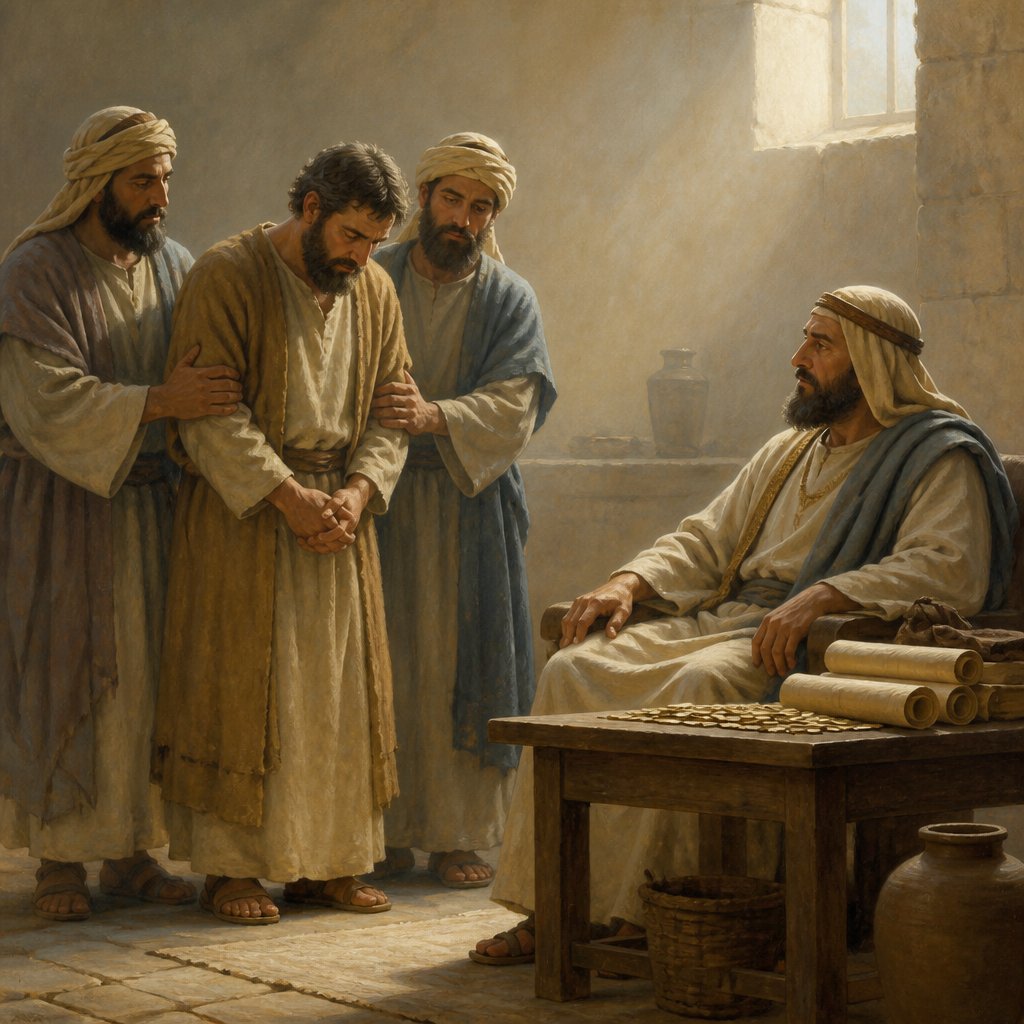
Matthew 18:24 (KJV) says, "And when he had begun to reckon, one was brought unto him, which owed him ten thousand talents."
In order to fully understand the meaning and context of this verse, it is important to consider the broader passage in which it appears. In Matthew 18, Jesus is teaching his disciples about the importance of forgiveness and the value of every individual in the eyes of God. The chapter begins with the disciples asking Jesus who is the greatest in the kingdom of heaven, to which Jesus responds by calling a little child to him and telling the disciples that they must become like little children in order to enter the kingdom of heaven. He also warns them about causing others to stumble and instructs them on the process of reconciliation within the community of believers.
The verse in question, Matthew 18:24, is part of a parable that Jesus tells to illustrate the concept of forgiveness. In the parable, a king decides to settle accounts with his servants. As he begins to reckon, a servant who owes him an exorbitant amount, ten thousand talents, is brought before him. This amount is incredibly large, as a single talent was equivalent to around 20 years' worth of wages for a laborer at the time. Therefore, owing ten thousand talents would have been an astronomical sum, representing a debt that could never possibly be repaid by the servant.
The symbolism and themes present in this verse are profound and offer valuable insights into the nature of God's forgiveness and the importance of mercy and grace. The servant's debt represents the sins of humanity, which are so great that they can never be repaid through our own efforts. Just as the servant owed an unpayable debt, so too do we owe a debt of sin to God that we cannot possibly repay on our own.
In the broader context of the chapter, Jesus teaches that just as the king in the parable forgave the servant's immense debt, so too does God offer forgiveness and grace to those who repent and seek reconciliation with Him. The parable serves as a powerful reminder of the depth of God's mercy and the importance of extending that same mercy and forgiveness to others.
The parable also emphasizes the fundamental equality of all people in the eyes of God. Regardless of the size of the debt owed, each person is valued and loved by God, and each person is in need of His forgiveness. This underscores the universal need for repentance and the universal availability of God's grace.
Furthermore, the parable serves as a cautionary tale about the dangers of failing to extend forgiveness to others. Later in the chapter, Jesus underscores the importance of forgiving others by telling his disciples the parable of the unforgiving servant, who, after being forgiven a great debt by his master, refuses to forgive a much smaller debt owed to him by a fellow servant. Through this parable, Jesus warns that those who do not forgive others will not receive forgiveness themselves.
In conclusion, Matthew 18:24 from the King James Version of the Bible offers a profound and compelling insight into the nature of God's forgiveness, the equality of all people in His eyes, and the importance of extending forgiveness to others. The verse and the broader passage in which it appears serve as a powerful reminder of the depth of God's mercy and the universal need for repentance and reconciliation.
Have questions about Matthew 18:24?
Dive deeper into this scripture with Bible Chat — an AI-powered tool for exploring God's Word through conversation. Ask questions, get context, and grow in your understanding of the Bible.
Get Our Apps


Matthew 18:24 Artwork

Matthew 18:24 - "And when he had begun to reckon, one was brought unto him, which owed him ten thousand talents."

"And when he had begun to reckon, one was brought unto him, which owed him ten thousand talents." - Matthew 18:24

Matthew 24:18 - "Neither let him which is in the field return back to take his clothes."

Matthew 1:18-24 The angel of the Lord appeared to Joseph in a dream

"Neither let him which is in the field return back to take his clothes." - Matthew 24:18

Matthew 24:35

Matthew 24:35

Matthew 24:35

Matthew 24:35

Matthew 24:35

Matthew 24:35

Matthew 24:35

Matthew 24:35

Matthew 24:35

Matthew 24:35

Matthew 24:27

Matthew 24:15

Matthew 6:24

Matthew 24:8

Matthew 6:24

Matthew 6:24

Matthew 6:24

Matthew 24:8 - "All these are the beginning of sorrows."

Matthew 24:30-31

Matthew 24:30-31

Matthew 24:30-31

Matthew 24:30-31

Matthew 24:30-31

Matthew 24:30-31

Matthew 24:30-31