What does Matthew 17:9 mean?
"And as they came down from the mountain, Jesus charged them, saying, Tell the vision to no man, until the Son of man be risen again from the dead." - Matthew 17:9
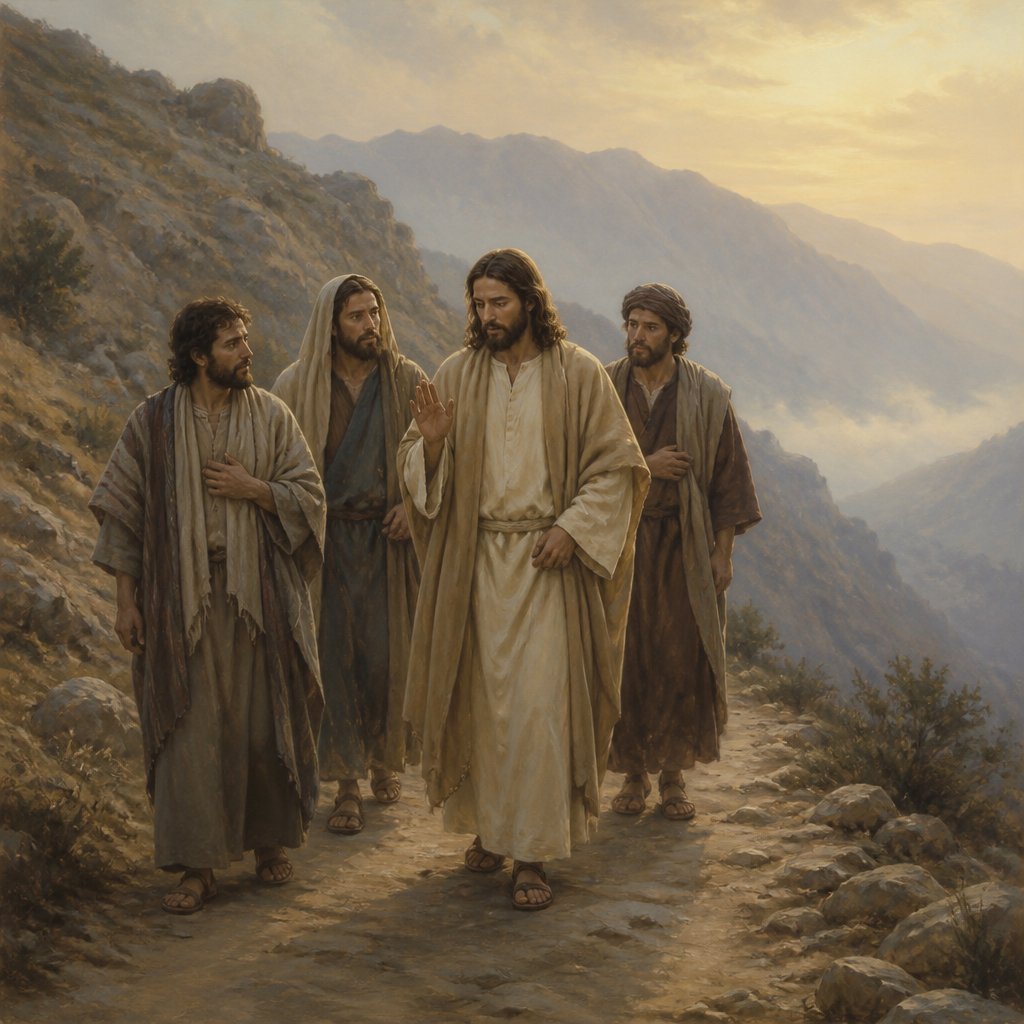
Matthew 17:9 in the King James Version of the Bible (KJV) reads, "And as they came down from the mountain, Jesus charged them, saying, Tell the vision to no man, until the Son of man be risen again from the dead." This verse follows the Transfiguration of Jesus, where Peter, James, and John witness Jesus' divine glory on a high mountain. As they descend from the mountain, Jesus instructs them to keep the vision they saw to themselves until after he has risen from the dead.
The context of this verse is essential for understanding its significance. The Transfiguration marks a pivotal moment in Jesus' ministry, where Peter, James, and John are given a glimpse of his divine nature. They witness Jesus speaking with Moses and Elijah, representing the Law and the Prophets, and hear the voice of God affirming Jesus as his Son. This event serves as a confirmation of Jesus' identity and mission for both the disciples and for Jesus himself as he prepares for his impending death and resurrection.
The charge to keep the vision a secret until after Jesus' resurrection is significant because it speaks to the timing and purpose of Jesus' divine revelation. It suggests that the full revelation of Jesus' glory and identity should be unveiled at the appropriate time, which is after his resurrection. This instruction also serves to prevent any potential misunderstanding or misinterpretation of the vision by those who were not present.
One theme that emerges from this verse is the concept of timing and divine purpose. Jesus' charge to keep the vision secret until after his resurrection highlights the precision and intentionality of God's plan for revealing his Son to the world. It also underscores the importance of obedience and trust in following Jesus' instructions, even when they may seem counterintuitive or difficult to understand.
Another theme is the secrecy of divine revelation. Throughout the Gospels, Jesus often instructs those who witness his miracles or divine manifestations to keep them secret. This is known as the "Messianic Secret," a motif in the Gospel of Mark where Jesus conceals his identity as the Messiah until the appropriate time. In the case of the Transfiguration, the disciples are given a profound revelation of Jesus' true nature, but they are charged with keeping it concealed until after his resurrection. This theme raises questions about the nature of faith, knowledge, and the role of secrecy in God's plan.
The symbolism in this verse is rich and layered, reflecting the complexities of Jesus' identity and mission. The mountain itself symbolizes the elevated spiritual experience and proximity to God. The Transfiguration represents a glimpse of the divine glory that Jesus possesses as the Son of God. The presence of Moses and Elijah also holds symbolic significance, connecting Jesus to the lineage of Israel's prophets and affirming his fulfillment of the Law and the Prophets.
The charge to keep the vision of the Transfiguration secret until after Jesus' resurrection symbolizes the unfolding of God's plan and the gradual revelation of Jesus' true identity. It emphasizes the transformative power of Jesus' resurrection and the subsequent spread of the Gospel message. It also serves as a reminder of the disciples' role in carrying out Jesus' mission and spreading the good news to the world.
In conclusion, Matthew 17:9 in the King James Version of the Bible offers profound insights into the timing, purpose, and secrecy of divine revelation. It highlights the importance of obedience, trust, and discernment in following Jesus' instructions and understanding God's plan. The themes of timing and secrecy, as well as the rich symbolism of the Transfiguration, invite readers to contemplate the mystery and depth of Jesus' identity and mission.
Have questions about Matthew 17:9?
Dive deeper into this scripture with Bible Chat — an AI-powered tool for exploring God's Word through conversation. Ask questions, get context, and grow in your understanding of the Bible.
Get Our Apps


Matthew 17:9 Artwork

Matthew 17:9 - "And as they came down from the mountain, Jesus charged them, saying, Tell the vision to no man, until the Son of man be risen again from the dead."
"And as they came down from the mountain, Jesus charged them, saying, Tell the vision to no man, until the Son of man be risen again from the dead." - Matthew 17:9

Matthew 9:17 - "Neither do men put new wine into old bottles: else the bottles break, and the wine runneth out, and the bottles perish: but they put new wine into new bottles, and both are preserved."

mat 17:1-9

Matthew 17:17-18

Matthew 17:17-18

Matthew 17:20

Matthew 6:17

Matthew 17:20

Matthew 9:21

Matthew 19:16-17

Matthew 6:17-18

Matthew 17:14-21

Matthew 17:14-15

Matthew 3:13-17

Matthew 9:21-22

Matthew 9:21-22

Matthew 9:21-22

Matthew 9:21-22

Matthew 9:21-22

Matthew 2:9

Matthew 9:9 - "¶ And as Jesus passed forth from thence, he saw a man, named Matthew, sitting at the receipt of custom: and he saith unto him, Follow me. And he arose, and followed him."

Matthew 2:9

Matthew 2:17 - "Then was fulfilled that which was spoken by Jeremy the prophet, saying,"

Matthew 17:21 - "Howbeit this kind goeth not out but by prayer and fasting."

Matthew 9:16-17 - "No one sews a patch of unshrunk cloth on an old garment, for the patch will pull away from the garment, making the tear worse. Neither do people pour new wine into old wineskins. If they do, the skins will burst; the wine will run out and the wineskins will be ruined. No, they pour new wine into new wineskins, and both are preserved."

Rev 9:17

Matthew 12:17 - "That it might be fulfilled which was spoken by Esaias the prophet, saying,"

Matthew 6:9-13

Matthew 17:7 - "And Jesus came and touched them, and said, Arise, and be not afraid."