What does Matthew 17:16 mean?
"And I brought him to thy disciples, and they could not cure him." - Matthew 17:16
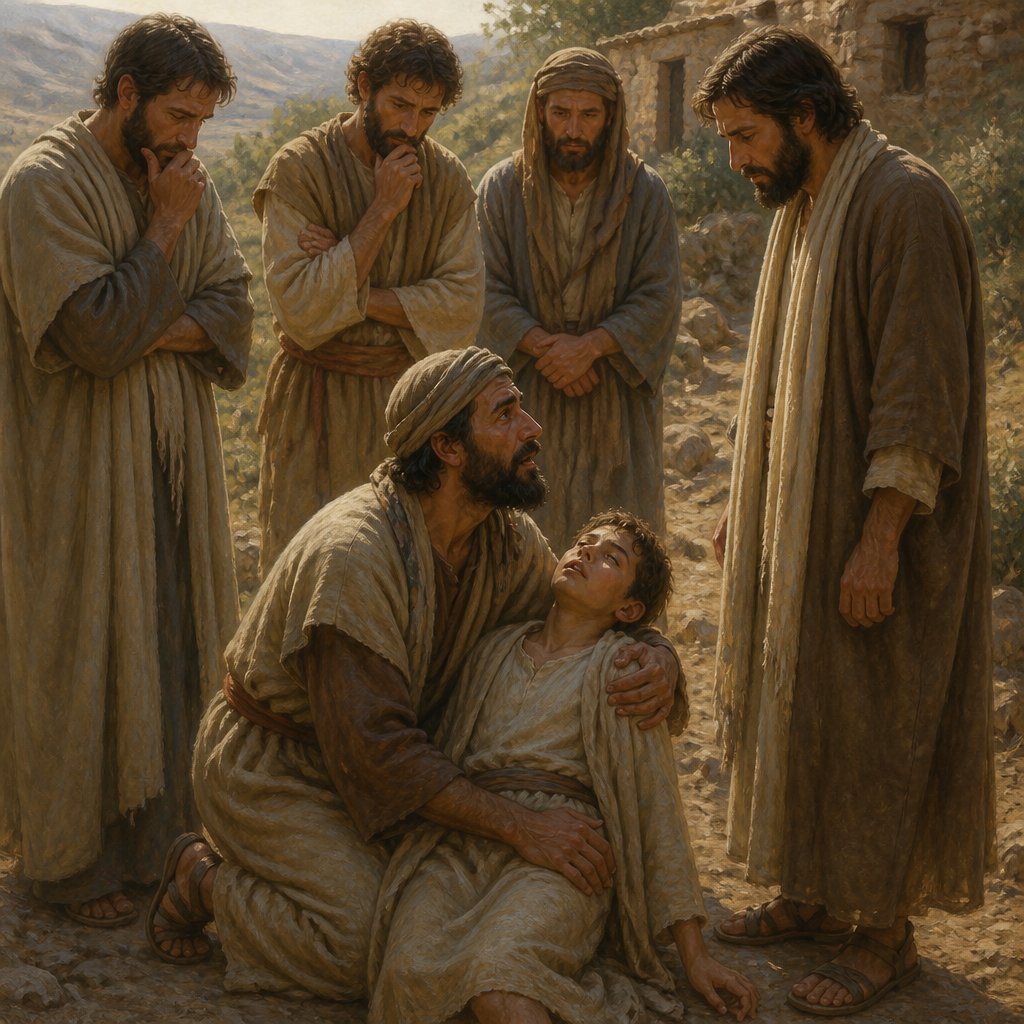
Matthew 17:16 (KJV) reads, "And I brought him to thy disciples, and they could not cure him." This verse is part of a longer passage in which Jesus heals a boy who was possessed by a demon. In this verse, a man brings his son, who is afflicted by a demon, to the disciples of Jesus for healing. However, the disciples are unable to cure the boy, leading to frustration and disappointment on the part of the father.
This passage is significant for several reasons, and it offers many important lessons for believers. First and foremost, it demonstrates the limitations of human abilities and the necessity of relying on the power of God. The disciples, who had witnessed Jesus perform many miracles, were unable to heal the boy on their own. This highlights the fact that even those who are close to Jesus and have a strong faith may still struggle with their own limitations.
The passage also emphasizes the importance of faith. In the verses preceding Matthew 17:16, Jesus rebukes the disciples for their lack of faith, stating, "O faithless and perverse generation, how long shall I be with you? how long shall I suffer you? bring him hither to me" (Matthew 17:17, KJV). Jesus then proceeds to heal the boy, highlighting the connection between faith and miracles.
Additionally, this passage points to the sovereignty and power of Jesus Christ. Despite the disciples' inability to heal the boy, Jesus is able to perform the miracle effortlessly. This serves as a reminder to believers that Jesus is the ultimate source of healing and deliverance, and that nothing is impossible for him.
The context of this passage is also important for understanding its significance. In the verses leading up to Matthew 17:16, Jesus and three of his disciples, Peter, James, and John, had just experienced the Transfiguration. During this event, Jesus' appearance was transformed, and he was joined by the Old Testament figures Moses and Elijah. This incredible display of divine glory served as a confirmation of Jesus' identity as the Son of God.
In light of the Transfiguration, the inability of the disciples to heal the boy takes on even greater significance. It serves as a contrast to the extraordinary display of divine power and signals the disciples' need for further growth in their understanding and faith. This demonstrates that even those who have witnessed remarkable demonstrations of God's power may still struggle with doubt and inadequacy.
Furthermore, the passage contains important symbolism. The boy's affliction by a demon represents the larger spiritual battle between good and evil. The disciples' inability to cure him serves as a reminder of the limitations of human efforts in the face of such spiritual forces. However, Jesus' ultimate victory over the demon highlights his authority over all supernatural powers, offering hope and reassurance to believers.
In conclusion, Matthew 17:16 conveys several important themes, including the limitations of human abilities, the importance of faith, and the sovereignty and power of Jesus Christ. It serves as a reminder that even those who are close to Jesus may still struggle with doubt and inadequacy, and that true healing and deliverance come from relying on the strength and authority of Jesus. This passage continues to offer encouragement and instruction to believers, emphasizing the need to place their trust in the power of God.
Have questions about Matthew 17:16?
Dive deeper into this scripture with Bible Chat — an AI-powered tool for exploring God's Word through conversation. Ask questions, get context, and grow in your understanding of the Bible.
Get Our Apps


Matthew 17:16 Artwork

Matthew 17:16 - "And I brought him to thy disciples, and they could not cure him."
"And I brought him to thy disciples, and they could not cure him." - Matthew 17:16

Matthew 19:16-17

Matthew 16:17 - "And Jesus answered and said unto him, Blessed art thou, Simon Bar-jona: for flesh and blood hath not revealed it unto thee, but my Father which is in heaven."

Matthew 11:16-17 - "But to what shall I compare this generation? It is like children sitting in the marketplaces and calling to their playmates, 'We played the flute for you, and you did not dance; we sang a dirge, and you did not mourn.'"

Matthew 17:17-18

Matthew 17:17-18

Matthew 3:16

Matthew 3:16

Matthew 3:16

Matthew 17:20

Matthew 6:17

Matthew 17:20

Matthew 16:25

Matthew 8:16-17 - "When evening came, many who were demon-possessed were brought to him, and he drove out the spirits with a word and healed all the sick. This was to fulfill what was spoken through the prophet Isaiah: "He took up our infirmities and bore our diseases.""

Matthew 16:16 - "And Simon Peter answered and said, Thou art the Christ, the Son of the living God."

Matthew 19:16-17 - "Just then a man came up to Jesus and asked, “Teacher, what good thing must I do to get eternal life?” “Why do you ask me about what is good?” Jesus replied. “There is only One who is good. If you want to enter life, keep the commandments.”"

Galatians 5:16-17

Galatians 5:16-17

Matthew 3:13-17

Matthew 17:14-15

Matthew 6:17-18

Matthew 17:14-21

1 corinthians 3:16-17

1 corinthians 3:16-17

1 corinthians 3:16-17

Genesis 17-16

Romans 16:17

Matthew 9:16-17 - "No one sews a patch of unshrunk cloth on an old garment, for the patch will pull away from the garment, making the tear worse. Neither do people pour new wine into old wineskins. If they do, the skins will burst; the wine will run out and the wineskins will be ruined. No, they pour new wine into new wineskins, and both are preserved."

Romans 16:17