What does Matthew 16:20 mean?
"Then charged he his disciples that they should tell no man that he was Jesus the Christ." - Matthew 16:20

Matthew 16:20 in the King James Version (KJV) states, "Then charged he his disciples that they should tell no man that he was Jesus the Christ." This verse comes immediately after Peter's confession that Jesus is the Christ, the Son of the living God, and Jesus' subsequent blessing and commendation of Peter for his faith and insight.
This verse is a pivotal moment in the narrative of the Gospel of Matthew, as it marks a significant turning point in Jesus' ministry. Up until this point, Jesus had been performing miracles, preaching the kingdom of God, and gathering followers, all while keeping a relatively low profile and instructing those who witnessed his miracles and teachings to keep his identity a secret. However, after Peter's confession, Jesus charges his disciples to keep his identity as the Messiah a secret, an instruction known as the "Messianic Secret."
The "Messianic Secret" is a recurring theme in the Gospel of Matthew and is a source of scholarly debate among biblical scholars and theologians. It refers to Jesus' instructions to his followers not to reveal his true identity as the Messiah, despite all of the evidence and support for his claim. Some scholars believe that this secrecy was a tactical measure to avoid premature conflict with religious authorities, premature persecution, or misinterpretation of his mission. Others see it as a way for Jesus to control the timing and manner of his public revelation as the Messiah, in line with his divine plan and purpose.
The charge for secrecy also reflects Jesus' understanding of the political and religious climate of his time. The Jewish people were longing for a Messiah who would liberate them from Roman oppression and establish a kingdom of God on earth. By instructing his disciples to keep his identity a secret, Jesus was not yet ready to fully reveal his identity and confront the misconceptions and expectations of the people. He wanted to first teach them about the true nature of his mission, which was not focused on political liberation, but on spiritual redemption and the establishment of the kingdom of God in people's hearts.
The Messiah's secret also reflects Jesus' humility and selflessness. He did not seek fame or personal glory for his divine identity as the Son of God. Instead, he focused on serving others, teaching them, and ultimately sacrificing himself for the salvation of humanity. This verse illustrates Jesus' intentional restraint and selflessness, which serves as a model for his followers to prioritize the work of God over personal recognition and ambition.
Furthermore, the "Messianic Secret" fits into the larger theme of the fulfillment of Old Testament prophecies in the Gospel of Matthew. Throughout the Gospel, Matthew emphasizes how Jesus' life and ministry fulfill the prophecies of the Hebrew Scriptures, including his birth, teachings, miracles, death, and resurrection. The charge for secrecy aligns with the Old Testament prophecies that anticipated a suffering servant and a humble Messiah, rather than a conquering hero or political leader.
Additionally, the "Messianic Secret" serves as a theological motif in the Gospel of Matthew, emphasizing the paradoxical nature of Jesus' identity as both fully divine and fully human. The charge for secrecy underscores the mystery and complexity of Jesus' dual nature as the Son of God and the Son of Man, an essential doctrine in Christian theology.
In conclusion, Matthew 16:20 in the King James Version encapsulates the complexity and significance of the "Messianic Secret" in the Gospel of Matthew. This verse is a pivotal moment in the narrative, reflecting Jesus' strategic approach to revealing his identity and mission, his humility and selflessness, the fulfillment of Old Testament prophecies, and the theological mystery of his dual nature. It invites readers to contemplate the deeper meaning of Jesus' identity and mission and to consider the implications of his charge for secrecy on their understanding of faith and discipleship.
Have questions about Matthew 16:20?
Dive deeper into this scripture with Bible Chat — an AI-powered tool for exploring God's Word through conversation. Ask questions, get context, and grow in your understanding of the Bible.
Get Our Apps


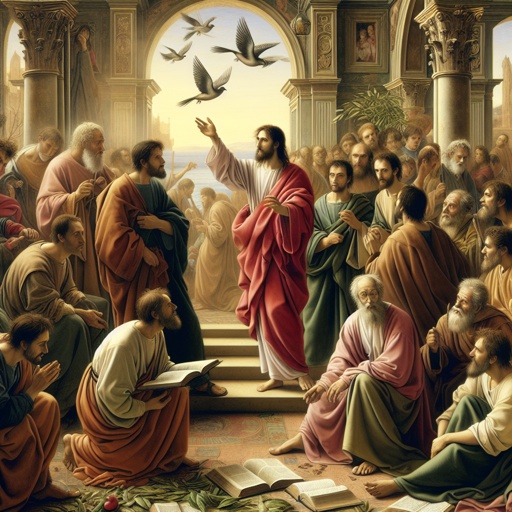
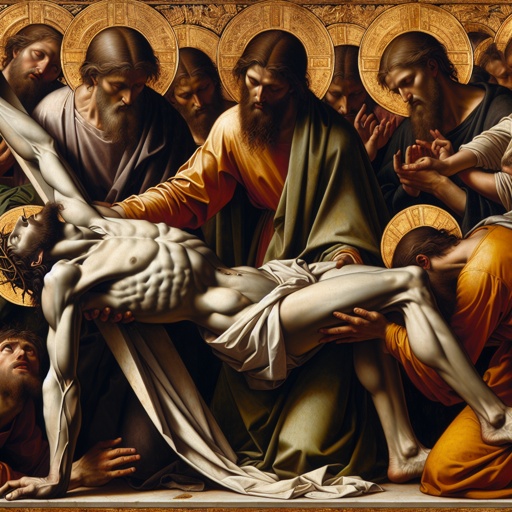
Matthew 16:20 Artwork

Matthew 16:20 - "Then charged he his disciples that they should tell no man that he was Jesus the Christ."

"Then charged he his disciples that they should tell no man that he was Jesus the Christ." - Matthew 16:20

Matthew 20:16 - "So the last shall be first, and the first last: for many be called, but few chosen."

"So the last shall be first, and the first last: for many be called, but few chosen." - Matthew 20:16

Matthew 3:16

Matthew 18:20

Matthew 17:20

Matthew 3:16

Matthew 3:16

matthew 20:3

Matthew 18:20

Matthew 18:20

Matthew 17:20

Matthew 16:25

Matthew 16:16 - "And Simon Peter answered and said, Thou art the Christ, the Son of the living God."

matthew 5 13-20

Matthew 28:19-20

Matthew 20:29-34

Matthew 28:19-20

Matthew 28: 19-20

Matthew 28:19-20

Matthew 15 : 1-20

Matthew 20:20 - "¶ Then came to him the mother of Zebedee's children with her sons, worshipping him, and desiring a certain thing of him."

Mark 16:20
Mark 16:20

Deuteronomy 20:16
Mark 16:20

Genesis 20-16

Mark 16:20

Deuteronomy 20:16