What does Matthew 16:13 mean?
"¶ When Jesus came into the coasts of Caesarea Philippi, he asked his disciples, saying, Whom do men say that I the Son of man am?" - Matthew 16:13
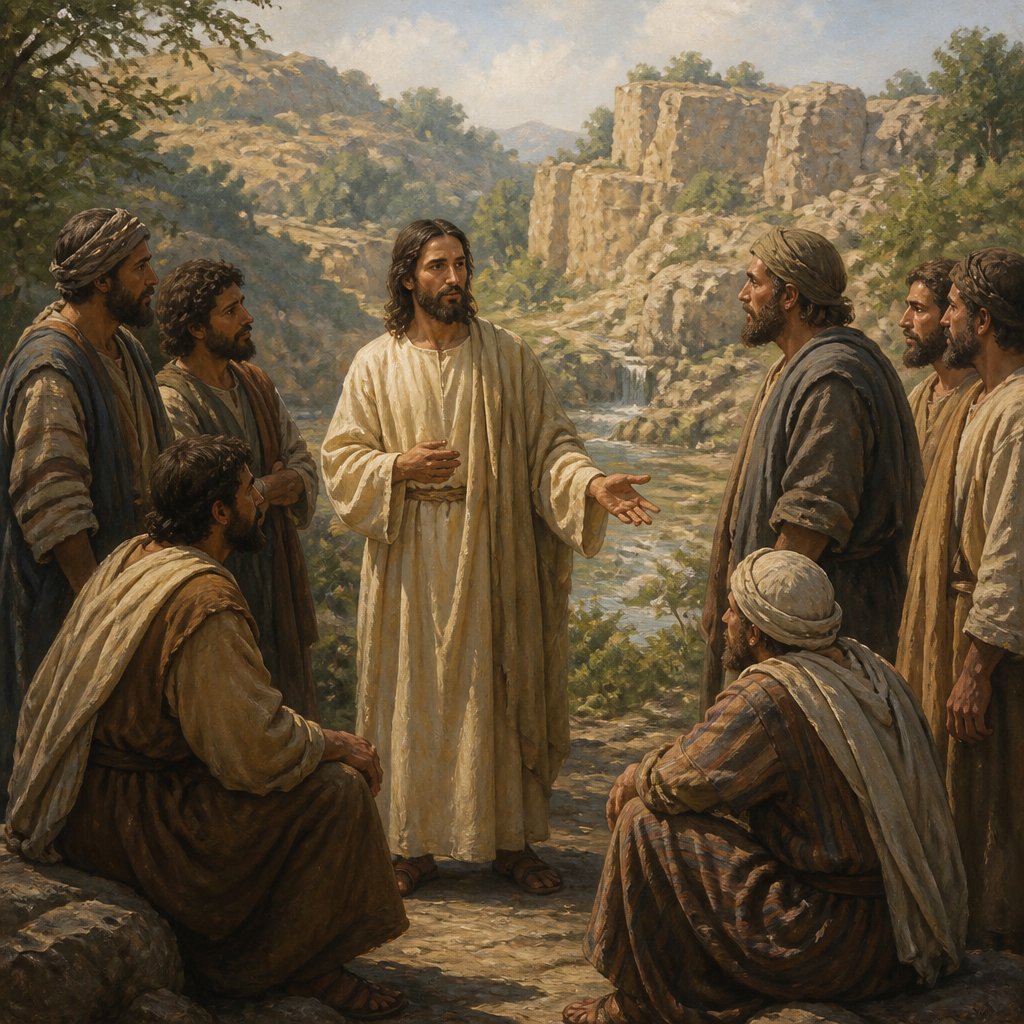
Matthew 16:13 from the King James Version (KJV) of the Bible reads, "When Jesus came into the coasts of Caesarea Philippi, he asked his disciples, saying, Whom do men say that I the Son of man am?"
This verse is a critical moment in the Gospel of Matthew, as it marks a turning point in Jesus' ministry. Jesus takes his disciples to a specific place, Caesarea Philippi, a predominantly Gentile region at the northernmost part of Israel. This location holds great significance, as it is here that Jesus begins to reveal his true identity to his disciples.
The question Jesus asks his disciples, "Whom do men say that I the Son of man am?" is a pivotal question because it prompts the disciples to reflect on who Jesus truly is. Throughout his ministry, Jesus had performed numerous miracles and taught with authority, leading many people to question his identity. This question forces the disciples to grapple with the opinions and beliefs of those around them and to confront their own understanding of Jesus' identity.
The disciples' responses to Jesus' question reflect the diverse opinions circulating about him at the time. Some said he was John the Baptist, others Elijah, Jeremiah, or one of the prophets. These responses reflect the confusion and uncertainty surrounding Jesus' true identity, and they demonstrate the various expectations and hopes people had for the Messiah. The disciples' responses reveal the prevailing belief that Jesus was a significant figure, perhaps even a prophet, but they fall short of recognizing him as the Messiah and Son of God.
The significance of this verse lies in Peter's response to Jesus' question. In Matthew 16:16, Peter responds, "Thou art the Christ, the Son of the living God." This confession marks a critical moment in Peter's understanding of Jesus' identity. Jesus responds to Peter, affirming the truth of his confession, and declares that this revelation was not something Peter came up with on his own, but was a revelation from God himself.
This confession of Jesus as the Christ, the Son of the living God, is a pivotal moment in the Gospel of Matthew and indeed in all of Christianity. It signifies a shift in the disciples' understanding of who Jesus is and serves as a foundational declaration of Jesus' true identity. This confession becomes the bedrock of the Christian faith, as the belief in Jesus as the Christ, the Son of God, is fundamental to Christian theology.
The location of this conversation is also significant. Caesarea Philippi was a place of great religious significance, as it was home to a temple dedicated to the god Pan, and was associated with various other pagan religious practices. By bringing his disciples to this place, Jesus was demonstrating that his identity as the Christ, the Son of God, transcended the religious and cultural beliefs of the time. This location underscores the universality of Jesus' identity and his mission to bring salvation to all people, regardless of their background or beliefs.
In addition to the themes of revelation and identity, this verse also highlights the importance of faith. Peter's confession of Jesus as the Christ, the Son of the living God, reflects a profound trust and belief in who Jesus is. This act of faith becomes a model for all believers, as it demonstrates the transformative power of recognizing Jesus' true identity and placing one's trust in him.
Ultimately, Matthew 16:13 is a significant verse in the Gospel of Matthew as it marks a critical moment in the disciples' understanding of Jesus' identity, and it serves as a foundation for the Christian faith. This verse highlights the themes of revelation, identity, and faith, and it emphasizes the universal significance of Jesus' identity as the Christ, the Son of God.
Have questions about Matthew 16:13?
Dive deeper into this scripture with Bible Chat — an AI-powered tool for exploring God's Word through conversation. Ask questions, get context, and grow in your understanding of the Bible.
Get Our Apps


Matthew 16:13 Artwork

Matthew 16:13 - "¶ When Jesus came into the coasts of Caesarea Philippi, he asked his disciples, saying, Whom do men say that I the Son of man am?"

Matthew 16:13-16 - "When Jesus came into the coasts of Caesarea Philippi, he asked his disciples, saying, Whom do men say that I the Son of man am? And they said, Some say that thou art John the Baptist: some, Elias; and others, Jeremias, or one of the prophets. He saith unto them, But whom say ye that I am? And Simon Peter answered and said, Thou art the Christ, the Son of the living God."
"¶ When Jesus came into the coasts of Caesarea Philippi, he asked his disciples, saying, Whom do men say that I the Son of man am?" - Matthew 16:13
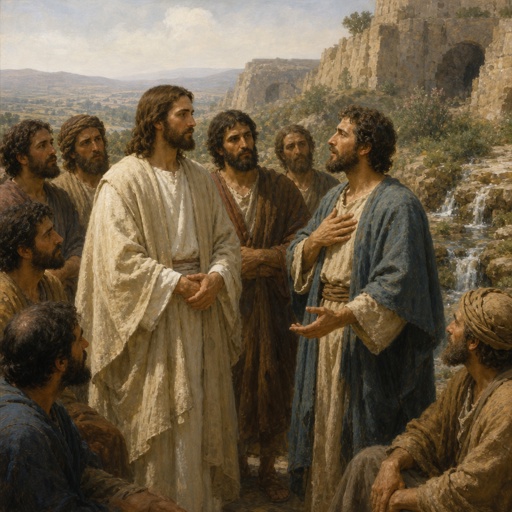
"When Jesus came into the coasts of Caesarea Philippi, he asked his disciples, saying, Whom do men say that I the Son of man am? And they said, Some say that thou art John the Baptist: some, Elias; and others, Jeremias, or one of the prophets. He saith unto them, But whom say ye that I am? And Simon Peter answered and said, Thou art the Christ, the Son of the living God." - Matthew 16:13-16

Matthew 13:16 - "But blessed are your eyes, for they see: and your ears, for they hear."

"But blessed are your eyes, for they see: and your ears, for they hear." - Matthew 13:16

Matthew 3:16

Matthew 13

Matthew 3:16

Matthew 3:16

Matthew 8:13

Matthew 8:13

Matthew 8:13

Matthew 13

Matthew 16:25

Matthew 7:13-14

Matthew 7:13-14

Matthew 7:13-14

Matthew 7:13-14

Matthew 7:13-14

Matthew 7:13-14

Matthew 7:13-14

Matthew 16:16 - "And Simon Peter answered and said, Thou art the Christ, the Son of the living God."

Matthew 7:13-14

Matthew 7:13-14

Matthew 7:13-14

Matthew 7:13-14

Matthew 2:13

Matthew 7:13

Matthew 13:8