What does Matthew 16:1 mean?
"The Pharisees also with the Sadducees came, and tempting desired him that he would shew them a sign from heaven." - Matthew 16:1
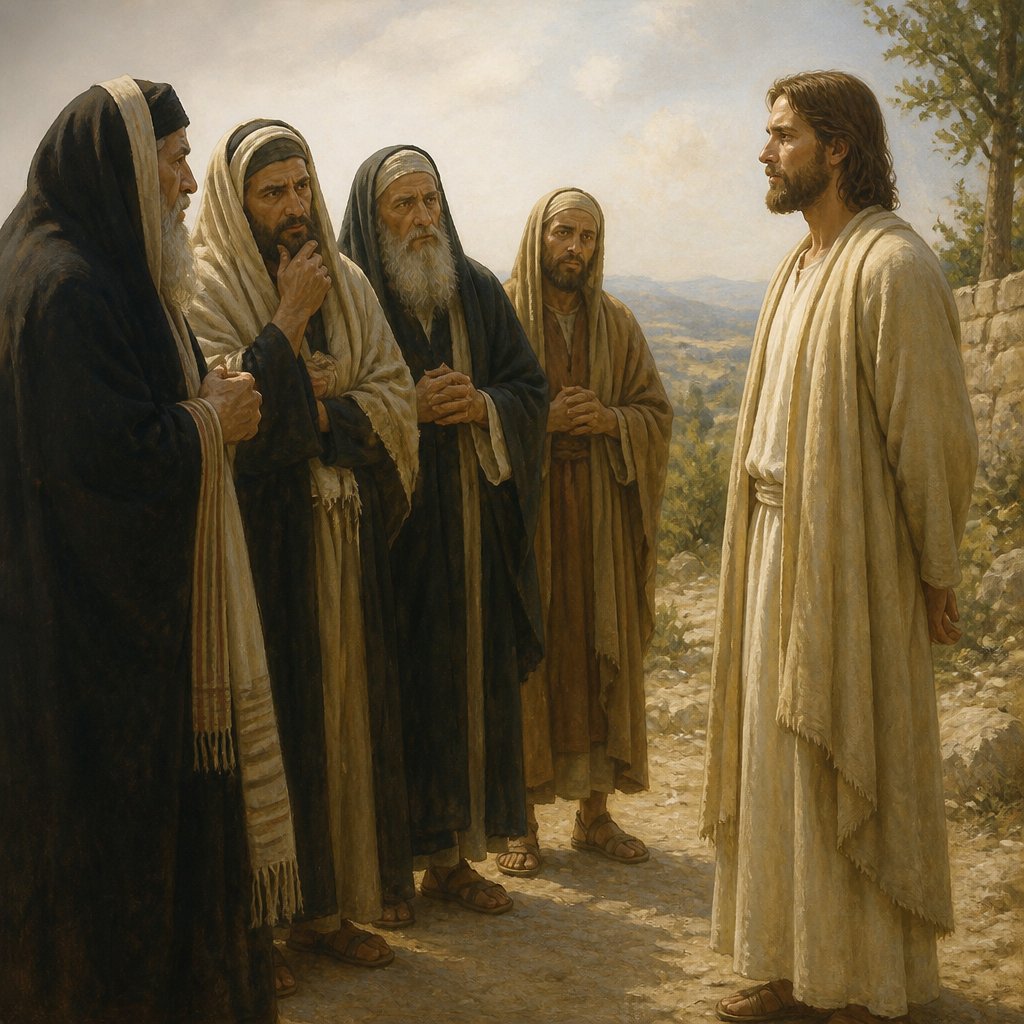
Matthew 16:1 in the King James Version (KJV) states, "The Pharisees also with the Sadducees came, and tempting desired him that he would shew them a sign from heaven." This verse is part of a larger passage in which the Pharisees and Sadducees confront Jesus and demand a sign from him to prove his authority.
To fully understand the significance of this verse, it is important to consider the broader context in which it is situated. In the preceding chapters of Matthew, Jesus performs numerous miracles and teaches the crowds, gaining a significant following in the process. His displays of divine power and wisdom draw the attention of religious leaders, including the Pharisees and Sadducees, who view Jesus as a threat to their own authority and teachings.
The Pharisees were a Jewish sect known for their strict adherence to the Mosaic law and their emphasis on personal piety. The Sadducees, on the other hand, were a group of Jewish leaders who rejected the oral tradition and placed their main emphasis on the written Torah. Despite their theological differences, the Pharisees and Sadducees shared a common concern about Jesus' growing influence and popularity among the people.
In this verse, the Pharisees and Sadducees approach Jesus with a specific intention in mind. They "tempt" him by requesting a sign from heaven, hoping to test his claims and discredit his authority. This demand for a sign reflects the disbelief and skepticism of the religious leaders, who refuse to accept Jesus' teachings without tangible evidence of his divine authority.
However, the Pharisees and Sadducees' request for a sign also reveals their failure to recognize the signs and miracles that Jesus has already performed. Throughout the Gospel of Matthew, Jesus heals the sick, casts out demons, and demonstrates his power over nature. These miracles serve as visible signs of his authority and the arrival of the kingdom of God. By asking for yet another sign, the religious leaders demonstrate their unwillingness to acknowledge the evidence of Jesus' divine identity that is already before them.
The confrontation between Jesus and the Pharisees and Sadducees in this verse also highlights the theme of faith and belief. Jesus consistently calls his followers to have faith in him and his teachings, even when they cannot see or understand everything clearly. This theme is echoed in the demand for a sign, as the religious leaders' refusal to believe in Jesus mirrors the doubt and unbelief of those who require visible proof before placing their trust in him.
Furthermore, the demand for a sign from heaven carries symbolic significance in the context of Jesus' mission. Throughout the Old Testament, God's people often requested signs or miracles as a way to confirm the presence and power of God. In the Book of Exodus, for example, Moses performs miraculous signs to demonstrate God's authority to the people of Israel and to Pharaoh. Similarly, the demand for a sign from Jesus reflects the expectation of divine validation and intervention.
In response to the Pharisees and Sadducees' request, Jesus delivers a rebuke, condemning them for their hypocrisy and failure to interpret the signs of the times. He reminds them of the signs of impending judgment and salvation that they have misinterpreted or ignored. This rebuke underscores the importance of discernment and spiritual insight in recognizing the significance of Jesus' ministry and the coming of the kingdom of God.
In conclusion, Matthew 16:1 captures a pivotal moment in Jesus' ministry, as the religious leaders confront him and demand a sign from heaven. This verse sheds light on the themes of faith, belief, and discernment, as well as the reluctance of some to accept Jesus' authority and teachings. It also underscores the significance of the signs and miracles that attest to Jesus' divine identity. Ultimately, this verse serves as a profound reminder of the importance of recognizing and responding to the signs of God's presence and work in the world.
Have questions about Matthew 16:1?
Dive deeper into this scripture with Bible Chat — an AI-powered tool for exploring God's Word through conversation. Ask questions, get context, and grow in your understanding of the Bible.
Get Our Apps


Matthew 16:1 Artwork

Matthew 16:1 - "The Pharisees also with the Sadducees came, and tempting desired him that he would shew them a sign from heaven."

"The Pharisees also with the Sadducees came, and tempting desired him that he would shew them a sign from heaven." - Matthew 16:1

Matthew 1:1-16 Jesus geneology.

Matthew 1:16 - "And Jacob begat Joseph the husband of Mary, of whom was born Jesus, who is called Christ."

Matthew 1:16 the husband of Mary, and Mary was the mother of Jesus who is called the Messiah.

Matthew 3:16

Matthew 3:16

Matthew 3:16

Matthew 16:25

Matthew 16:16 - "And Simon Peter answered and said, Thou art the Christ, the Son of the living God."

Matthew 19:16-17

Matthew 27:16 - "And they had then a notable prisoner, called Barabbas."

Matthew 12:16 - "And charged them that they should not make him known:"

Matthew 24:16 - "Then let them which be in Judaea flee into the mountains:"

"And Jacob begat Joseph the husband of Mary, of whom was born Jesus, who is called Christ." - Matthew 1:16

Matthew 13:16 - "But blessed are your eyes, for they see: and your ears, for they hear."

Matthew 26:16 - "And from that time he sought opportunity to betray him."

Matthew 15:16 - "And Jesus said, Are ye also yet without understanding?"

Matthew 17:16 - "And I brought him to thy disciples, and they could not cure him."

Matthew 16:20 - "Then charged he his disciples that they should tell no man that he was Jesus the Christ."

Matthew 14:16 - "But Jesus said unto them, They need not depart; give ye them to eat."

Matthew 16:7 - "And they reasoned among themselves, saying, It is because we have taken no bread."

Matthew 16:15 - "He saith unto them, But whom say ye that I am?"

Matthew 16:10 - "Neither the seven loaves of the four thousand, and how many baskets ye took up?"

Matthew 16:12 - "Then understood they how that he bade them not beware of the leaven of bread, but of the doctrine of the Pharisees and of the Sadducees."

"And Simon Peter answered and said, Thou art the Christ, the Son of the living God." - Matthew 16:16

Matthew 20:16 - "So the last shall be first, and the first last: for many be called, but few chosen."

Matthew 16:6 - "¶ Then Jesus said unto them, Take heed and beware of the leaven of the Pharisees and of the Sadducees."

"And they had then a notable prisoner, called Barabbas." - Matthew 27:16

Matthew 7:16 - "Ye shall know them by their fruits. Do men gather grapes of thorns, or figs of thistles?"