What does Matthew 15:2 mean?
"Why do thy disciples transgress the tradition of the elders? for they wash not their hands when they eat bread." - Matthew 15:2
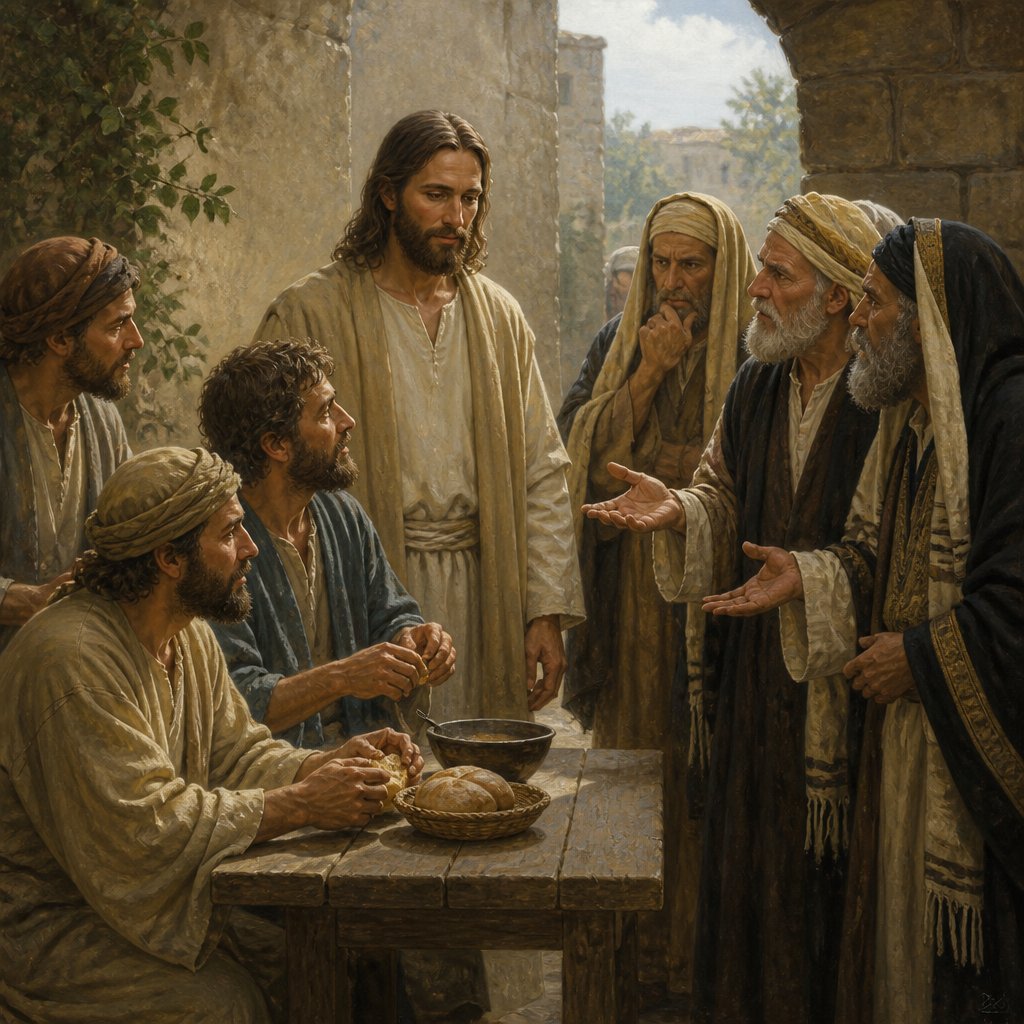
Matthew 15:2 in the King James Version (KJV) reads, "Why do thy disciples transgress the tradition of the elders? for they wash not their hands when they eat bread." This verse is part of a larger passage in which the Pharisees and scribes confront Jesus about his disciples' adherence to the traditions of the elders. The context of this verse is important for understanding its meaning and significance.
The Pharisees and scribes were religious leaders in Jesus' time who were known for their strict adherence to the traditions and laws of the Jewish faith. In this particular instance, they were questioning Jesus about why his disciples did not follow the tradition of washing their hands before eating. This ritual washing was not a commandment from God, but rather a tradition that had been passed down through generations as a way of maintaining ritual purity. The Pharisees and scribes were deeply concerned with preserving these traditions, and they saw the actions of Jesus' disciples as a disregard for the authority of the elders.
In response to their question, Jesus does not defend his disciples' actions but instead turns the focus back on the Pharisees and scribes, accusing them of placing their traditions above the commandments of God. This interaction serves as a teaching moment for Jesus, as he goes on to explain that true defilement comes from within the heart, not from what enters the body through food or drink. This passage highlights the tension between religious tradition and the true meaning of faith, and it challenges the reader to consider what truly defiles a person in the eyes of God.
One of the central themes of this verse is the conflict between tradition and spiritual truth. The Pharisees and scribes were so focused on upholding the traditions of the elders that they lost sight of the heart of the law. Jesus' criticism of their hypocrisy serves as a reminder to prioritize the teachings of God above man-made traditions. This theme is relevant not only in the context of the biblical narrative but also in the modern-day church, where there is often a tension between adhering to tradition and embracing the true spirit of Christianity.
Another theme that emerges from this verse is the concept of ritual purity. The Pharisees and scribes were deeply concerned with maintaining their ritual purity through strict adherence to traditions such as handwashing. However, Jesus challenges this understanding of purity by emphasizing the importance of inner righteousness and the purity of the heart. This theme resonates throughout the New Testament, as Jesus consistently teaches that true righteousness comes from a personal relationship with God, rather than outward rituals and observances.
In terms of symbolism, the act of handwashing in this verse serves as a metaphor for the Pharisees' outward displays of religious piety. The handwashing ritual was a visible, tangible symbol of their devotion to tradition, but Jesus uses it to point to the greater significance of inner purity. This symbolism reinforces the idea that true faith is more than just a set of outward practices; it requires a transformation of the heart and a commitment to living by the spirit of the law, rather than the letter.
In conclusion, Matthew 15:2 from the King James Version of the Bible provides a powerful commentary on the tension between tradition and spiritual truth, the importance of inner purity over outward rituals, and the hypocrisy of prioritizing tradition over God's commandments. This verse challenges readers to reexamine their own faith and consider whether they are prioritizing the true heart of the gospel or simply going through the motions of religious tradition. Its message remains relevant and thought-provoking for believers today, as it calls us to pursue a deeper, more genuine relationship with God.
Have questions about Matthew 15:2?
Dive deeper into this scripture with Bible Chat — an AI-powered tool for exploring God's Word through conversation. Ask questions, get context, and grow in your understanding of the Bible.
Get Our Apps


Matthew 15:2 Artwork

Matthew 15:2 - "Why do thy disciples transgress the tradition of the elders? for they wash not their hands when they eat bread."
"Why do thy disciples transgress the tradition of the elders? for they wash not their hands when they eat bread." - Matthew 15:2

matthew 15 matthew 15:10

Matthew 2:15 - "And was there until the death of Herod: that it might be fulfilled which was spoken of the Lord by the prophet, saying, Out of Egypt have I called my son."

Matthew 26:15

Matthew 26:15

Matthew 15:23

Matthew 24:15

Matthew 15:15 - "Then answered Peter and said unto him, Declare unto us this parable."

Matthew 5:15

Matthew 15:23

Matthew 5:15

Matthew 17:14-15

Matthew 15 : 1-20

Matthew 1:15 - "And Eliud begat Eleazar; and Eleazar begat Matthan; and Matthan begat Jacob;"

Matthew 15:35 - "And he commanded the multitude to sit down on the ground."

Matthew 11:15 - "He that hath ears to hear, let him hear."

Matthew 15:16 - "And Jesus said, Are ye also yet without understanding?"

Matthew 19:15 - "And he laid his hands on them, and departed thence."

Matthew 15:21 - "¶ Then Jesus went thence, and departed into the coasts of Tyre and Sidon."

Matthew 15:9 - "But in vain they do worship me, teaching for doctrines the commandments of men."

Matthew 15:7 - "Ye hypocrites, well did Esaias prophesy of you, saying,"

Matthew 15:1 - "Then came to Jesus scribes and Pharisees, which were of Jerusalem, saying,"

Luke 6:15 - "Matthew and Thomas, James the son of Alphaeus, and Simon called Zelotes,"

Matthew 15:25 - "Then came she and worshipped him, saying, Lord, help me."

Matthew 15:10 - "¶ And he called the multitude, and said unto them, Hear, and understand:"

Matthew 15:38 - "And they that did eat were four thousand men, beside women and children."

Matthew 15:20 - "These are the things which defile a man: but to eat with unwashen hands defileth not a man."

Matthew 15:39 - "And he sent away the multitude, and took ship, and came into the coasts of Magdala."

Matthew 15:26 - "But he answered and said, It is not meet to take the children's bread, and to cast it to dogs."