What does Matthew 13:58 mean?
"And he did not many mighty works there because of their unbelief." - Matthew 13:58
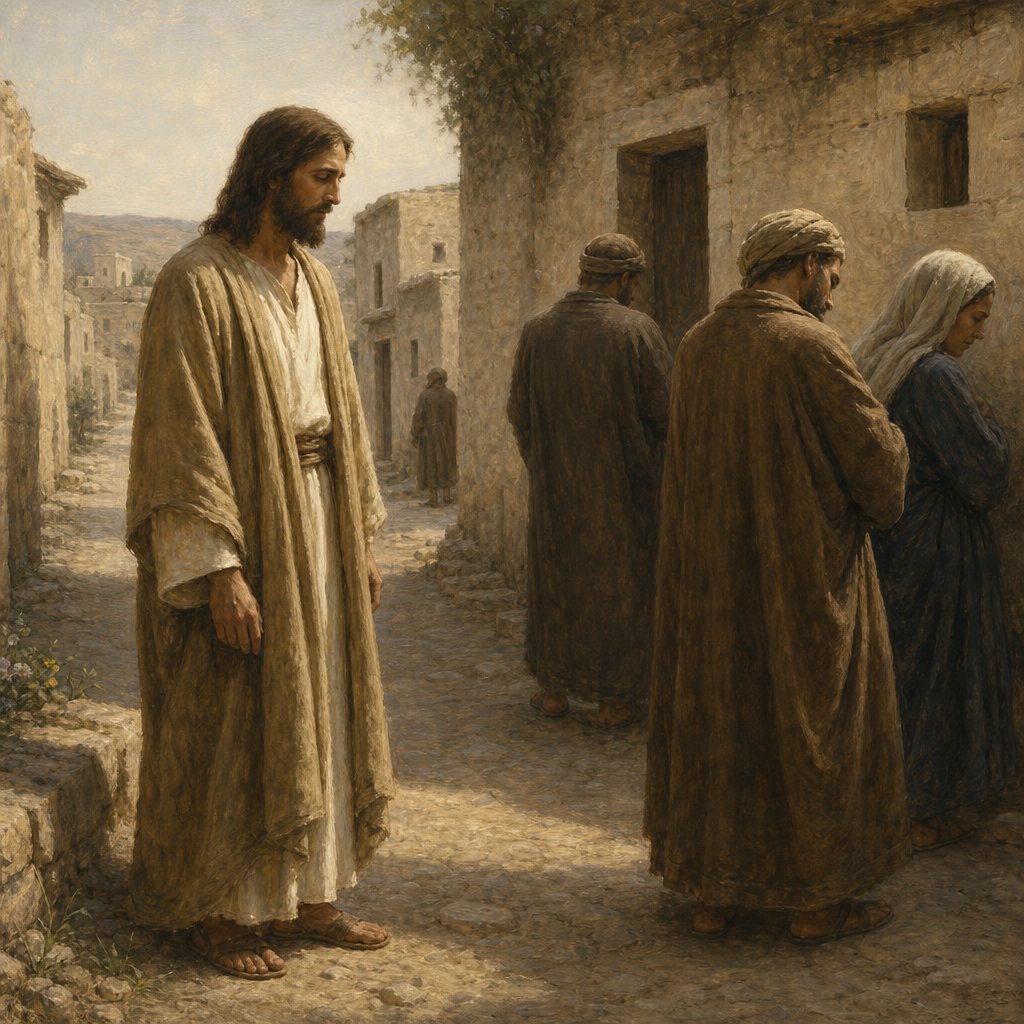
Matthew 13:58 in the King James Version reads, “And he did not many mighty works there because of their unbelief.” This sentence closes the account of Christ’s return to “his own country” after he has spoken the parables of the kingdom in Matthew 13, and it functions like a solemn seal on what has just happened: the presence of the Messiah in their midst did not automatically produce faith, and the absence of faith did not change who he was, but it did change what they were willing to receive from him.
The immediate context is the rejection of Jesus at Nazareth. Matthew has just shown Jesus teaching in the synagogue so that the people “were astonished” and began to question his wisdom and power: “Whence hath this man this wisdom, and these mighty works?” Their words sound like admiration, yet the passage reveals it as a kind of offended amazement. They do not deny that wisdom is present, nor do they deny that “mighty works” are associated with him; instead they stumble over the familiarity of his ordinary human life. They identify him by natural relations and common labour—“Is not this the carpenter’s son? is not his mother called Mary? and his brethren…? And his sisters, are they not all with us?”—and the effect is not humble wonder but contemptuous limitation, as though what is known according to the flesh cannot be the vessel of what is from heaven. So Matthew says, “And they were offended in him.” In that setting Jesus answers with a proverb that interprets their reaction: “A prophet is not without honour, save in his own country, and in his own house.” Then comes verse 58, explaining the outward consequence of their inward posture: he “did not many mighty works there because of their unbelief.”
The verse therefore carries a theme that runs throughout Matthew: the kingdom of heaven is truly present in Jesus Christ, but it is not received by mere proximity, tradition, or familiarity; it is received by faith. Matthew has already shown that many in Israel possessed Scripture and religious practice and yet could be blind to the One to whom Scripture points. In Matthew 13 itself, Jesus speaks parables and cites Isaiah to describe those who “seeing see not; and hearing they hear not, neither do they understand.” The Nazareth episode is a lived example of that principle. They have the greatest possible “light” standing in their synagogue, and yet the light is resisted, not because it is insufficient, but because hearts are closed. “Unbelief” in Matthew is not simply lack of information; it is a settled refusal to trust and yield when the truth is near enough to demand a response.
At the same time, Matthew 13:58 is not saying that Jesus lacked power, as though unbelief made him weak. Matthew’s Gospel has already demonstrated his authority over sickness, nature, devils, and death. The wording “he did not many mighty works” suggests restraint rather than inability. The Lord is not a performer compelled to satisfy scepticism, nor does he scatter signs where they will only be trampled under contempt. Mighty works in Matthew are not mere wonders meant to entertain; they are signs of the kingdom that call for repentance and faith. Where the heart posture is hardened, the sign would not achieve its merciful end. This is consistent with the moral shape of God’s dealings throughout Scripture: miracles may expose the reality of God, but they do not mechanically produce faith in those determined to resist; and God’s gifts are not dispensed as though human unbelief were irrelevant to human receiving. The verse therefore holds together divine sovereignty and human responsibility in a practical, experiential way: Christ remains Lord, yet those who will not believe will not benefit.
The symbolism in the scene is quiet but strong. “His own country” represents the place of familiarity, reputation, and preconceived categories—the place where people think they already know who you are. Nazareth stands for the danger of reducing Jesus to what is ordinary and manageable. The synagogue, a place of teaching and worship, becomes a place where light is measured by human expectation: they want the Messiah to fit the boundaries of their social knowledge. Their appeal to his family is symbolic of a deeper move: they judge the heavenly by the earthly, the eternal by the local, the divine by the domestic. In that sense their unbelief is not merely doubt about miracles; it is resistance to the scandal of incarnation, the truth that the Holy One of God could stand among them in the plain clothes of a known household.
The phrase “mighty works” itself is significant in Matthew. Such works are often acts of compassion and deliverance that manifest the nearness of God’s reign. They are “mighty” not only because they break natural limitation, but because they are tokens of the Messiah’s authority and mercy. To say he did not do “many” mighty works is to say that a community can, by persistent unbelief, forfeit a season of visitation. This does not mean God’s grace is earned by faith as a payment; rather, faith is the open hand that receives what grace freely gives. Unbelief is the clenched fist that refuses. The tragedy of the verse is that the Messiah is present, willing to bless, and yet the people prefer offence to trust, and so the stream of merciful power is not widely tasted in that place.
In the wider flow of Matthew 13, this closing line also echoes the parables. The soils in the parable of the sower show that the same seed can yield vastly different outcomes depending on reception. Nazareth is like ground where the word is not welcomed; the “mighty works” are like the fruit that might have been more abundant, yet unbelief chokes it at the root. In the parables of treasure and pearl, the kingdom is valued supremely by those who truly see; in Nazareth, the kingdom is devalued because they think they already possess the full explanation of Jesus. In the parable of the net, separation is coming; Nazareth foreshadows that division, where closeness to holy things does not guarantee inclusion, and rejection can occur even in the place of greatest familiarity.
The significance of Matthew 13:58, then, is both warning and revelation. It warns that unbelief is not a neutral stance but a spiritual condition that can shut a person or a community out of the benefits of Christ’s presence. It reveals that Jesus’ works are purposive signs aimed at awakening faith and repentance, not spectacles for the offended. And it exposes the peril of contempt born of familiarity: people can be near to Jesus, able to name his mother, aware of his wisdom, and yet miss him because they will not believe. The verse stands as a sober commentary on how the kingdom of heaven is encountered in the world: not merely by seeing, but by believing; not by explaining Jesus away, but by receiving him as he truly is.
Have questions about Matthew 13:58?
Dive deeper into this scripture with Bible Chat — an AI-powered tool for exploring God's Word through conversation. Ask questions, get context, and grow in your understanding of the Bible.
Get Our Apps


Matthew 13:58 Artwork

Matthew 13:58 - "And he did not many mighty works there because of their unbelief."
"And he did not many mighty works there because of their unbelief." - Matthew 13:58

"And he did not many mighty works there because of their unbelief." - Matthew 13:58
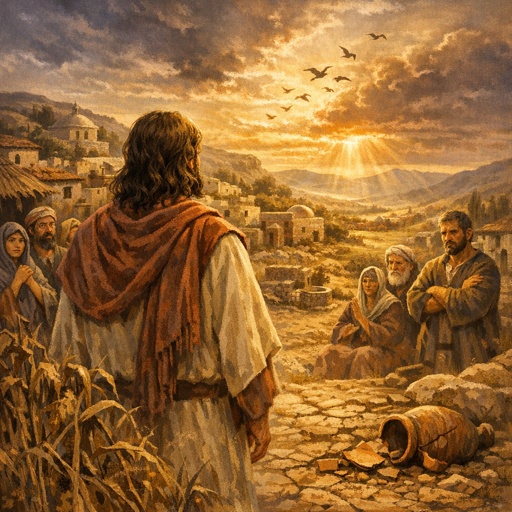
"And he did not many mighty works there because of their unbelief." - Matthew 13:58

Matthew 27:58 - "He went to Pilate, and begged the body of Jesus. Then Pilate commanded the body to be delivered."

Matthew 26:58 - "But Peter followed him afar off unto the high priest's palace, and went in, and sat with the servants, to see the end."
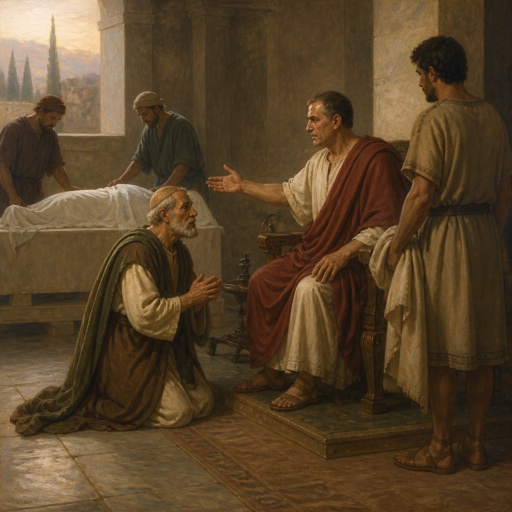
"He went to Pilate, and begged the body of Jesus. Then Pilate commanded the body to be delivered." - Matthew 27:58

Leviticus 13:58 - "And the garment, either warp, or woof, or whatsoever thing of skin it be, which thou shalt wash, if the plague be departed from them, then it shall be washed the second time, and shall be clean."
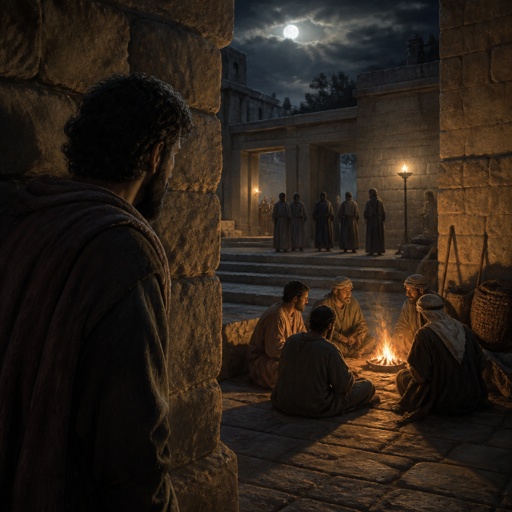
"But Peter followed him afar off unto the high priest's palace, and went in, and sat with the servants, to see the end." - Matthew 26:58

Matthew 13

Matthew 8:13

Matthew 8:13

Matthew 8:13

Matthew 13

Matthew 7:13-14

Matthew 7:13-14

Matthew 7:13-14

Matthew 7:13-14

Matthew 7:13-14

Matthew 7:13-14

Matthew 7:13-14
Isaiah 58:13 - "¶ If thou turn away thy foot from the sabbath, from doing thy pleasure on my holy day; and call the sabbath a delight, the holy of the LORD, honourable; and shalt honour him, not doing thine own ways, nor finding thine own pleasure, nor speaking thine own words:"

Matthew 7:13-14

Matthew 7:13-14

Matthew 7:13-14

Matthew 7:13-14

Matthew 2:13

Matthew 7:13

Matthew 13:8

Matthew 2:13