What does Matthew 13:41-43 mean?
"The Son of man shall send forth his angels, and they shall gather out of his kingdom all things that offend, and them which do iniquity; And shall cast them into a furnace of fire: there shall be wailing and gnashing of teeth. Then shall the righteous shine forth as the sun in the kingdom of their Father. Who hath ears to hear, let him hear." - Matthew 13:41-43
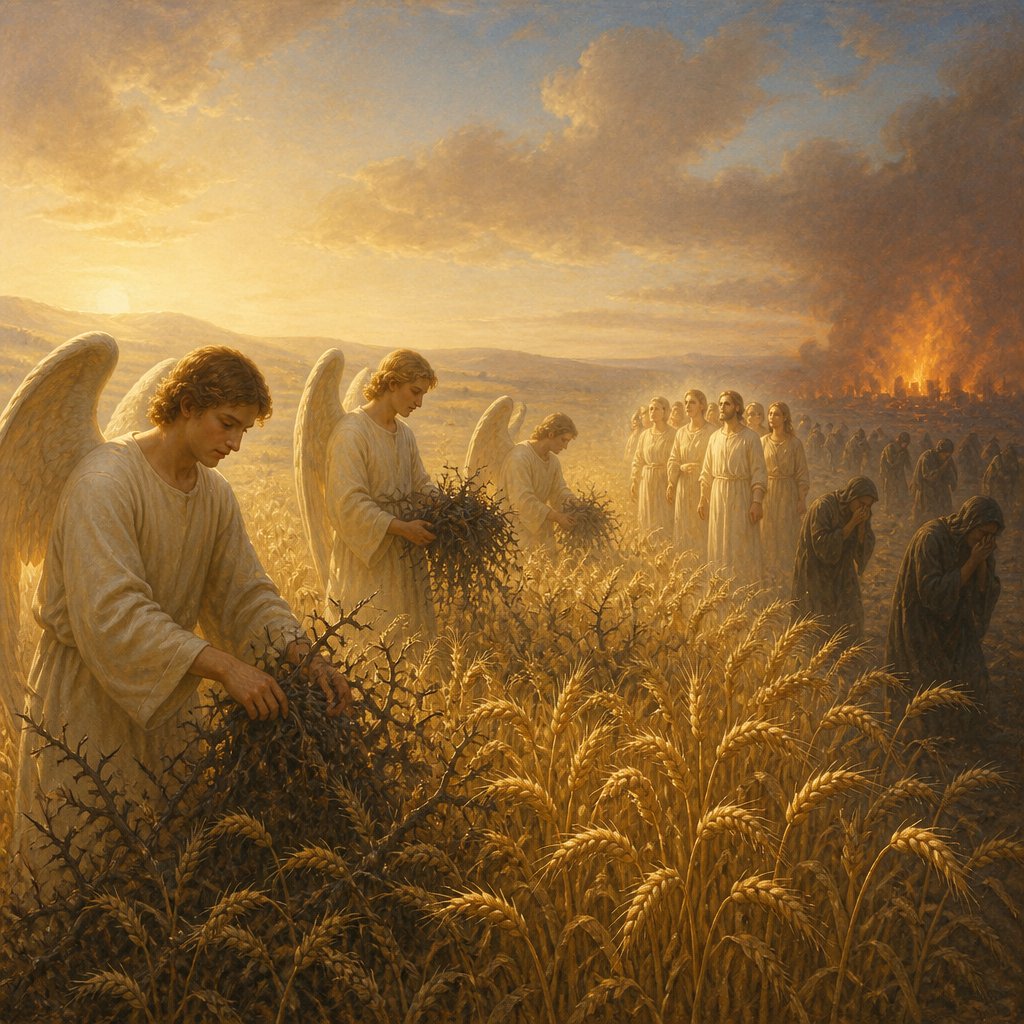
Matthew 13:41-43 in the King James Version of the Bible reads:
41 The Son of man shall send forth his angels, and they shall gather out of his kingdom all things that offend, and them which do iniquity;
42 And shall cast them into a furnace of fire: there shall be wailing and gnashing of teeth.
43 Then shall the righteous shine forth as the sun in the kingdom of their Father. Who hath ears to hear, let him hear.
This passage comes from the Gospel of Matthew, which is the first book of the New Testament. The Gospel of Matthew is one of the synoptic gospels, along with Mark, Luke, and John, and it focuses on the life, teachings, death, and resurrection of Jesus Christ.
In these verses, Jesus is speaking in parables to convey deep spiritual truths to the crowds that were listening to him. The context of this particular parable is the Parable of the Wheat and the Tares. In the parable, Jesus describes a field in which wheat and tares (weeds) grow together. The owner of the field tells his servants not to pull up the tares, lest they accidentally uproot the wheat as well. Instead, he instructs them to let both grow together until the harvest, at which time the reapers will gather the tares and burn them, while the wheat will be gathered into the barn.
In verses 41-43, Jesus explains the meaning of the parable. He compares the field to the world, the good seed to the sons of the kingdom, the tares to the sons of the evil one, the enemy who sowed them to the devil, the harvest to the end of the age, the reapers to the angels, and the barn to the kingdom of God. These verses convey several important themes and messages that are central to Christian belief and doctrine.
One of the primary themes in this passage is the concept of judgment. Jesus speaks of the Son of Man (a title he often used to refer to himself) sending forth his angels to gather out of his kingdom all things that offend and those who practice lawlessness. This speaks to the eventual separation of the righteous from the unrighteous, with the unrighteous being cast into a furnace of fire where there will be wailing and gnashing of teeth. This vivid and intense imagery is often interpreted as a depiction of the afterlife, with the furnace of fire representing hell and the eternal punishment for those who have rejected God and lived in rebellion against him.
Conversely, the righteous are promised to shine forth like the sun in the kingdom of their Father. This denotes the reward and glory that awaits those who have remained faithful to God and have lived according to his will. The contrast between the fate of the righteous and the unrighteous serves as a powerful reminder of the consequences of one's actions and the ultimate accountability before God.
Another important theme in these verses is the sovereignty of God. The parable and its explanation emphasize the divine oversight and control over the world and its inhabitants. The enemy (the devil) may sow tares in the field (the world), but ultimately it is the owner (God) who will determine the outcome and bring about justice in the end. This theme underscores the belief in God's ultimate authority and the assurance that he will ultimately set all things right.
The symbolism in this passage is rich and profound. The field represents the world, the good seed symbolizes the children of God, and the tares represent the children of the evil one. The harvest signifies the end of the age, the reapers represent the angels who will carry out the judgment, and the furnace of fire symbolizes hell. The contrast between the wailing and gnashing of teeth and the shining of the righteous like the sun vividly communicates the stark difference in the fate of the righteous and the unrighteous.
In conclusion, Matthew 13:41-43 conveys significant theological and moral truths concerning judgment, sovereignty, and the ultimate destiny of the righteous and the unrighteous. It serves as a powerful reminder of the consequences of one's choices and actions, as well as the assurance of God's ultimate justice and reward for those who remain faithful to him. This passage stands as a solemn warning and a source of comfort and hope for believers, prompting them to align their lives with God's will and to eagerly anticipate the fulfillment of his kingdom.
Have questions about Matthew 13:41-43?
Dive deeper into this scripture with Bible Chat — an AI-powered tool for exploring God's Word through conversation. Ask questions, get context, and grow in your understanding of the Bible.
Get Our Apps


Matthew 13:41-43 Artwork

Matthew 13:41-43 - "The Son of Man will send out his angels, and they will weed out of his kingdom everything that causes sin and all who do evil. They will throw them into the blazing furnace, where there will be weeping and gnashing of teeth. Then the righteous will shine like the sun in the kingdom of their Father. Whoever has ears, let them hear."
"The Son of Man will send out his angels, and they will weed out of his kingdom everything that causes sin and all who do evil. They will throw them into the blazing furnace, where there will be weeping and gnashing of teeth. Then the righteous will shine like the sun in the kingdom of their Father. Whoever has ears, let them hear." - Matthew 13:41-43

LUKE 24:41-43

Matthew 13:43 - "Then shall the righteous shine forth as the sun in the kingdom of their Father. Who hath ears to hear, let him hear."

"Then shall the righteous shine forth as the sun in the kingdom of their Father. Who hath ears to hear, let him hear." - Matthew 13:43

Matthew 13:41 - "The Son of man shall send forth his angels, and they shall gather out of his kingdom all things that offend, and them which do iniquity;"

LUKE 24:41-43 41 And while they still did not believe it because of joy and amazement, he asked them, “Do you have anything here to eat?” 42 They gave him a piece of broiled fish, 43 and he took it and ate it in their presence.

LUKE 24:41-43 41 And while they still did not believe it because of joy and amazement, he asked them, “Do you have anything here to eat?” 42 They gave him a piece of broiled fish, 43 and he took it and ate it in their presence.

Ezekiel 4:1-3

Matthew 26:41

Daniel 4:1-3

Acts 13:43

"Then shall the righteous shine forth as the sun in the kingdom of their Father. Who hath ears to hear, let him hear." - Matthew 13:43

Isaiah 41:13

Genesis 41:43 - "And he made him to ride in the second chariot which he had; and they cried before him, Bow the knee: and he made him ruler over all the land of Egypt."

Matthew 26:43 - "And he came and found them asleep again: for their eyes were heavy."

Matthew 22:41 - "¶ While the Pharisees were gathered together, Jesus asked them,"

Matthew 22:43 - "He saith unto them, How then doth David in spirit call him Lord, saying,"

Genesis 43:13 - "Take also your brother, and arise, go again unto the man:"

Matthew 27:41 - "Likewise also the chief priests mocking him, with the scribes and elders, said,"

Matthew 5:41 - "And whosoever shall compel thee to go a mile, go with him twain."

Matthew 26:41 - "Watch and pray, that ye enter not into temptation: the spirit indeed is willing, but the flesh is weak."

Matthew 25:43 - "I was a stranger, and ye took me not in: naked, and ye clothed me not: sick, and in prison, and ye visited me not."

Matthew 24:41 - "Two women shall be grinding at the mill; the one shall be taken, and the other left."

Matthew 5:43 - "¶ Ye have heard that it hath been said, Thou shalt love thy neighbour, and hate thine enemy."

Matthew 12:43 - "When the unclean spirit is gone out of a man, he walketh through dry places, seeking rest, and findeth none."
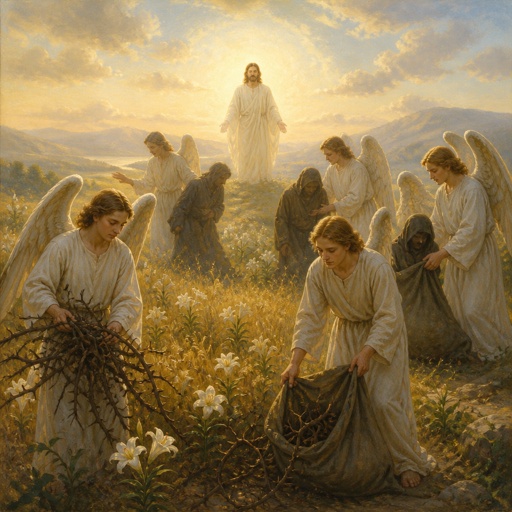
"The Son of man shall send forth his angels, and they shall gather out of his kingdom all things that offend, and them which do iniquity;" - Matthew 13:41

Matthew 27:43 - "He trusted in God; let him deliver him now, if he will have him: for he said, I am the Son of God."

Psalms 41:13 - "Blessed be the LORD God of Israel from everlasting, and to everlasting. Amen, and Amen."

Matthew 21:43 - "Therefore say I unto you, The kingdom of God shall be taken from you, and given to a nation bringing forth the fruits thereof."