What does Matthew 13:40 mean?
"As therefore the tares are gathered and burned in the fire; so shall it be in the end of this world." - Matthew 13:40
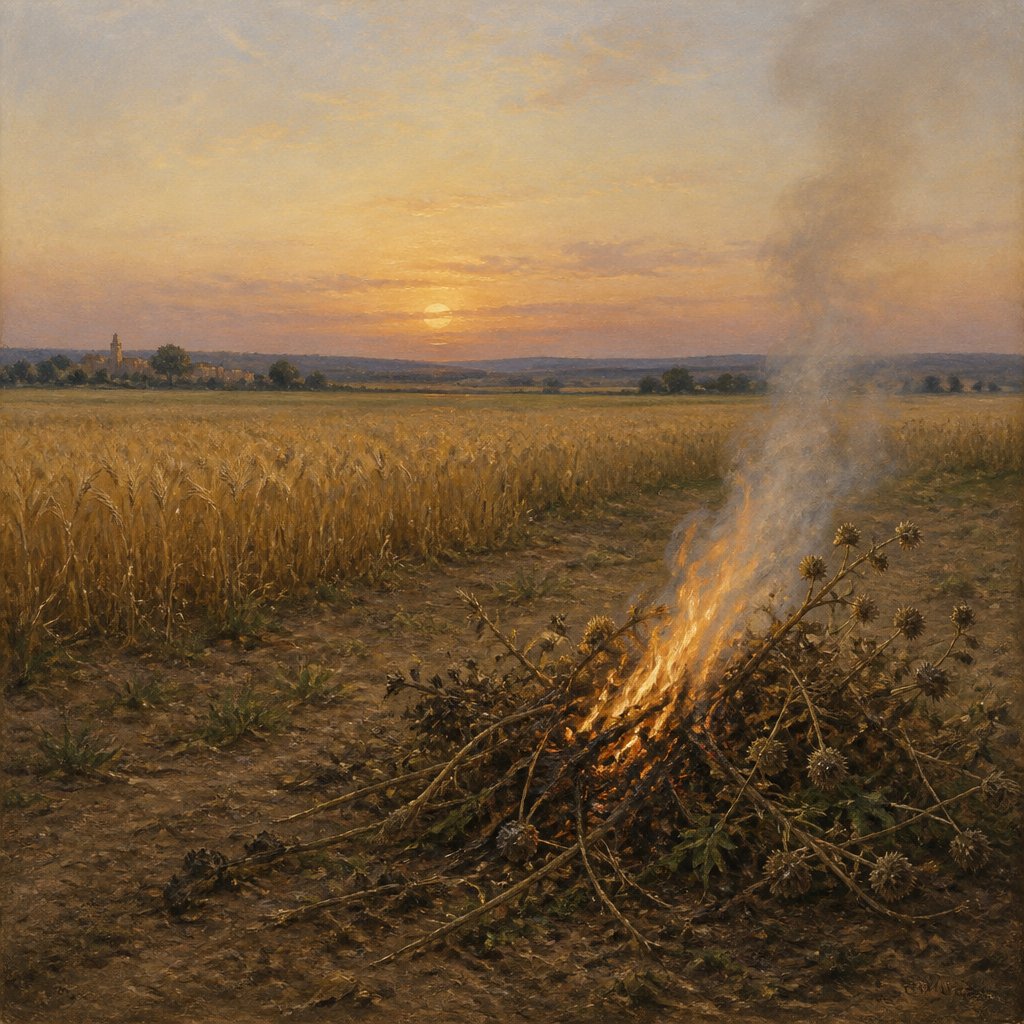
The verse Matthew 13:40 in the King James Version of the Bible reads, "As therefore the tares are gathered and burned in the fire; so shall it be in the end of this world."
This verse is part of Jesus' explanation of the parable of the wheat and the tares, which is one of the several parables he uses to explain the nature of the kingdom of heaven. In this particular parable, a man sowed good seed in his field, but while everyone was sleeping, his enemy came and sowed tares among the wheat. When the wheat sprouted and formed heads, the tares also appeared. The man's servants asked him if they should pull up the tares, but he tells them to let both the wheat and the tares grow together until the harvest, when the reapers will separate the two and gather the tares to be burned.
One of the major themes of this verse is the concept of judgment and the end times. Jesus uses the imagery of the tares being gathered and burned to convey the idea that there will come a time when there will be a separation between the righteous and the wicked. This is a common theme throughout the New Testament, where there is a focus on the final judgment and the consequences for those who do not align with God's will.
Another important theme in this verse is the idea of perseverance and patience. The parable of the wheat and the tares teaches us to wait for God's timing and not to rush to judge or condemn others. It reminds us that while there are both good and evil in the world, we should not be quick to uproot the evil or take matters into our own hands. Instead, we should trust in God's sovereignty and wisdom to bring about justice in his own time.
The context of this verse is within a series of parables that Jesus tells to his disciples and the crowds who have gathered to hear him speak. These parables are meant to teach important spiritual truths about the kingdom of heaven and the nature of God's work in the world. In this particular parable, the tares represent the children of the wicked one, and the wheat represents the children of the kingdom. The field is the world, and the harvest is the end of the age.
The symbolism in this verse is rich and multi-layered. The tares, which are a type of weed that resembles wheat, can be seen as representing those who outwardly appear to be a part of God's kingdom but are actually false believers or agents of the devil. The burning of the tares symbolizes the final judgment and the punishment for those who do not belong to God's kingdom. It serves as a warning to those who profess to be a part of the church but do not genuinely have faith in Christ.
The gathering and burning of the tares also symbolize the purification and restoration of God's creation. It signifies the removal of all that is wicked and unrighteous from the world, allowing the righteous to live in a renewed and perfect kingdom. This imagery speaks to the ultimate triumph of good over evil and the establishment of God's eternal kingdom.
In conclusion, Matthew 13:40 is a verse that speaks to the end times and the ultimate judgment that will come upon the world. It reminds us to be patient and trust in God's timing, as well as to discern and separate between what is of God and what is not. It carries a powerful message about the consequences of rejecting God and the hope of a future where righteousness will prevail.
Have questions about Matthew 13:40?
Dive deeper into this scripture with Bible Chat — an AI-powered tool for exploring God's Word through conversation. Ask questions, get context, and grow in your understanding of the Bible.
Get Our Apps


Matthew 13:40 Artwork

Matthew 13:40 - "As therefore the tares are gathered and burned in the fire; so shall it be in the end of this world."
"As therefore the tares are gathered and burned in the fire; so shall it be in the end of this world." - Matthew 13:40

Matthew 22:40 - "On these two commandments hang all the law and the prophets."

Matthew 24:40 - "Then shall two be in the field; the one shall be taken, and the other left."

Matthew 21:40 - "When the lord therefore of the vineyard cometh, what will he do unto those husbandmen?"

Job 40:13 - "Hide them in the dust together; and bind their faces in secret."

Matthew 10:40 - "¶ He that receiveth you receiveth me, and he that receiveth me receiveth him that sent me."

Acts 13:40 - "Beware therefore, lest that come upon you, which is spoken of in the prophets;"

"On these two commandments hang all the law and the prophets." - Matthew 22:40
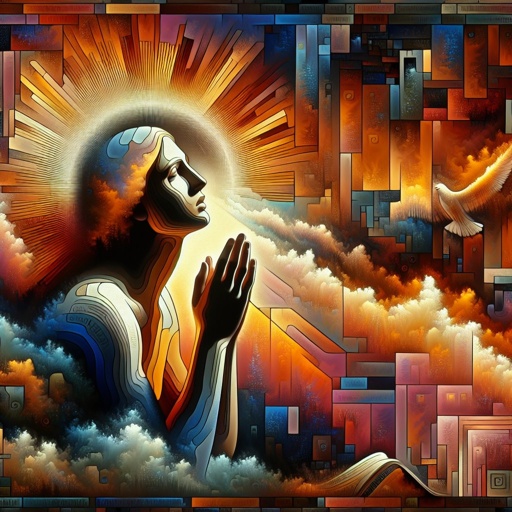
Psalms 40:13 - "Be pleased, O LORD, to deliver me: O LORD, make haste to help me."

Matthew 5:40 - "And if any man will sue thee at the law, and take away thy coat, let him have thy cloke also."

Leviticus 13:40 - "And the man whose hair is fallen off his head, he is bald; yet is he clean."

Matthew 13

Matthew 26:40 - "And he cometh unto the disciples, and findeth them asleep, and saith unto Peter, What, could ye not watch with me one hour?"

Matthew 12:40 - "For as Jonas was three days and three nights in the whale's belly; so shall the Son of man be three days and three nights in the heart of the earth."

Matthew 8:13

Matthew 8:13

Matthew 8:13

Matthew 27:40 - "And saying, Thou that destroyest the temple, and buildest it in three days, save thyself. If thou be the Son of God, come down from the cross."

Matthew 13

Jeremiah 40:13 - "¶ Moreover Johanan the son of Kareah, and all the captains of the forces that were in the fields, came to Gedaliah to Mizpah,"
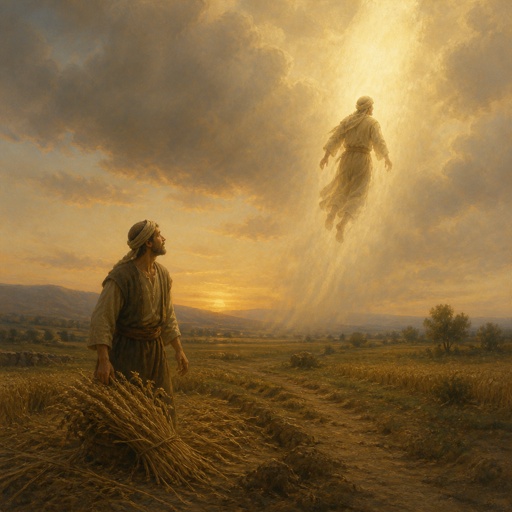
"Then shall two be in the field; the one shall be taken, and the other left." - Matthew 24:40

Matthew 7:13-14

Matthew 7:13-14

Matthew 7:13-14

Matthew 7:13-14

Matthew 7:13-14

Matthew 7:13-14

Matthew 7:13-14

Matthew 7:13-14