What does Matthew 13:39 mean?
"The enemy that sowed them is the devil; the harvest is the end of the world; and the reapers are the angels." - Matthew 13:39
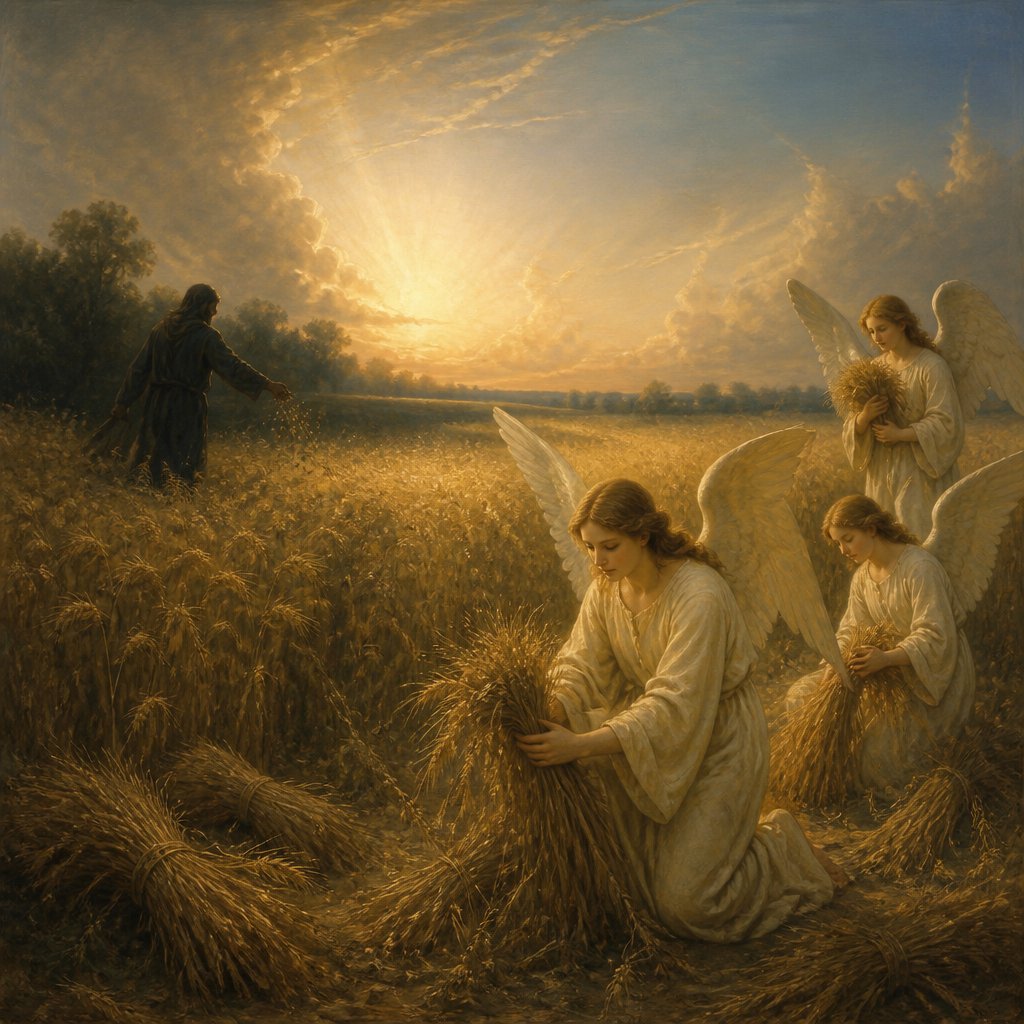
Matthew 13:39 (KJV) states, "The enemy that sowed them is the devil; the harvest is the end of the world; and the reapers are the angels." This verse is part of a parable told by Jesus known as the Parable of the Tares, and it provides insight into the nature of good and evil and the ultimate judgement of the world.
In this parable, Jesus compares the kingdom of heaven to a field where a man sowed good seed, but an enemy came and sowed tares, which are essentially weeds, among the wheat. As the plants grew, it became apparent that both the wheat and the tares were present, and the servants of the man in the field asked if they should gather the tares. The man in the field responded, "No; lest while ye gather up the tares, ye root up also the wheat with them. Let both grow together until the harvest: and in the time of harvest I will say to the reapers, Gather ye together first the tares, and bind them in bundles to burn them: but gather the wheat into my barn" (Matthew 13:29-30, KJV).
The verse in question, Matthew 13:39, is Jesus' explanation of the parable to his disciples. He identifies the enemy as the devil, the harvest as the end of the world, and the reapers as the angels. This parable and its interpretation provide several important themes and insights.
One of the main themes of the Parable of the Tares is the coexistence of good and evil in the world. The field represents the world, and just as both the wheat and the tares grow together in the field, so do good and evil coexist in the world. This coexistence can be a source of confusion and frustration for believers, particularly when they see the wicked prospering. However, the parable reassures believers that God is aware of the presence of evil and has a plan for its ultimate defeat.
Another theme of the parable is the ultimate judgement of the world. The harvest at the end of the world represents the final judgement, at which time the righteous will be separated from the wicked. The wheat, symbolizing the righteous, will be gathered into the "barn" of God's kingdom, while the tares, symbolizing the wicked, will be gathered and burned.
The Parable of the Tares also reveals the presence of evil in the world and its source, the devil. This serves as a reminder for believers to be vigilant and discerning, as the devil's influence can often be subtle and deceptive. Additionally, it underscores the reality of spiritual warfare and the need to stand firm in faith against the schemes of the enemy.
The interpretation of the parable in Matthew 13:39 also highlights the role of angels in the final judgement of the world. The reapers, identified as the angels, will carry out God's judgement, separating the righteous from the wicked. This emphasizes the sovereignty of God and the integral role that heavenly beings play in carrying out his divine plan.
The Parable of the Tares and its interpretation in Matthew 13:39 also have important contextual significance within the broader teachings of Jesus. It reflects his teachings on the kingdom of heaven, which is characterized by the presence of both believers and non-believers, the reality of spiritual warfare, and the assurance of God's ultimate judgement and justice.
In conclusion, Matthew 13:39 provides a rich and profound insight into the nature of good and evil, the ultimate judgement of the world, and the role of angels in God's divine plan. This verse and the parable it is part of offer reassurance to believers, warning against the subtle influence of the enemy, and affirming the ultimate victory of righteousness. It underscores the need for discernment, faithfulness, and trust in God's sovereignty.
Have questions about Matthew 13:39?
Dive deeper into this scripture with Bible Chat — an AI-powered tool for exploring God's Word through conversation. Ask questions, get context, and grow in your understanding of the Bible.
Get Our Apps


Matthew 13:39 Artwork

Matthew 13:39 - "The enemy that sowed them is the devil; the harvest is the end of the world; and the reapers are the angels."
"The enemy that sowed them is the devil; the harvest is the end of the world; and the reapers are the angels." - Matthew 13:39

Matthew 22:37-39

Matthew 27:39 - "¶ And they that passed by reviled him, wagging their heads,"

Job 39:13-25

Matthew 21:39 - "And they caught him, and cast him out of the vineyard, and slew him."

Matthew 22:39 - "And the second is like unto it, Thou shalt love thy neighbour as thyself."

Matthew 15:39 - "And he sent away the multitude, and took ship, and came into the coasts of Magdala."

Matthew 25:39 - "Or when saw we thee sick, or in prison, and came unto thee?"

"¶ And they that passed by reviled him, wagging their heads," - Matthew 27:39

Matthew 10:39 - "He that findeth his life shall lose it: and he that loseth his life for my sake shall find it."

Exodus 39:13 - "And the fourth row, a beryl, an onyx, and a jasper: they were inclosed in ouches of gold in their inclosings."

Job 39:13 - "Gavest thou the goodly wings unto the peacocks? or wings and feathers unto the ostrich?"

Matthew 24:39 - "And knew not until the flood came, and took them all away; so shall also the coming of the Son of man be."

Psalms 39:13 - "O spare me, that I may recover strength, before I go hence, and be no more."

Matthew 13

Matthew 12:39 - "But he answered and said unto them, An evil and adulterous generation seeketh after a sign; and there shall no sign be given to it, but the sign of the prophet Jonas:"

Matthew 23:39 - "For I say unto you, Ye shall not see me henceforth, till ye shall say, Blessed is he that cometh in the name of the Lord."

Matthew 5:39 - "But I say unto you, That ye resist not evil: but whosoever shall smite thee on thy right cheek, turn to him the other also."

Matthew 8:13

Matthew 8:13

Matthew 8:13

Genesis 39:13 - "And it came to pass, when she saw that he had left his garment in her hand, and was fled forth,"

Matthew 13

Acts 13:39 - "And by him all that believe are justified from all things, from which ye could not be justified by the law of Moses."

"And they caught him, and cast him out of the vineyard, and slew him." - Matthew 21:39

Matthew 7:13-14

Matthew 7:13-14

Matthew 7:13-14

Matthew 7:13-14