What does Matthew 13:37 mean?
"He answered and said unto them, He that soweth the good seed is the Son of man;" - Matthew 13:37
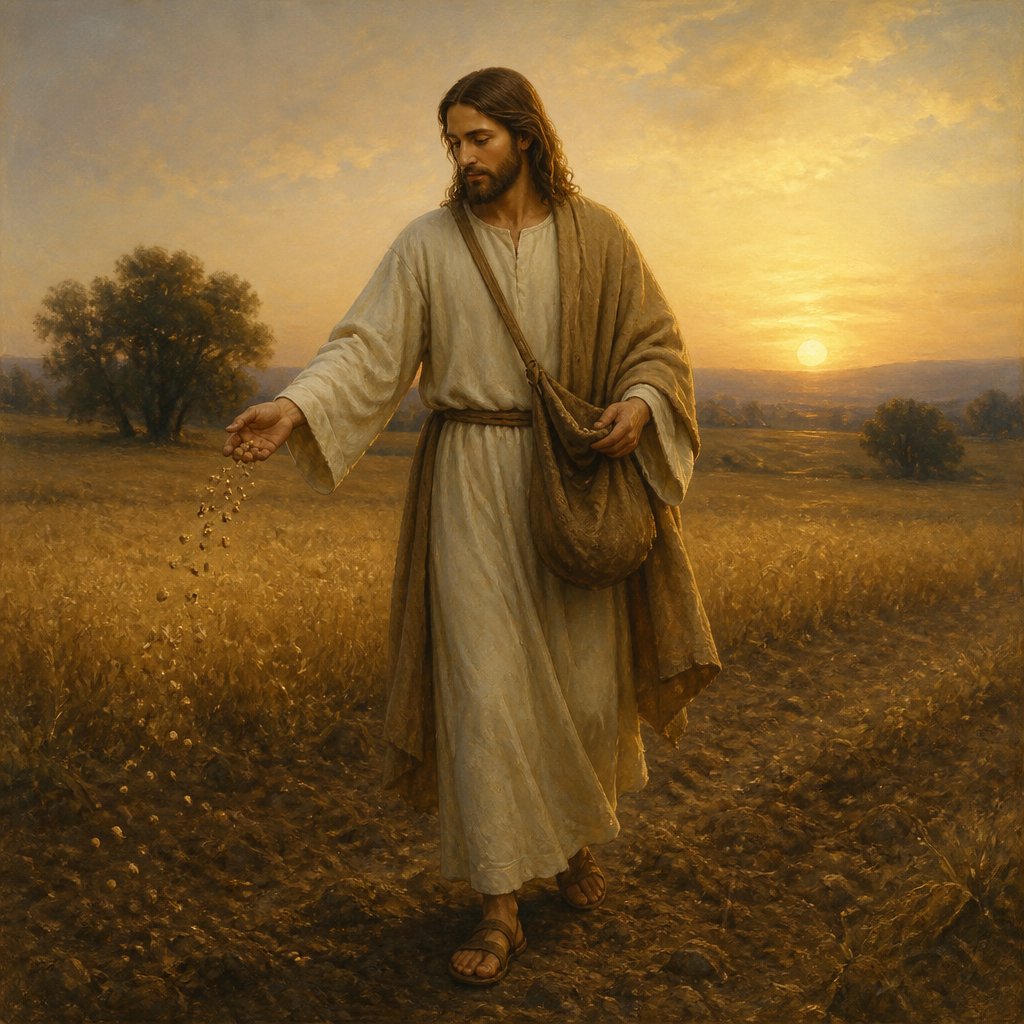
Matthew 13:37 (KJV) says, "He answered and said unto them, He that soweth the good seed is the Son of man."
In this verse, Jesus is explaining the meaning of the parable of the wheat and the tares to his disciples. The parable, found in the preceding verses (Matthew 13:24-30), tells the story of a man who sows good seed in his field, but an enemy comes and sows tares (weeds) among the wheat. When the plants begin to grow, the servants notice the tares and ask the man if they should pull them up. He tells them to let both the wheat and the tares grow together until the harvest, when the reapers will gather the tares and burn them, and the wheat will be gathered into the barn.
In verse 37, Jesus identifies himself as the one who sows the good seed. The Son of man is a title that Jesus often used to refer to himself, emphasizing both his humanity and his authority as the promised Messiah. By identifying himself as the sower of the good seed, Jesus is asserting his authority as the one who brings about the kingdom of God.
The themes present in this verse and the surrounding parable include the coexistence of good and evil, the patience of God, and the ultimate judgment. The parable of the wheat and the tares illustrates the reality of living in a fallen world where good and evil coexist. The servants' question about whether they should separate the wheat from the tares reflects the human desire for justice and the elimination of evil. However, the man's response highlights the patience and mercy of God, who allows both the righteous and the unrighteous to coexist until the time of judgment.
The concept of judgment is also central to this verse and the parable as a whole. Jesus' identification as the sower of the good seed emphasizes his role in bringing about the kingdom of God and ultimately separating the righteous from the unrighteous. The image of the harvest, where the wheat is gathered into the barn and the tares are burned, represents the final judgment when God will separate the righteous from the wicked.
In terms of context, this verse is part of a larger section in Matthew's Gospel where Jesus uses parables to teach about the kingdom of God. The parables in this section serve as a means of communicating spiritual truths to the disciples and the crowds in a way that is accessible and memorable. The parable of the wheat and the tares and Jesus' explanation in verse 37 highlight the reality of living in a world where good and evil coexist, the patience of God in allowing both to exist, and the promise of ultimate judgment and the separation of the righteous and the unrighteous.
Symbolically, the sowing of the good seed by the Son of man represents the proclamation of the gospel and the establishment of the kingdom of God. The wheat symbolizes the righteous and the tares symbolize the unrighteous. The coexistence of the wheat and the tares in the field represents the current state of the world, where believers and unbelievers live together. The harvest and the separation of the wheat and tares symbolize the future judgment when God will separate the righteous from the unrighteous.
In conclusion, Matthew 13:37 is a key verse in the parable of the wheat and the tares, emphasizing Jesus' role as the sower of the good seed and the ultimate authority in bringing about the kingdom of God. The verse and the surrounding parable convey important themes about the coexistence of good and evil, the patience and mercy of God, and the promise of ultimate judgment and the separation of the righteous and the unrighteous. As believers, we are called to live faithfully in the midst of a fallen world, trusting in God's ultimate plan for justice and redemption.
Have questions about Matthew 13:37?
Dive deeper into this scripture with Bible Chat — an AI-powered tool for exploring God's Word through conversation. Ask questions, get context, and grow in your understanding of the Bible.
Get Our Apps


Matthew 13:37 Artwork

Matthew 13:37 - "He answered and said unto them, He that soweth the good seed is the Son of man;"
"He answered and said unto them, He that soweth the good seed is the Son of man;" - Matthew 13:37

Matthew 12:36-37

matthew 12:36-37

Matthew 9:37-38

Matthew 22:37-39

Matthew 12:36-37

Mark 13:28-37

Mark 13:28-37

Mark 13:28-37

luke 13:28-37

Mark 13:28-37

luke 13:28-37

Matthew 24:37 - "But as the days of Noe were, so shall also the coming of the Son of man be."

Matthew 9:37 - "Then saith he unto his disciples, The harvest truly is plenteous, but the labourers are few;"

Matthew 12:37 - "For by thy words thou shalt be justified, and by thy words thou shalt be condemned."

Matthew 26:37 - "And he took with him Peter and the two sons of Zebedee, and began to be sorrowful and very heavy."

Acts 13:37 - "But he, whom God raised again, saw no corruption."

Matthew 27:37 - "And set up over his head his accusation written, THIS IS JESUS THE KING OF THE JEWS."

Job 37:13 - "He causeth it to come, whether for correction, or for his land, or for mercy."

Matthew 5:37 - "But let your communication be, Yea, yea; Nay, nay: for whatsoever is more than these cometh of evil."

Matthew 21:37 - "But last of all he sent unto them his son, saying, They will reverence my son."

Psalms 37:13 - "The Lord shall laugh at him: for he seeth that his day is coming."

Matthew 15:37 - "And they did all eat, and were filled: and they took up of the broken meat that was left seven baskets full."

Matthew 13

Mark 13:37 - "And what I say unto you I say unto all, Watch."

Matthew 8:13

Matthew 8:13

Matthew 8:13

Matthew 13