What does Matthew 13:36 mean?
"Then Jesus sent the multitude away, and went into the house: and his disciples came unto him, saying, Declare unto us the parable of the tares of the field." - Matthew 13:36
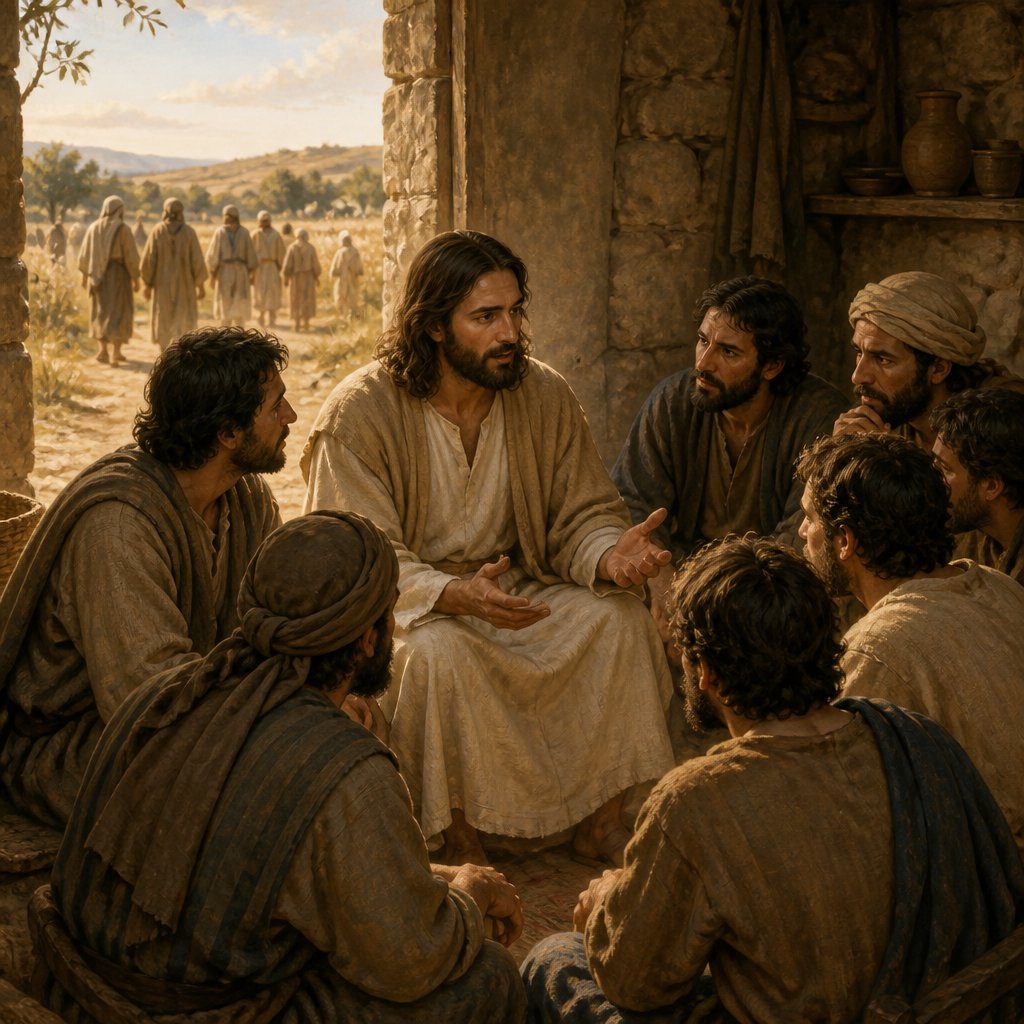
The Bible verse Matthew 13:36 is from the New Testament and is part of a larger passage that includes the Parable of the Wheat and the Tares. In this particular verse, Jesus explains the meaning of the parable to his disciples. The verse reads: "Then Jesus sent the multitude away, and went into the house: and his disciples came unto him, saying, Declare unto us the parable of the tares of the field."
This verse is situated in the context of a series of parables that Jesus tells to the crowds that have gathered to hear him speak. In Matthew 13:36, Jesus has just finished telling the Parable of the Wheat and the Tares, and his disciples come to him seeking an explanation of the parable. This request for understanding sets the stage for Jesus' explanation, which follows in the subsequent verses.
The Parable of the Wheat and the Tares is a story about a man who sows good seed in his field, but an enemy comes and sows weeds among the wheat. When the plants begin to grow, the man's servants notice the weeds and ask if they should pull them up. The man tells them to let the weeds grow alongside the wheat and that they will be separated at the harvest. Jesus uses this parable to illustrate the coexistence of good and evil in the world and the final judgment that will separate the righteous from the wicked.
In the broader context of the Gospel of Matthew, this passage comes at a point where Jesus is teaching his disciples through parables. These parables often contain deeper spiritual truths that require explanation and interpretation. In this particular instance, Jesus is using the parable to teach about the nature of the kingdom of heaven and the ultimate judgment that will separate the righteous from the unrighteous.
One of the key themes of this verse and the Parable of the Wheat and the Tares is the concept of judgment. Jesus is teaching his disciples about the ultimate judgment that will occur at the end of time, where the righteous will be separated from the wicked. This theme of judgment and the ultimate accountability of all people before God is a common motif throughout the New Testament.
Another important theme in this passage is the coexistence of good and evil in the world. Jesus uses the imagery of the wheat and the tares growing together to illustrate that in this earthly life, both the righteous and the unrighteous will coexist. This teaches his disciples to expect the presence of evil in the world and to be prepared for the final judgment that will separate the two.
The symbolism in this verse and the surrounding parable is rich and meaningful. The wheat represents the righteous, those who belong to the kingdom of God and bear good fruit. The tares, or weeds, represent the unrighteous, those who do not belong to the kingdom of God and bear bad fruit. The field represents the world, and the sowing of the seeds represents the preaching of the gospel. The presence of both wheat and tares growing together symbolizes the coexistence of good and evil in the world, and the final separation at the harvest symbolizes the ultimate judgment of God.
In conclusion, Matthew 13:36 is an important verse in the Gospel of Matthew that sets the stage for Jesus' explanation of the Parable of the Wheat and the Tares. The verse and the surrounding passage teach important lessons about the ultimate judgment of God, the coexistence of good and evil in the world, and the symbolism of the wheat and the tares. These teachings are relevant for Christians today as they navigate the challenges of living in a fallen world while awaiting the ultimate fulfillment of God's kingdom.
Have questions about Matthew 13:36?
Dive deeper into this scripture with Bible Chat — an AI-powered tool for exploring God's Word through conversation. Ask questions, get context, and grow in your understanding of the Bible.
Get Our Apps


Matthew 13:36 Artwork

Matthew 13:36 - "Then Jesus sent the multitude away, and went into the house: and his disciples came unto him, saying, Declare unto us the parable of the tares of the field."
"Then Jesus sent the multitude away, and went into the house: and his disciples came unto him, saying, Declare unto us the parable of the tares of the field." - Matthew 13:36

Matthew 12:36-37

matthew 12:36-37

Matthew 12:36-37

Matthew 27:36 - "And sitting down they watched him there;"

Matthew 22:36 - "Master, which is the great commandment in the law?"

Matthew 10:36 - "And a man's foes shall be they of his own household."

Matthew 24:36 - "¶ But of that day and hour knoweth no man, no, not the angels of heaven, but my Father only."

"And sitting down they watched him there;" - Matthew 27:36

Mark 13:36 - "Lest coming suddenly he find you sleeping."

Matthew 23:36 - "Verily I say unto you, All these things shall come upon this generation."

"Master, which is the great commandment in the law?" - Matthew 22:36

Matthew 21:36 - "Again, he sent other servants more than the first: and they did unto them likewise."

Matthew 9:36 (KJV) 36 But when he saw the multitudes, he was moved with compassion on them, because they fainted, and were scattered abroad, as sheep having no shepherd.

Matthew 13

Matthew 14:36 - "And besought him that they might only touch the hem of his garment: and as many as touched were made perfectly whole."

Matthew 5:36 - "Neither shalt thou swear by thy head, because thou canst not make one hair white or black."

Matthew 15:36 - "And he took the seven loaves and the fishes, and gave thanks, and brake them, and gave to his disciples, and the disciples to the multitude."

"And a man's foes shall be they of his own household." - Matthew 10:36

Job 36:13 - "But the hypocrites in heart heap up wrath: they cry not when he bindeth them."

Matthew 8:13

Matthew 8:13

Matthew 8:13

Matthew 13

Matthew 25:36 - "Naked, and ye clothed me: I was sick, and ye visited me: I was in prison, and ye came unto me."

Genesis 36:13 - "And these are the sons of Reuel; Nahath, and Zerah, Shammah, and Mizzah: these were the sons of Bashemath Esau's wife."

Matthew 7:13-14

Matthew 7:13-14

Matthew 7:13-14