What does Matthew 11:29 mean?
"Take my yoke upon you, and learn of me; for I am meek and lowly in heart: and ye shall find rest unto your souls." - Matthew 11:29
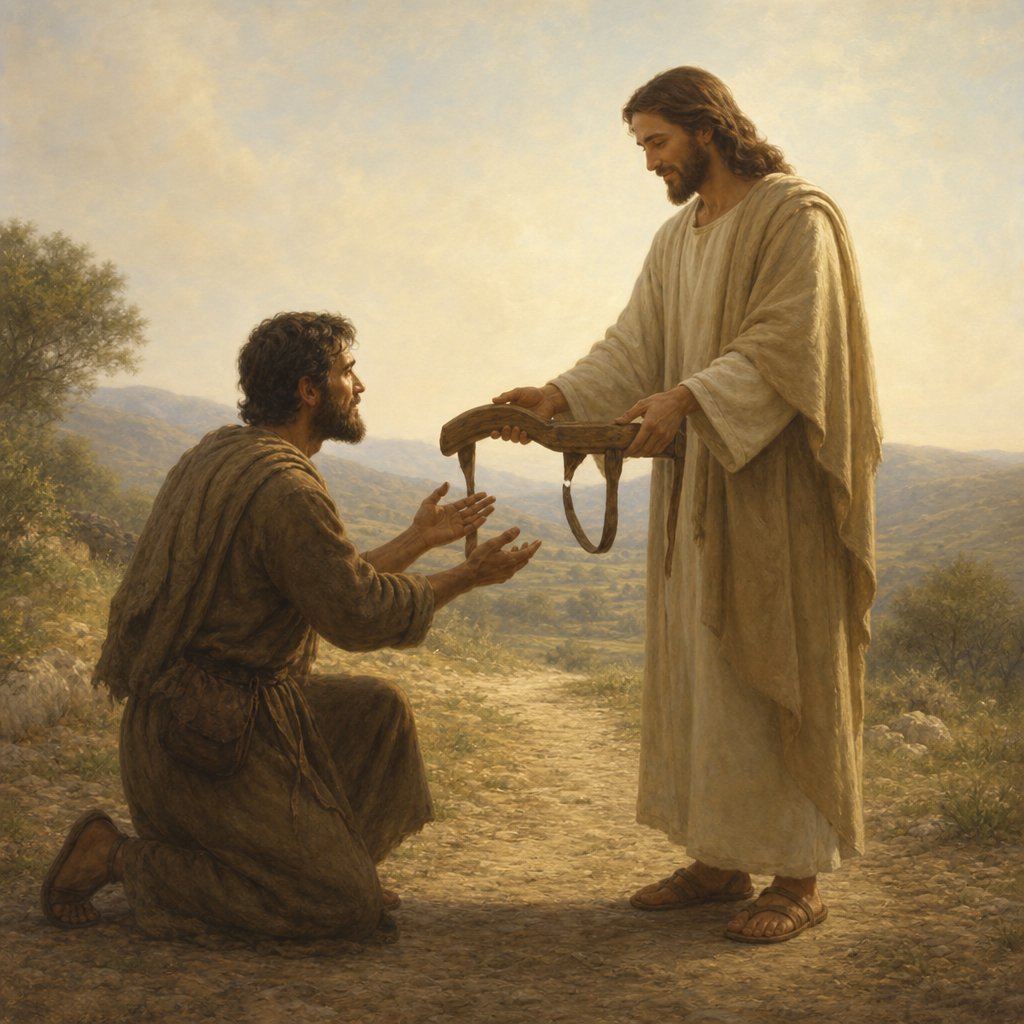
Matthew 11:29 in the King James Version reads, “Take my yoke upon you, and learn of me; for I am meek and lowly in heart: and ye shall find rest unto your souls.” In its own sentence it is both an invitation and a promise: an invitation to come under Christ’s rule and teaching, and a promise that this surrender will not crush the soul but quiet it. The verse does not stand alone as a pleasant saying; it is spoken by the Lord Jesus at a particular moment in His ministry when many were weary, burdened, and confused by sin, suffering, and the heavy religious demands that had come to dominate public life. Immediately around it, He calls, “Come unto me, all ye that labour and are heavy laden, and I will give you rest,” and then clarifies what that “coming” looks like: it is taking His yoke and learning Him. The rest He offers is not mere escape from work or hardship, but rest “unto your souls,” the deep settling of the inner person before God.
The first image, the “yoke,” is earthy and deliberate. A yoke is an instrument laid upon the necks of oxen so they can pull a load under the direction of another. In Scripture and in common life it could signify servitude, discipline, or obligation. Christ’s words therefore sound paradoxical: take a yoke, and you will find rest. Yet the paradox is the heart of the meaning. He is not offering rest by removing all obligation, but by replacing a burdensome kind of bondage with His own kind of lordship. The surrounding verses in the KJV show this contrast plainly: He speaks of giving “rest,” then speaks of His “yoke” being “easy” and His “burden” being “light.” The weariness He addresses is not merely physical fatigue, but the exhaustion of trying to bear life and righteousness without the right Master, without forgiveness, and without grace. To take His yoke is to yield to His authority as Lord and to accept His way of being right with God, a way that leads not to anxious striving but to settled peace.
The next phrase, “and learn of me,” deepens the picture. Under a yoke, an animal is not only pulling; it is being guided. Likewise, the believer’s life is not only about carrying duties but about discipleship. “Learn of me” is more than learning about Him as a subject; it is learning Him as Teacher and Pattern, being formed by His words and ways. In the context of Matthew’s Gospel, where Jesus repeatedly teaches the crowds and confronts distorted religion, this summons implies a transfer of allegiance: from other voices that command without healing to the voice of Christ who commands and gives life. The “yoke” and the “learning” belong together: submission to Him is not blind oppression but a guided apprenticeship that remakes the heart.
Christ then grounds the invitation in His own character: “for I am meek and lowly in heart.” The reason His yoke gives rest is not only that His teaching is true, but that His heart is gentle. “Meek” in the KJV sense is strength under control, not weakness; it is the disposition that does not crush the bruised reed. “Lowly in heart” speaks of humility at the deepest level, not a superficial modesty. This is crucial symbolism and theology at once: the One who has authority to yoke others does not resemble an earthly tyrant; He is the King who stoops, the Lord whose rule heals. In Matthew’s narrative, this fits the whole portrait of Jesus as the promised Messiah who receives sinners, touches the unclean, and bears with the ignorant. His “heart” is mentioned to assure the weary that they are not coming to a harsh taskmaster. The rest He gives flows from who He is.
Finally comes the promise: “and ye shall find rest unto your souls.” The phrase echoes older Scriptural language about “rest,” which in the life of Israel could mean the relief of deliverance, the settled peace of dwelling in God’s promise, and the quietness of trusting Him rather than being driven by fear. Here it is explicitly “unto your souls,” identifying the deepest human need: reconciliation with God, cleansing from guilt, liberation from the tyranny of sin, and the end of the inward turmoil that comes from resisting God or trying to justify oneself. The verse does not deny outward burdens; Christians still labor, suffer, repent, forgive, and endure. But it declares that under Christ those burdens are no longer borne alone, no longer borne to earn God’s favor, and no longer borne under condemnation. The soul rests because it is held by a meek and lowly Lord.
In sum, Matthew 11:29 is significant because it reveals the shape of Christ’s salvation in lived experience. The gospel is not merely that burdens are lifted, but that a new Lord takes you to Himself. His yoke signifies belonging and obedience; learning of Him signifies ongoing discipleship; His meekness and lowliness signify the safety of drawing near; and the promised rest signifies the deep peace that comes when the soul is finally aligned with God through Christ. The verse insists that true rest is not found in self-rule or in crushing religion, but in coming under the gentle mastery of Jesus, whose authority is inseparable from His mercy.
Have questions about Matthew 11:29?
Dive deeper into this scripture with Bible Chat — an AI-powered tool for exploring God's Word through conversation. Ask questions, get context, and grow in your understanding of the Bible.
Get Our Apps


Matthew 11:29 Artwork

Matthew 11:29 - "Take my yoke upon you, and learn of me; for I am meek and lowly in heart: and ye shall find rest unto your souls."
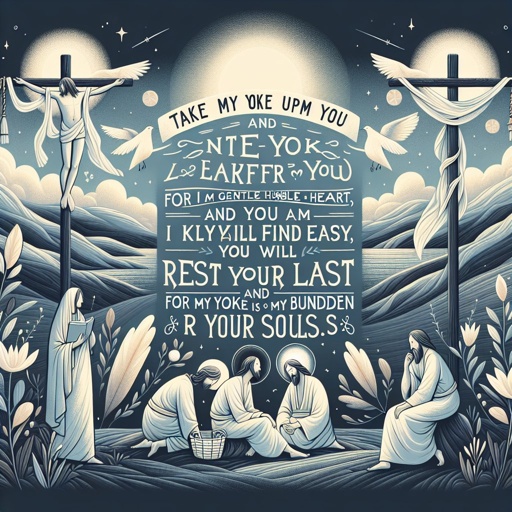
Matthew 11:29-30 - "Take my yoke upon you and learn from me, for I am gentle and humble in heart, and you will find rest for your souls. For my yoke is easy and my burden is light."

"Take my yoke upon you, and learn of me; for I am meek and lowly in heart: and ye shall find rest unto your souls." - Matthew 11:29
"Take my yoke upon you, and learn of me; for I am meek and lowly in heart: and ye shall find rest unto your souls." - Matthew 11:29
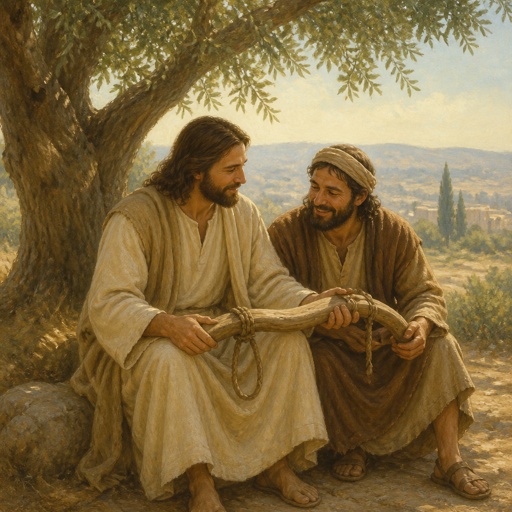
"Take my yoke upon you and learn from me, for I am gentle and humble in heart, and you will find rest for your souls. For my yoke is easy and my burden is light." - Matthew 11:29-30

Matthew 11:3

Matthew 11:28-29 - "Come to me, all you who are weary and burdened, and I will give you rest. Take my yoke upon you and learn from me, for I am gentle and humble in heart, and you will find rest for your souls."

Matthew 20:29-34

Matthew 7:24-29

Matthew 7:24-29

Jeremiah 29:11-13

Jeremiah 29:11-13

Jeremiah 29:11-13

Jeremiah 29:11-13

Jeremiah 29:11

Jeremiah 29:11

Jeremiah 29:11

Jeremiah 29:11

Matthew 20:29 - "And as they departed from Jericho, a great multitude followed him."

Matthew 7:29 - "For he taught them as one having authority, and not as the scribes."

Matthew 21:29 - "He answered and said, I will not: but afterward he repented, and went."

Matthew 6:29 expressed as a rose garden

Haggai 2:9

Matthew 2:9

Matthew 9:29 - "Then touched he their eyes, saying, According to your faith be it unto you."

Nehemiah 11:29 - "And at En-rimmon, and at Zareah, and at Jarmuth,"

Matthew 3:11

Matthew 3:11

Matthew 3:11

Matthew 3:11