What does Matthew 10:32 mean?
"Whosoever therefore shall confess me before men, him will I confess also before my Father which is in heaven." - Matthew 10:32
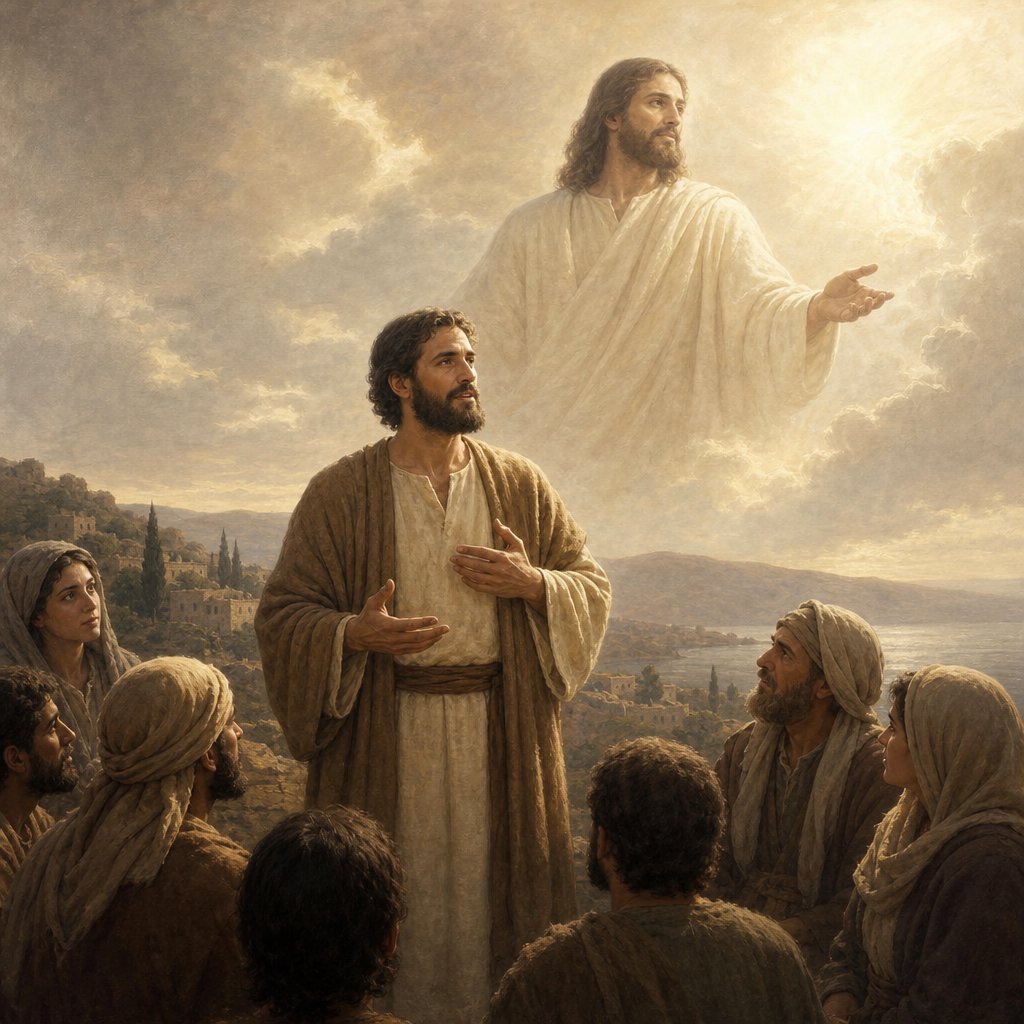
“Whosoever therefore shall confess me before men, him will I confess also before my Father which is in heaven.” (Matthew 10:32, KJV)
In this saying Jesus sets a solemn, bright line between hidden discipleship and open allegiance. The word “therefore” ties the verse to what He has just been teaching: His disciples will face fear, opposition, and the pressure to be silent, yet they are not to let threats govern their witness. In the immediate context of Matthew 10, Christ is sending the twelve forth to preach, and He repeatedly prepares them for rejection, persecution, and the temptation to protect themselves by shrinking back. Matthew 10:32 is thus not an isolated proverb; it is a commissioning word meant to steady the heart of those who are about to speak for Him in a hostile world.
To “confess” Christ “before men” is more than merely admitting private belief; it is the outward owning of Him—speaking His name, standing with His doctrine, and not refusing identification with Him when that identification carries a cost. The phrase “before men” matters because the arena of this confession is public life, where reputations are at stake and where human approval can compete with faith. In the chapter Jesus has already warned that the disciple is not above his master and that the servant will be treated as the master was treated; confessing Him, then, is portrayed as an act of loyalty in the same world that resisted Him. It is faith refusing to stay safely invisible.
The reciprocal promise—“him will I confess also”—gives the verse its profound weight. Jesus presents Himself as one who will speak on behalf of His people, not merely as their teacher but as their advocate. The imagery is courtroom-like: the disciple bears witness to Christ in the earthly court of human opinion, and Christ bears witness to the disciple in the heavenly court. The direction of the promise is striking: a confession made in weakness and danger on earth is answered by a confession made in authority and glory in heaven. The disciple’s testimony may be scorned “before men,” but Christ’s testimony “before my Father which is in heaven” is decisive.
Calling God “my Father” highlights the unique authority behind Jesus’ words. He is not describing a distant deity but speaking from the place of sonship. His promise implies access: He stands in the presence of the Father and can “confess” a person there. This is not mere encouragement; it is a claim about who Jesus is and what role He plays. The verse therefore carries Christological significance: the one who sends disciples to speak on earth is the one who has standing in heaven to speak for them.
The theme of loyalty runs through the verse, but it is not loyalty as a vague sentiment. It is loyalty expressed as confession—truth voiced, allegiance acknowledged, identity owned. In Matthew 10 the disciples are told not to fear those who can kill the body, and they are reminded that the Father knows even the fall of a sparrow; Matthew 10:32 sits within that atmosphere of reverent fear and divine care. Because the Father is sovereign and attentive, confession becomes both possible and required. The disciple is not asked to be fearless because danger is unreal, but because God is real and ultimate.
There is also the theme of representation. The disciple is Christ’s representative on earth, proclaiming Him “before men.” In turn, Christ represents the disciple in heaven, confessing him “before my Father.” This mirrored relationship underscores the seriousness of discipleship: to belong to Jesus is to be bound to Him in public witness now and in acknowledged belonging then. The verse points to a future disclosure in the heavenly realm, suggesting that what is confessed in time will be recognized in eternity.
Symbolically, “before men” and “before my Father which is in heaven” set two audiences in contrast. Human society is portrayed as a stage where discipleship is tested; heaven is portrayed as the true court where the final verdict and true honor are rendered. This contrast relativizes human judgment. Men may deny, mock, or punish, but their assessment is not final. The disciple’s open confession aligns him with the verdict of heaven rather than the shifting approval of earth.
At the same time, the verse is intensely personal: “Whosoever” widens the promise beyond the twelve to anyone who will own Christ; “me” keeps the center fixed on Jesus Himself. Confession is not merely adherence to an ethic, a movement, or a set of abstract principles. It is owning a person—Christ—and being owned by Him in return. That mutual acknowledgment is the heart of the verse’s significance: public allegiance to Jesus in this life corresponds to Jesus’ acknowledgment of the believer in the presence of the Father.
In sum, Matthew 10:32, KJV, is a promise and a warning in the shape of a promise. It calls for courageous, public fidelity to Christ amid real opposition, and it anchors that call in the greater reality of heaven, where Jesus speaks for His people before the Father. The verse teaches that discipleship is not meant to be concealed when confession is costly, and it assures that the cost of confessing Christ before men is not wasted, for Christ Himself will confess that disciple “before my Father which is in heaven.”
Have questions about Matthew 10:32?
Dive deeper into this scripture with Bible Chat — an AI-powered tool for exploring God's Word through conversation. Ask questions, get context, and grow in your understanding of the Bible.
Get Our Apps


Matthew 10:32 Artwork
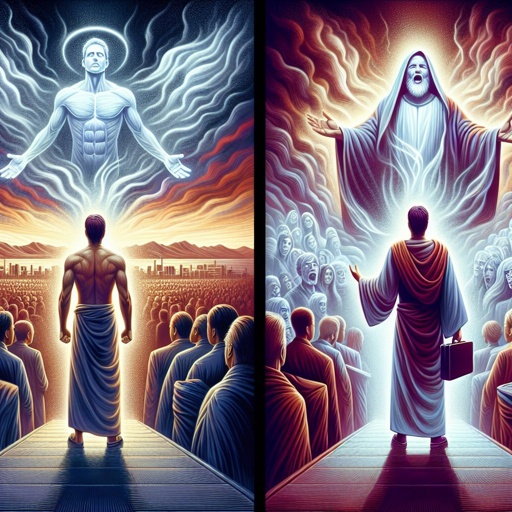
Matthew 10:32 - "Whosoever therefore shall confess me before men, him will I confess also before my Father which is in heaven."

Matthew 10: 32 “Therefore whoever confesses Me before men, him I will also confess before My Father who is in heaven.
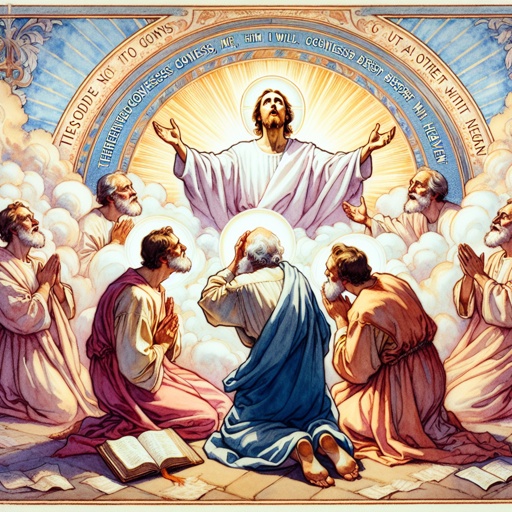
Matthew 10: 32 “Therefore whoever confesses Me before men, him I will also confess before My Father who is in heaven.
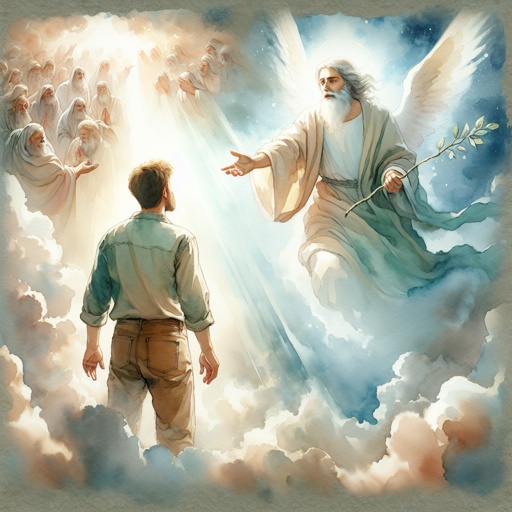
Matthew 10: 32 “Therefore whoever confesses Me before men, him I will also confess before My Father who is in heaven.
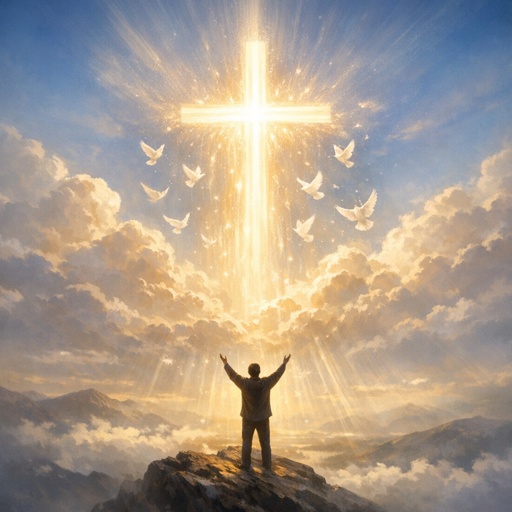
"Whosoever therefore shall confess me before men, him will I confess also before my Father which is in heaven." - Matthew 10:32
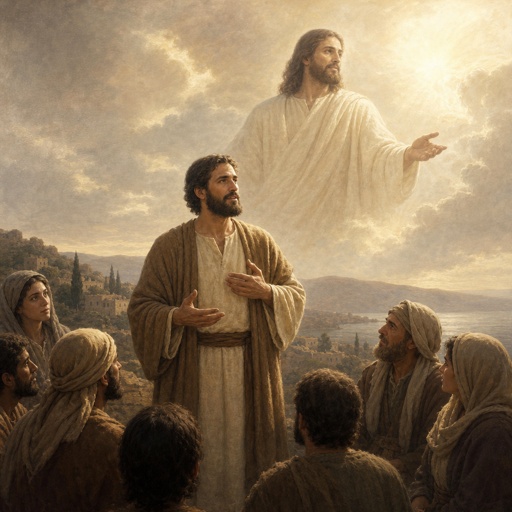
"Whosoever therefore shall confess me before men, him will I confess also before my Father which is in heaven." - Matthew 10:32

Matthew 8:32

Matthew 8:32

Matthew 8:32

Matthew 23:32 - "Fill ye up then the measure of your fathers."

Matthew 14:32 - "And when they were come into the ship, the wind ceased."

Ezra 10:32 - "Benjamin, Malluch, and Shemariah."

Matthew 9:32 - "¶ As they went out, behold, they brought to him a dumb man possessed with a devil."

Matthew 26:32 - "But after I am risen again, I will go before you into Galilee."

matthew 15 matthew 15:10

Matthew 22:32 - "I am the God of Abraham, and the God of Isaac, and the God of Jacob? God is not the God of the dead, but of the living."

Matthew 27:32 - "And as they came out, they found a man of Cyrene, Simon by name: him they compelled to bear his cross."

Matthew 20:32 - "And Jesus stood still, and called them, and said, What will ye that I shall do unto you?"

"Benjamin, Malluch, and Shemariah." - Ezra 10:32

Numbers 32:10 - "And the LORD'S anger was kindled the same time, and he sware, saying,"

"Fill ye up then the measure of your fathers." - Matthew 23:32

"And when they were come into the ship, the wind ceased." - Matthew 14:32

Proverbs 10:32 - "The lips of the righteous know what is acceptable: but the mouth of the wicked speaketh frowardness."

Matthew 6:32 - "(For after all these things do the Gentiles seek:) for your heavenly Father knoweth that ye have need of all these things."

Matthew 1:10

Matthew 18:10

Matthew 1:10

Matthew 4:10

Jeremiah 32:10 - "And I subscribed the evidence, and sealed it, and took witnesses, and weighed him the money in the balances."

Job 32:10 - "Therefore I said, Hearken to me; I also will shew mine opinion."