What does Matthew 10:29-30 mean?
""Are not two sparrows sold for a penny? and one of them shall not fall on the ground without your Father. But the very hairs of your head are all numbered." - Matthew 10:29-30 (KJV)" - Matthew 10:29-30
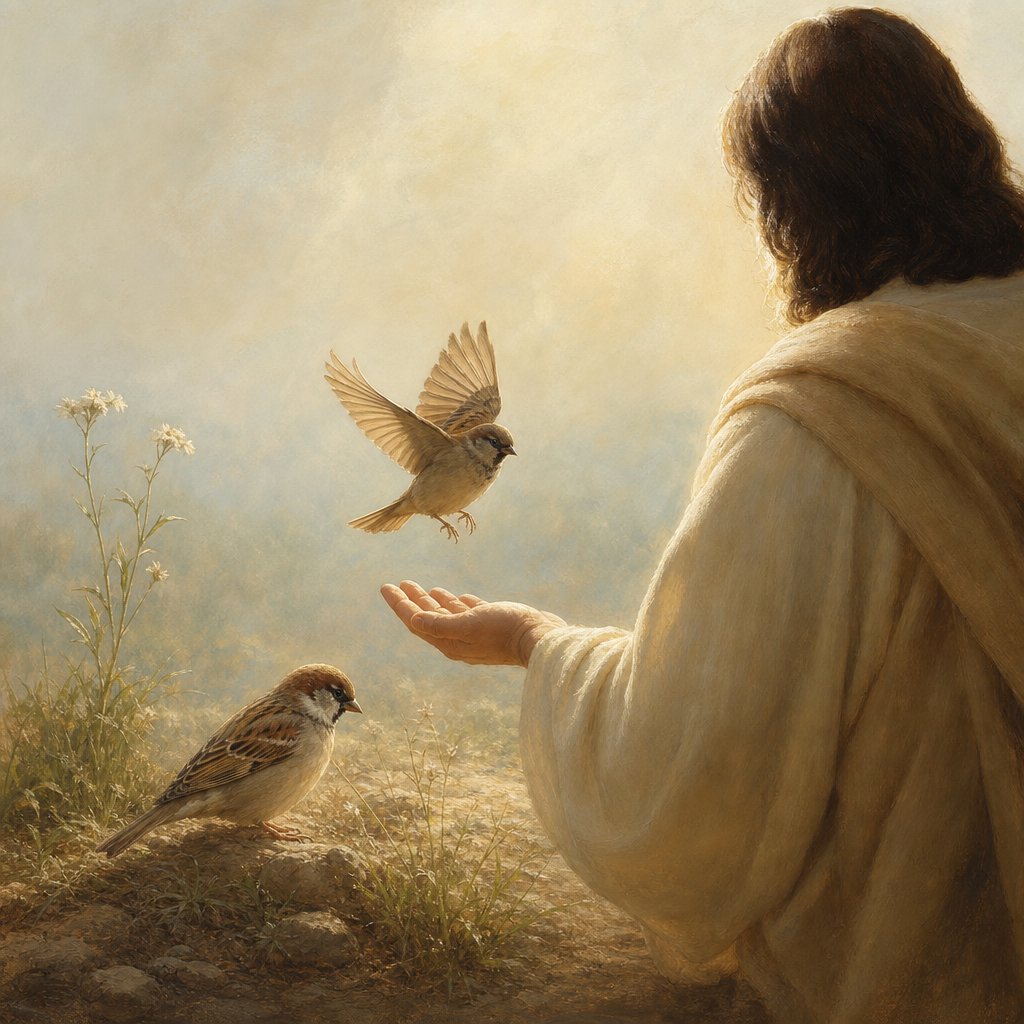
Matthew 10:29–30 in the KJV reads, “Are not two sparrows sold for a farthing? and one of them shall not fall on the ground without your Father. But the very hairs of your head are all numbered.” In its plain sense, Christ is saying that nothing in creation is too small to be under the notice of God, and no detail about the lives of His people is outside His careful knowledge and rule. The two sayings belong together: the first pictures the seeming insignificance of a sparrow, the second turns from the least of creatures to the intimate particulars of a human life. Taken as a single thought, they are meant to steady the heart with the truth that divine providence is both universal and personal.
The immediate context is Christ’s instruction to the twelve as He sends them out to preach. Matthew 10 is filled with sober warnings about opposition, persecution, and fear: they will be “delivered up,” “scourged,” and “hated of all men.” In that setting, Matthew 10:29–30 is not a general reflection on nature offered for its own sake; it is a direct answer to the pressure of fear. Just before, Christ says, “Fear not them which kill the body” and “be not afraid.” Just after, He adds, “Fear ye not therefore, ye are of more value than many sparrows.” The point is not that disciples will never suffer, but that their suffering does not mean abandonment. The mission Christ gives may place them in real danger, yet it is carried out under a Father’s government that cannot be bypassed by human violence or chance.
The sparrows and the “farthing” carry symbolic weight through their ordinariness. Sparrows were common and cheap; “two sparrows sold for a farthing” evokes something of negligible market value, easily purchased, easily overlooked, easily lost. Christ chooses what is small and inexpensive precisely to show the breadth of God’s care: if even the most ordinary creature is not outside the Father’s attention, then the disciple who feels exposed and expendable in a hostile world is not forgotten. The phrase “one of them shall not fall on the ground without your Father” speaks to the reality of death and loss in creation, but it denies that such events are random or meaningless. “Without your Father” does not present God as distant observer but as Father, a word that frames providence in personal relationship rather than cold fate. The verse does not say the sparrow never falls; it says the fall does not occur outside the Father’s rule. That distinction matters in Matthew 10, because Christ is preparing His servants to face hardship without interpreting hardship as divine absence.
When Christ adds, “But the very hairs of your head are all numbered,” He intensifies the idea from the general to the intimate. It is one thing to say God knows the sparrow; it is another to say God’s knowledge extends to what no person counts and what constantly changes. Hair is trivial in worth and too numerous for ordinary reckoning, yet the KJV says “all numbered,” implying complete knowledge, not approximate awareness. In Scripture, numbering often suggests deliberate attention and order, not mere statistics. Here it speaks of God’s meticulous governance: nothing about the disciple’s life is vague to Him, even what seems too small to matter. In the same way that the sparrow represents the least among creatures, the numbered hairs represent the least among details. Together they form a picture of providence that reaches from the smallest event to the smallest particular.
The themes that emerge are God’s fatherly providence, the worth of the disciple, and the conquest of fear through trust. Christ is not offering an argument that believers will avoid pain; He is giving a foundation for courage. If the Father’s rule extends to a sparrow’s fall and to the numbering of hairs, then the disciple’s public witness, private suffering, and even death cannot be outside God’s knowledge and purpose. The verses therefore function as pastoral reassurance: the One who sends them knows exactly what they will meet, and His care is not diminished by the scale of the threat.
There is also a quiet correction of human measures of value. The world prices sparrows by the “farthing,” and it may price Christ’s messengers as disposable; God’s valuation is different. By invoking sparrows, Christ acknowledges how easily people can feel cheap in the face of persecution. By calling God “your Father” and pointing to numbered hairs, He answers that feeling with belonging and significance. The disciple’s life is not a loose thread in history; it is held in the Father’s hand with deliberate knowledge.
In the end, Matthew 10:29–30 is significant because it anchors discipleship in the character of God. The mission is dangerous, the opposition real, and the servant vulnerable; nevertheless, God’s providence is not abstract but fatherly, not occasional but constant, not merely concerned with great turning points but attentive to the smallest creature and the smallest detail. That is why these words sit where they do in Matthew 10: they are meant to make fearless witness possible, not by denying danger, but by declaring that nothing happens “without your Father,” and that the lives of His people are known down to “the very hairs” of their head.
Have questions about Matthew 10:29-30?
Dive deeper into this scripture with Bible Chat — an AI-powered tool for exploring God's Word through conversation. Ask questions, get context, and grow in your understanding of the Bible.
Get Our Apps


Matthew 10:29-30 Artwork

Matthew 10:29-30 - "Are not two sparrows sold for a penny? Yet not one of them will fall to the ground outside your Father’s care. And even the very hairs of your head are all numbered."
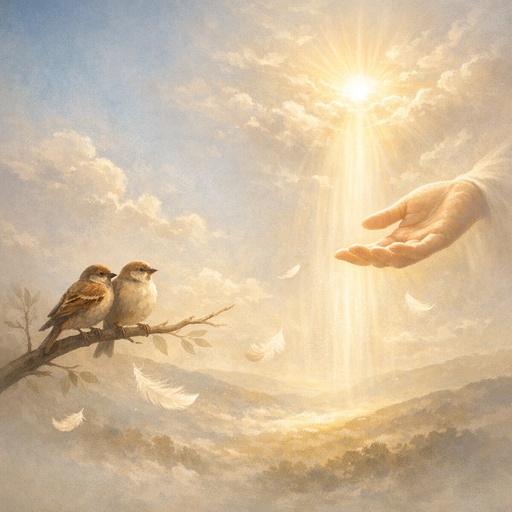
"Are not two sparrows sold for a penny? Yet not one of them will fall to the ground outside your Father’s care. And even the very hairs of your head are all numbered." - Matthew 10:29-30
"Are not two sparrows sold for a penny? Yet not one of them will fall to the ground outside your Father’s care. And even the very hairs of your head are all numbered." - Matthew 10:29-30

Matthew24:29-30

Matthew 10:30 - "But the very hairs of your head are all numbered."

Matthew 10:29 - "Are not two sparrows sold for a farthing? and one of them shall not fall on the ground without your Father."
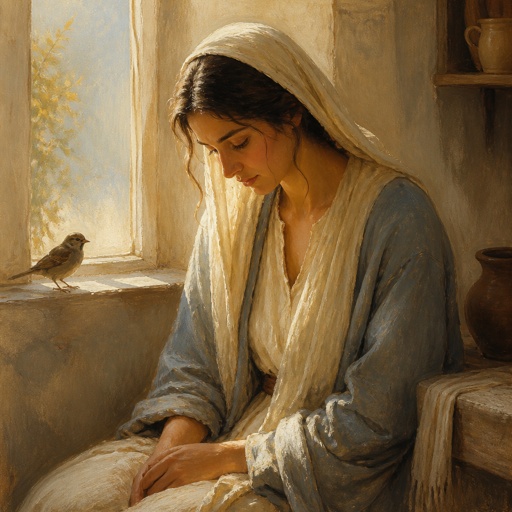
"But the very hairs of your head are all numbered." - Matthew 10:30
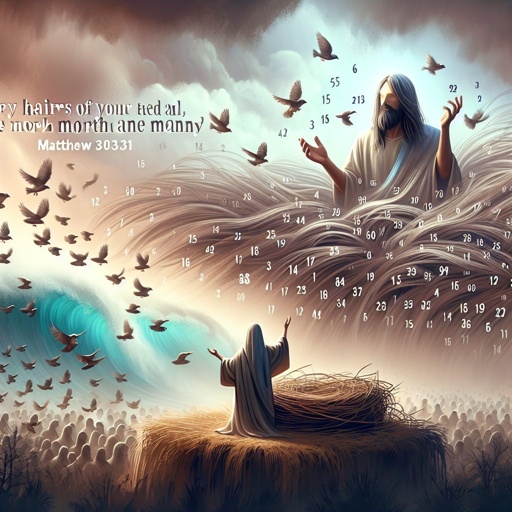
Matthew 10:30-31 - "But the very hairs of your head are all numbered. So don’t be afraid; you are worth more than many sparrows."
Matthew 11:29-30 - "Take my yoke upon you and learn from me, for I am gentle and humble in heart, and you will find rest for your souls. For my yoke is easy and my burden is light."

luke 9:29- 30

Genesis 29:15-30
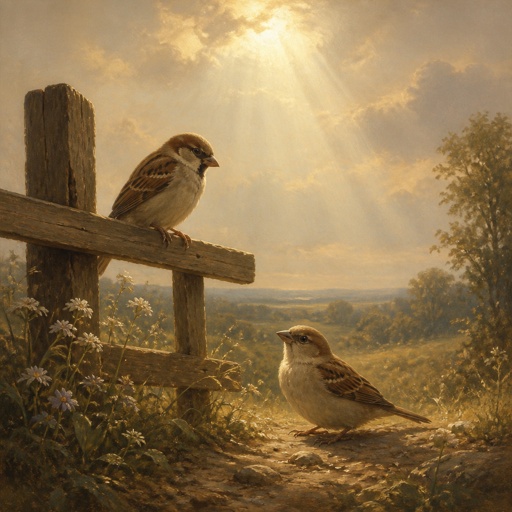
"Are not two sparrows sold for a farthing? and one of them shall not fall on the ground without your Father." - Matthew 10:29

Matthew 6:30

Job 30:29 - "I am a brother to dragons, and a companion to owls."

Jeremiah 29:30 - "¶ Then came the word of the LORD unto Jeremiah, saying,"

Matthew 5:30

Matthew 5:30

Matthew 24:30-31

Matthew 24:30-31

Matthew 24:30-31

Matthew 24:30-31

Matthew 24:30-31

Matthew 24:30-31

Matthew 24:30-31

Matthew 10:29-31 - "Are not two sparrows sold for a penny? Yet not one of them will fall to the ground apart from the will of your Father. And even the very hairs of your head are all numbered. So don’t be afraid; you are worth more than many sparrows."

Exodus 4:29-30 KJVA (29) And Moses and Aaron went and gathered together all the elders of the children of Israel: (30) And Aaron spake all the words which the LORD had spoken unto Moses, and did the signs in the sight of the people.

Matthew 20:29-34

Matthew 24:30-31

Matthew 24:30-31

Matthew 24:30-31