What does Mark 4:19 mean?
"And the cares of this world, and the deceitfulness of riches, and the lusts of other things entering in, choke the word, and it becometh unfruitful." - Mark 4:19
Mark 4:19 in the King James Version of the Bible reads, "And the cares of this world, and the deceitfulness of riches, and the lusts of other things entering in, choke the word, and it becometh unfruitful."
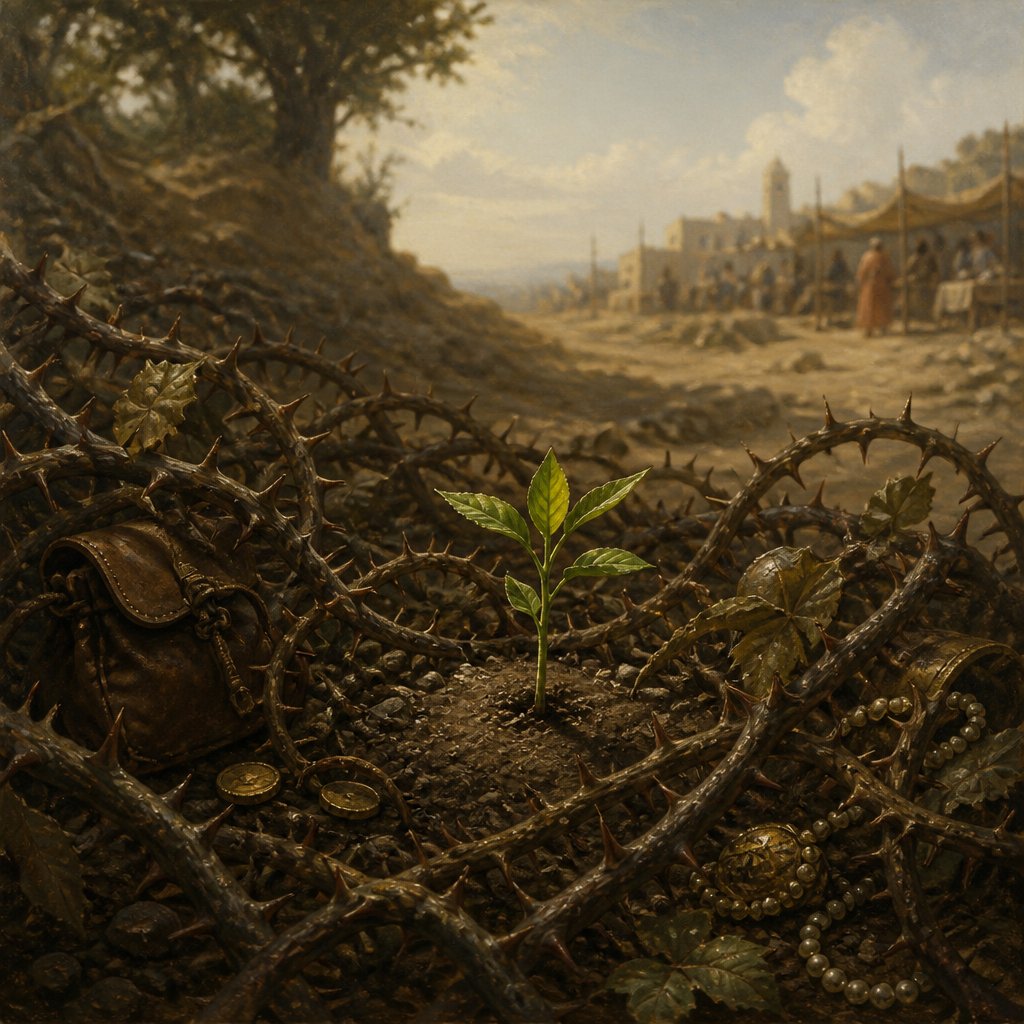
This verse is taken from the parable of the sower, which is found in the gospel of Mark, chapter 4. Jesus tells this parable to the crowd to illustrate the different ways that people respond to the word of God. In this particular verse, Jesus is describing the seed that fell among thorns, which represents those who hear the word of God but allow the worries and temptations of the world to choke it out.
The first part of the verse discusses "the cares of this world." This refers to the anxieties and concerns that come with living in the fallen world. It can include worries about finances, relationships, health, and other aspects of life that can distract us from focusing on God and His word. The deceitfulness of riches is the second factor mentioned in this verse. This refers to the way that wealth and material possessions can entice and deceive people, leading them to put their trust in money and possessions rather than in God. The pursuit of wealth can become all-consuming, leaving little room for the word of God to take root and grow in a person's life. Lastly, the verse mentions "the lusts of other things entering in," which can be understood as the desire for things other than God. This could include the pursuit of pleasure, power, success, or any other worldly desire that distracts and pulls a person away from God.
The overall message of this verse is that the worries, temptations, and distractions of the world can prevent the word of God from taking root in a person's life and bearing fruit. It serves as a warning to believers to be mindful of the things that can hinder their spiritual growth and to prioritize their relationship with God above all else.
One of the key themes in this verse is the contrast between the temporary nature of worldly concerns and the everlasting nature of the word of God. The cares of this world, the deceitfulness of riches, and the lusts of other things are all transient, fleeting things that do not ultimately satisfy. In contrast, the word of God is eternal and has the power to bring about transformation and growth in the lives of those who receive and embrace it. This serves as a reminder to believers to focus on the eternal things of God rather than getting caught up in the temporary concerns of the world.
Another important theme in this verse is the concept of spiritual fruitfulness. When the word of God is allowed to take root and grow in a person's life, it produces spiritual fruit such as love, joy, peace, patience, kindness, goodness, faithfulness, gentleness, and self-control (Galatians 5:22-23). However, when the distractions and cares of the world choke out the word, it becomes unfruitful. This serves as a reminder of the importance of nurturing our relationship with God and guarding against the things that can hinder our spiritual growth and fruitfulness.
The context of this verse is also important to consider. It is part of a series of parables that Jesus used to teach the crowds about the kingdom of God. In the preceding verses, Jesus explains the different types of soil that the seed (representing the word of God) falls on, and the corresponding responses of the people who hear it. The shallow soil represents those who receive the word with enthusiasm but quickly fall away when faced with persecution or trials. The rocky soil represents those who receive the word with joy but have no root and wither away when difficulties arise. The thorny soil, as described in Mark 4:19, represents those who allow the cares and distractions of the world to choke out the word and prevent it from taking root and growing.
In this broader context, Mark 4:19 serves as a warning to believers about the potential obstacles and challenges that can hinder their spiritual growth and fruitfulness. It encourages believers to cultivate a heart that is receptive to the word of God and to guard against the distractions and temptations of the world that can choke out the word and make it unfruitful.
The symbolism in this verse is also worth noting. The thorns that choke out the word of God can be seen as representing the cares and concerns of the world. In biblical symbolism, thorns are often associated with the consequences of sin and the fallen nature of the world. In the book of Genesis, thorns and thistles are described as part of the curse that came as a result of the fall (Genesis 3:18). They are a reminder of the brokenness and fallenness of the world, and how it can hinder and obstruct the growth of God's word in our lives.
In conclusion, Mark 4:19 contains a powerful and timely message for believers today. It serves as a warning to guard against the cares, distractions, and temptations of the world that can hinder our spiritual growth and fruitfulness. By prioritizing our relationship with God and cultivating a heart that is receptive to His word, we can ensure that it takes root and produces a bountiful harvest in our lives.
Have questions about Mark 4:19?
Dive deeper into this scripture with Bible Chat — an AI-powered tool for exploring God's Word through conversation. Ask questions, get context, and grow in your understanding of the Bible.
Get Our Apps


Mark 4:19 Artwork

Mark 4:19 - "And the cares of this world, and the deceitfulness of riches, and the lusts of other things entering in, choke the word, and it becometh unfruitful."
"And the cares of this world, and the deceitfulness of riches, and the lusts of other things entering in, choke the word, and it becometh unfruitful." - Mark 4:19

Mark 11:19 - "And when even was come, he went out of the city."

mark 2:4

mark 2:4

mark 2:4

Mark.19:52 Jeesus parantaa sokean

mark 2:4

Mark 4:41

Mark 4:41

mark 2:4

Mark 4:41

Mark 2:4

mark 2:4

Mark 4:41

Mark 3:19 - "And Judas Iscariot, which also betrayed him: and they went into an house."

Mark 4:36-37

Mark 4:36-37

Mark 16:4-5

Mark 16:4-5

Mark 16:4-5

Mark 4:35-37

Mark 4:14 - "¶ The sower soweth the word."

Mark 4:35-41

Mark 14:19 - "And they began to be sorrowful, and to say unto him one by one, Is it I? and another said, Is it I?"

Mark 15:19 - "And they smote him on the head with a reed, and did spit upon him, and bowing their knees worshipped him."

Mark 6:19 - "Therefore Herodias had a quarrel against him, and would have killed him; but she could not:"

Mark 4:4 - "And it came to pass, as he sowed, some fell by the way side, and the fowls of the air came and devoured it up."

Mark 4:18 - "And these are they which are sown among thorns; such as hear the word,"

Mark 4:3 - "Hearken; Behold, there went out a sower to sow:"