What does Mark 16:13 mean?
"And they went and told it unto the residue: neither believed they them." - Mark 16:13
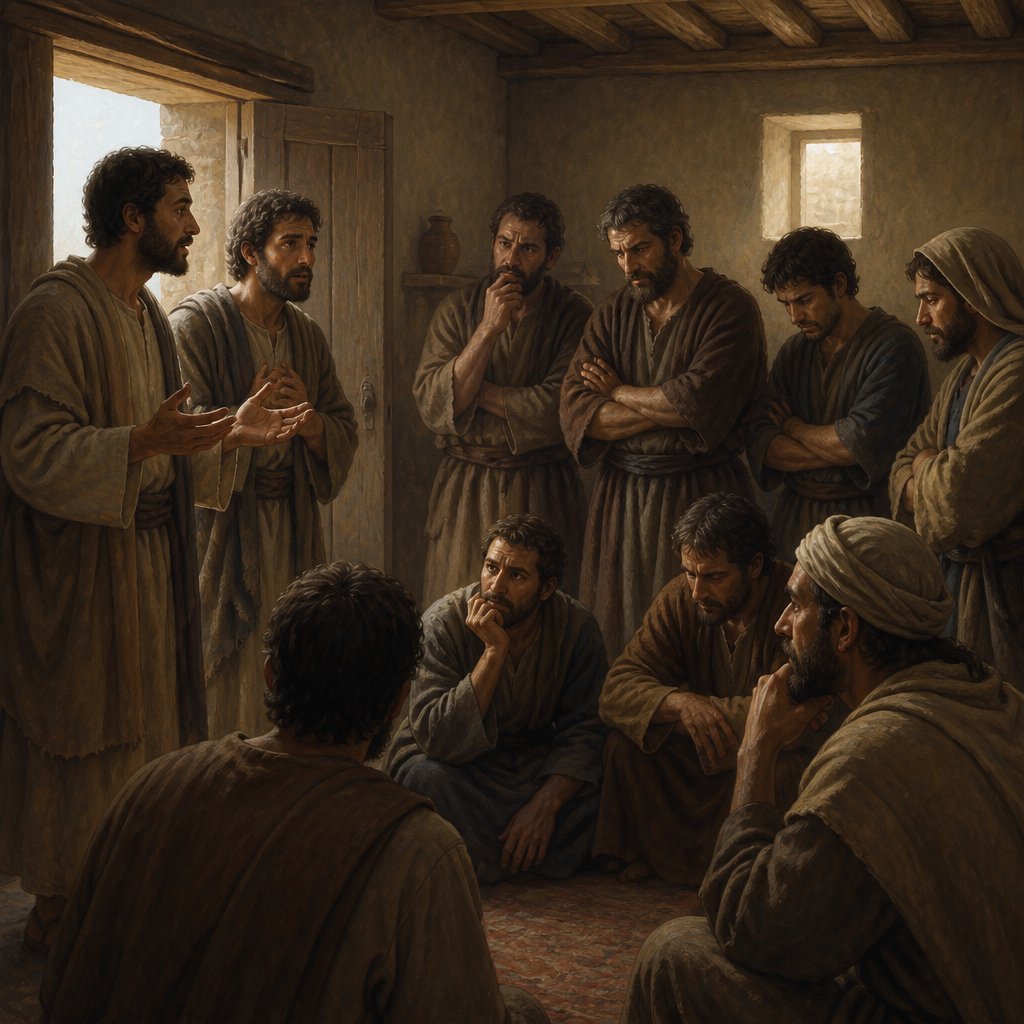
Mark 16:13 in the King James Version of the Bible reads: "And they went and told it unto the residue: neither believed they them." This verse comes from the Gospel of Mark, which is the second book of the New Testament. It is part of the account of the resurrection of Jesus Christ.
The context of this verse takes place after the women who had come to Jesus' tomb found it empty and encountered an angel who told them that Jesus had risen from the dead. In Mark 16:10-11, it says, "And she went and told them that had been with him, as they mourned and wept. And they, when they had heard that he was alive, and had been seen of her, believed not." This sets the stage for the disbelief that is expressed in verse 13. The "residue" refers to the remaining disciples and followers of Jesus who were not among the first to witness the empty tomb and the angel's message.
The themes present in this verse are disbelief, doubt, and the struggle to have faith in something extraordinary. The immediate reaction of the residue to the news of Jesus' resurrection is one of skepticism and incredulity. It is a natural human response to have doubts about something as miraculous as a person being raised from the dead. This theme of disbelief is a common thread throughout the Gospels, as even Jesus' closest followers often struggled to fully grasp the magnitude of his teachings and the events surrounding his life and death.
The context of this verse within the larger narrative of the Gospel of Mark is significant. The Gospel of Mark is known for its brevity and emphasis on action. It portrays Jesus as a powerful and enigmatic figure, often performing miracles and displaying his authority over the forces of nature and evil. However, the disciples and other characters in the story frequently misunderstand or underestimate Jesus and his mission. This passage is part of Mark's portrayal of the disciples' faltering faith and lack of understanding of Jesus' true identity and purpose.
The symbolism in this verse lies in the contrast between the women who witnessed the resurrection and the disbelief of the residue. The women, who are traditionally unnamed in the Gospel of Mark but are often identified as Mary Magdalene and Mary the mother of James, are depicted as faithful and obedient. They are the first to receive the news of Jesus' resurrection and are entrusted with the task of spreading the word to the disciples. Their role as messengers of the resurrection highlights the important role of women in the proclamation of the Gospel, despite the initial disbelief of the male disciples.
Furthermore, the disbelief of the residue serves to emphasize the extraordinary nature of the resurrection. It underscores the fact that Jesus' resurrection was not something that could be easily accepted or understood. The disbelief of the residue also sets the stage for the eventual appearance of Jesus himself to the disciples, where he rebukes them for their unbelief and hardness of heart (Mark 16:14).
In conclusion, Mark 16:13 is a pivotal verse in the Easter narrative, highlighting the themes of disbelief and doubt in the face of miraculous events. It also serves as a crucial moment in the disciples' journey of faith and understanding of Jesus' identity and mission. The verse's placement within the Gospel of Mark and its symbolism further enrich its significance within the broader Christian narrative.
Have questions about Mark 16:13?
Dive deeper into this scripture with Bible Chat — an AI-powered tool for exploring God's Word through conversation. Ask questions, get context, and grow in your understanding of the Bible.
Get Our Apps


Mark 16:13 Artwork

Mark 16:13 - "And they went and told it unto the residue: neither believed they them."
"And they went and told it unto the residue: neither believed they them." - Mark 16:13

Mark 10:13–16

Mark 13:16 - "And let him that is in the field not turn back again for to take up his garment."

Revelation 13:16 - "And he causeth all, both small and great, rich and poor, free and bond, to receive a mark in their right hand, or in their foreheads:"
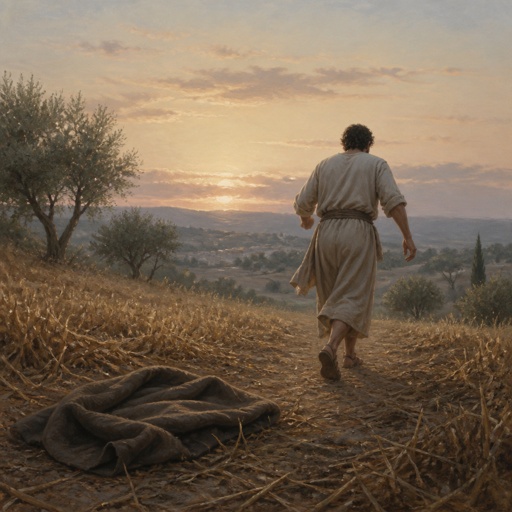
"And let him that is in the field not turn back again for to take up his garment." - Mark 13:16

Mark 16:20
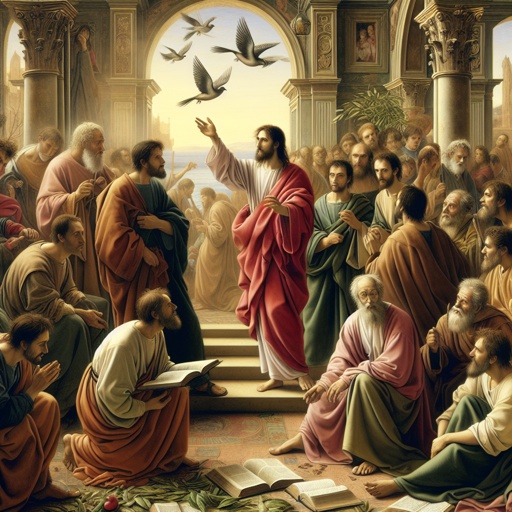
Mark 16:20

Mark 16:20
Mark 16:20

Mark 16:20

Mark 13:7

Mark 13:8

Mark 13:8

Mark 13:7

Mark 13:8

Mark 13:7

Mark 16:1-2

Mark 16:6-8

Mark 16:4-5

Mark 16:4-5

Mark 16:6-8

Mark 16:4-5

Mark 16:6-8
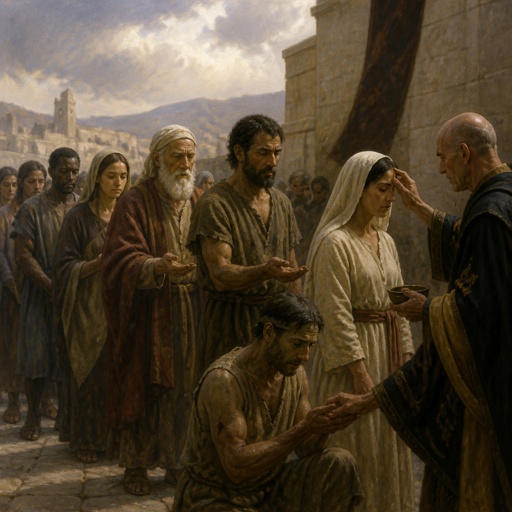
"And he causeth all, both small and great, rich and poor, free and bond, to receive a mark in their right hand, or in their foreheads:" - Revelation 13:16

Mark 3:16 - "And Simon he surnamed Peter;"

Mark 13:28-37

Mark 13:28-37

Mark 13:28-37

Mark 13:28-37