What does Mark 15:37 mean?
"And Jesus cried with a loud voice, and gave up the ghost." - Mark 15:37
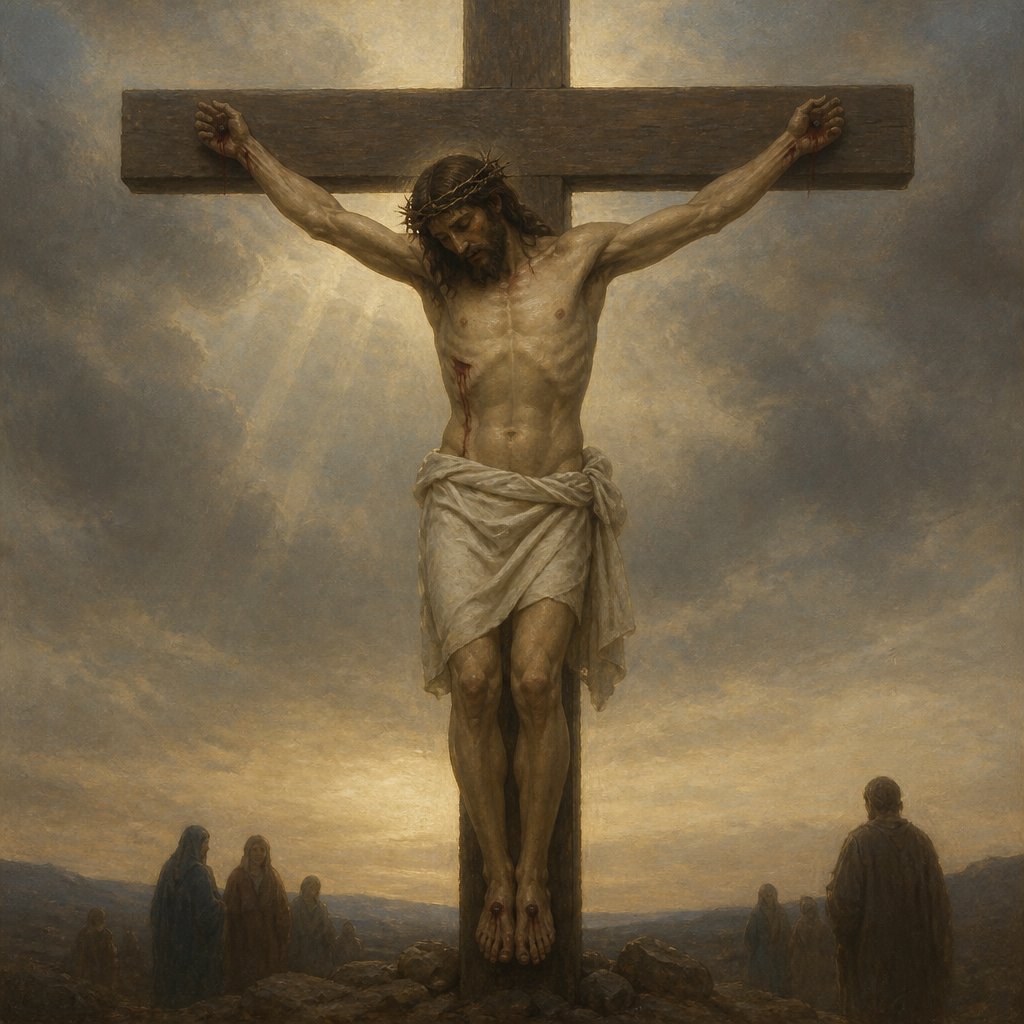
Mark 15:37 (KJV) states: "And Jesus cried with a loud voice, and gave up the ghost."
This verse comes from the Gospel of Mark, which records the crucifixion of Jesus Christ. It is a significant moment in the narrative, signifying the death of Jesus on the cross. The verse's language is poignant and powerful, emphasizing the profound impact of Jesus' sacrifice and the momentous nature of his death.
The context of this verse is framed by the events leading up to the crucifixion. Jesus had been betrayed by Judas Iscariot, arrested by the Jewish religious leaders, and brought before Pilate, the Roman governor. Despite Pilate finding no fault in Jesus, he succumbed to the pressure from the Jewish leaders and the crowd, agreeing to have Jesus crucified. The soldiers then mockingly crowned Jesus with thorns, placed a purple robe on him, and led him away to be crucified.
As Jesus hung on the cross, he endured great suffering and ridicule. The onlookers jeered at him, challenging him to come down from the cross if he truly was the Son of God. Even the two criminals who were crucified with him taunted him. Despite the agony and humiliation, Jesus remained steadfast, embodying humility, forgiveness, and love. It is in this grim and harrowing backdrop that the verse Mark 15:37 takes place.
The verse captures the moment of Jesus' death, emphasizing the physical and emotional intensity of the event. The phrase "cried with a loud voice" conveys not only the sheer agony Jesus experienced but also the significance of his final words. The loud cry could also be seen as a triumphant declaration, marking the completion of Jesus' redemptive work. It is a moment that reverberated through history, transforming the world and offering hope and salvation to all who believe in him.
The phrase "and gave up the ghost" is a powerful and evocative expression, signifying the voluntary surrender of Jesus' spirit. It conveys the idea that Jesus, as the Son of God, willingly yielded his life, fulfilling his purpose to redeem humanity. This act of sacrifice is a central tenet of Christian belief, illustrating the depth of God's love for humanity and the extent to which he was willing to go to reconcile humanity to himself.
Symbolically, the verse encapsulates the themes of redemption, atonement, and victory over sin and death. It highlights the profound significance of Jesus' death as the ultimate sacrifice for the forgiveness of sins. In Christian theology, Jesus' death and resurrection are central to the faith, providing a way for believers to be reconciled to God. The loud cry and the giving up of the ghost serve as powerful symbols of the magnitude of Jesus' sacrifice and the hope it offers to all who believe in him.
The verse also speaks to the sovereignty of God and the fulfillment of prophecy. Throughout the Old Testament, there are numerous prophecies that foretold the coming of a Messiah who would suffer and die for the sins of the world. The fulfillment of these prophecies in Jesus' death underscores the divine plan and purpose that was at work in this pivotal moment in history.
In conclusion, Mark 15:37 (KJV) is a profoundly significant verse that captures the climactic moment of Jesus' death on the cross. It embodies the themes of sacrifice, redemption, and victory, carrying profound theological and spiritual implications for Christians. The verse is a poignant reminder of the depth of God's love and the hope that Jesus' death and resurrection offer to all who believe in him.
Have questions about Mark 15:37?
Dive deeper into this scripture with Bible Chat — an AI-powered tool for exploring God's Word through conversation. Ask questions, get context, and grow in your understanding of the Bible.
Get Our Apps


Mark 15:37 Artwork

Mark 15:37 - "And Jesus cried with a loud voice, and gave up the ghost."

"And Jesus cried with a loud voice, and gave up the ghost." - Mark 15:37

Acts 15:37 - "And Barnabas determined to take with them John, whose surname was Mark."

"And Barnabas determined to take with them John, whose surname was Mark." - Acts 15:37

Psalms 37:37 - "Mark the perfect man, and behold the upright: for the end of that man is peace."

Mark 13;28-37

Mark 13;28-37

Mark 4:36-37

Mark 9:36-37

Mark 4:36-37

Mark 13:28-37

Mark 13:28-37

Mark 4:35-37

Mark 7:31-37

Mark 13:28-37

Mark 7:31-37

Mark 13:28-37

"Mark the perfect man, and behold the upright: for the end of that man is peace." - Psalms 37:37

Mark 8:37 - "Or what shall a man give in exchange for his soul?"

Mark 4:37 - "And there arose a great storm of wind, and the waves beat into the ship, so that it was now full."

Mark 13:37 - "And what I say unto you I say unto all, Watch."

Mark 5:37 - "And he suffered no man to follow him, save Peter, and James, and John the brother of James."

Mark 1:37 - "And when they had found him, they said unto him, All men seek for thee."

Joshua 15:37 - "Zenan, and Hadashah, and Migdal-gad,"

Isaiah 37:15 - "And Hezekiah prayed unto the LORD, saying,"

Numbers 15:37 - "¶ And the LORD spake unto Moses, saying,"

Mark 9:37 (KJVA) 37 Whosoever shall receive one of such children in my name, receiveth me: and whosoever shall receive me, receiveth not me, but him that sent me.

Mark 9:37 (KJVA) 37 Whosoever shall receive one of such children in my name, receiveth me: and whosoever shall receive me, receiveth not me, but him that sent me.

Mark 12:37 - "David therefore himself calleth him Lord; and whence is he then his son? And the common people heard him gladly."

Mark 15:12