What does Mark 14:64 mean?
"Ye have heard the blasphemy: what think ye? And they all condemned him to be guilty of death." - Mark 14:64
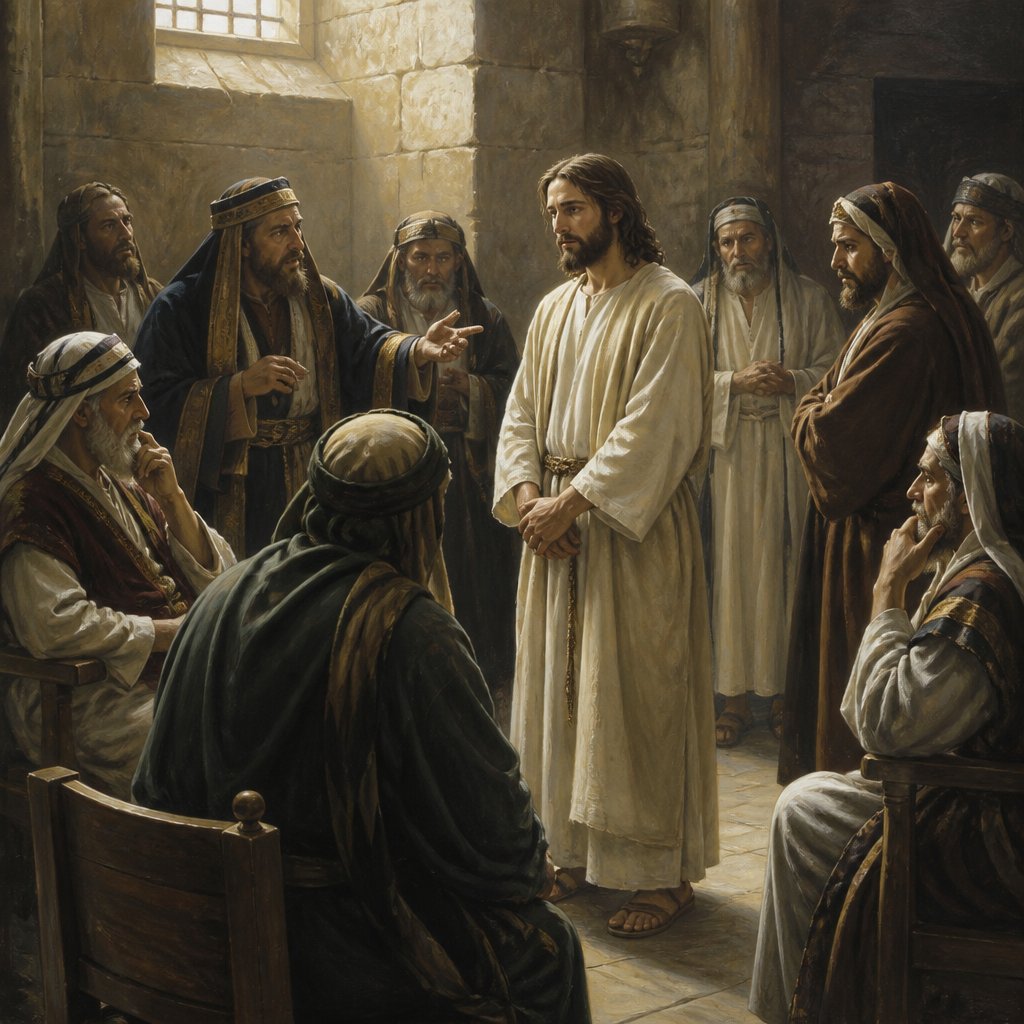
In Mark 14:64, the King James Version (KJV) of the Bible states, "Ye have heard the blasphemy: what think ye? And they all condemned him to be guilty of death." This verse is part of the narrative in the Gospel of Mark that describes the trial and condemnation of Jesus by the chief priests, elders, and scribes. The verse is significant in the larger context of the betrayal and crucifixion of Jesus, and it underscores the themes of persecution, injustice, and the fulfillment of prophecy.
The events leading up to Mark 14:64 began with the treacherous betrayal of Jesus by Judas Iscariot, one of his disciples. Judas had conspired with the religious authorities to hand Jesus over to them for thirty pieces of silver. After his arrest, Jesus was brought before the Jewish religious council, the Sanhedrin, for a trial. The chief priests and scribes sought false testimony against Jesus in order to put him to death, but their efforts were in vain. Finally, the high priest put Jesus under oath and asked him if he was the Messiah, the Son of God. When Jesus affirmed his divinity, the high priest accused him of blasphemy, which was punishable by death under Jewish law.
The verse Mark 14:64 captures the moment of condemnation, when the high priest asks the assembled council what they think of Jesus' claim of divinity. The response is unanimous - they all condemned him to be guilty of death. This moment marks a turning point in the narrative, as it sets in motion the events that lead to Jesus' crucifixion. The condemnation of Jesus by the religious authorities is a powerful demonstration of the injustice and persecution he faced, as well as the fulfillment of the prophecies of his suffering and death.
The theme of persecution is central to the larger narrative of the Gospels, and it is particularly pronounced in the Gospel of Mark. Throughout his ministry, Jesus faced opposition and hostility from various groups, including the religious leaders of his time. The trial and condemnation of Jesus reflect the deep-seated animosity that the religious authorities held towards him, as well as their determination to eliminate him as a threat to their power and authority. The verse Mark 14:64 serves as a stark reminder of the unjust treatment that Jesus endured at the hands of those who should have been his spiritual leaders.
In addition to the theme of persecution, the verse Mark 14:64 also highlights the fulfillment of prophecy in the crucifixion of Jesus. Throughout the Old Testament, there are numerous prophecies that foreshadow the suffering and death of the Messiah. The condemnation of Jesus as guilty of death is a fulfillment of these prophecies, particularly those found in Isaiah 53 and Psalm 22. These prophecies speak of the Messiah being despised and rejected, oppressed and afflicted, and ultimately, being pierced for our transgressions. The condemnation of Jesus by the religious authorities is a crucial step in the fulfillment of these prophecies, and it underscores the divine purpose and plan at work in the events leading to the crucifixion.
Lastly, the symbolism in Mark 14:64 is profound. The trial and condemnation of Jesus serve as a powerful symbol of the human condition and the universal need for redemption. In the gospel narrative, Jesus willingly submits to unjust condemnation in order to fulfill the will of God and offer salvation to all humanity. His sacrifice becomes the ultimate act of love and atonement, and it holds profound significance for all who believe in him. The symbolism of Jesus' condemnation is a poignant reminder of the depth of God's love and the hope of redemption through the suffering and death of Christ.
In conclusion, the verse Mark 14:64 from the King James Version of the Bible encapsulates the pivotal moment of Jesus' condemnation by the religious authorities. It serves to underscore the themes of persecution, injustice, and the fulfillment of prophecy, and it holds profound symbolism for the Christian faith. The events leading to the crucifixion of Jesus are a testament to the depth of God's love and the transformative power of Christ's sacrifice. This verse serves as a poignant reminder of the profound impact of Jesus' condemnation on humanity and the hope it offers for redemption.
Have questions about Mark 14:64?
Dive deeper into this scripture with Bible Chat — an AI-powered tool for exploring God's Word through conversation. Ask questions, get context, and grow in your understanding of the Bible.
Get Our Apps


Mark 14:64 Artwork

Mark 14:64 - "Ye have heard the blasphemy: what think ye? And they all condemned him to be guilty of death."
"Ye have heard the blasphemy: what think ye? And they all condemned him to be guilty of death." - Mark 14:64
Mark 14:51

Mark 4:14 - "¶ The sower soweth the word."

Mark 14:17 - "And in the evening he cometh with the twelve."

Mark 14:50 - "And they all forsook him, and fled."

Mark 14:46 - "¶ And they laid their hands on him, and took him."

Mark 14:59 - "But neither so did their witness agree together."

Mark 14:2 - "But they said, Not on the feast day, lest there be an uproar of the people."

"¶ The sower soweth the word." - Mark 4:14

Mark 14:39 - "And again he went away, and prayed, and spake the same words."

Mark 14:57 - "And there arose certain, and bare false witness against him, saying,"

Mark 14:26 - "¶ And when they had sung an hymn, they went out into the mount of Olives."

Mark 14:66 - "¶ And as Peter was beneath in the palace, there cometh one of the maids of the high priest:"

Mark 14:52 - "And he left the linen cloth, and fled from them naked."
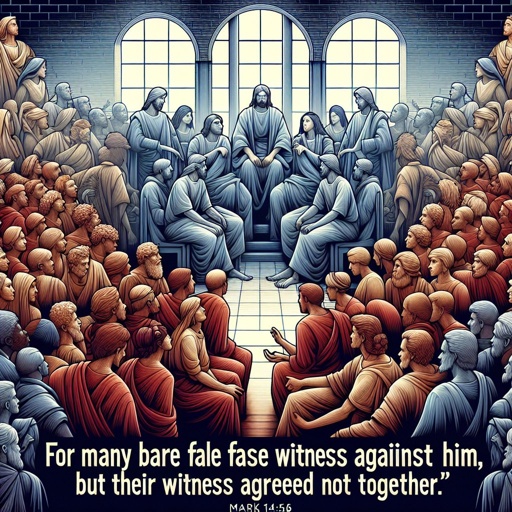
Mark 14:56 - "For many bare false witness against him, but their witness agreed not together."

Mark 14:14 - "And wheresoever he shall go in, say ye to the goodman of the house, The Master saith, Where is the guestchamber, where I shall eat the passover with my disciples?"

Mark 14:28 - "But after that I am risen, I will go before you into Galilee."

"And in the evening he cometh with the twelve." - Mark 14:17

Philippians 3:14 - "I press toward the mark for the prize of the high calling of God in Christ Jesus."

Mark 14:29 - "But Peter said unto him, Although all shall be offended, yet will not I."

"And they all forsook him, and fled." - Mark 14:50

Mark 14:42 - "Rise up, let us go; lo, he that betrayeth me is at hand."

Mark 14:20 - "And he answered and said unto them, It is one of the twelve, that dippeth with me in the dish."

Mark 14:69 - "And a maid saw him again, and began to say to them that stood by, This is one of them."

Mark 3:14 - "And he ordained twelve, that they should be with him, and that he might send them forth to preach,"

Mark 14:19 - "And they began to be sorrowful, and to say unto him one by one, Is it I? and another said, Is it I?"

Mark 14:24 - "And he said unto them, This is my blood of the new testament, which is shed for many."

Mark 14:33 - "And he taketh with him Peter and James and John, and began to be sore amazed, and to be very heavy;"

Mark 14:15 - "And he will shew you a large upper room furnished and prepared: there make ready for us."