What does Mark 14:6 mean?
"And Jesus said, Let her alone; why trouble ye her? she hath wrought a good work on me." - Mark 14:6
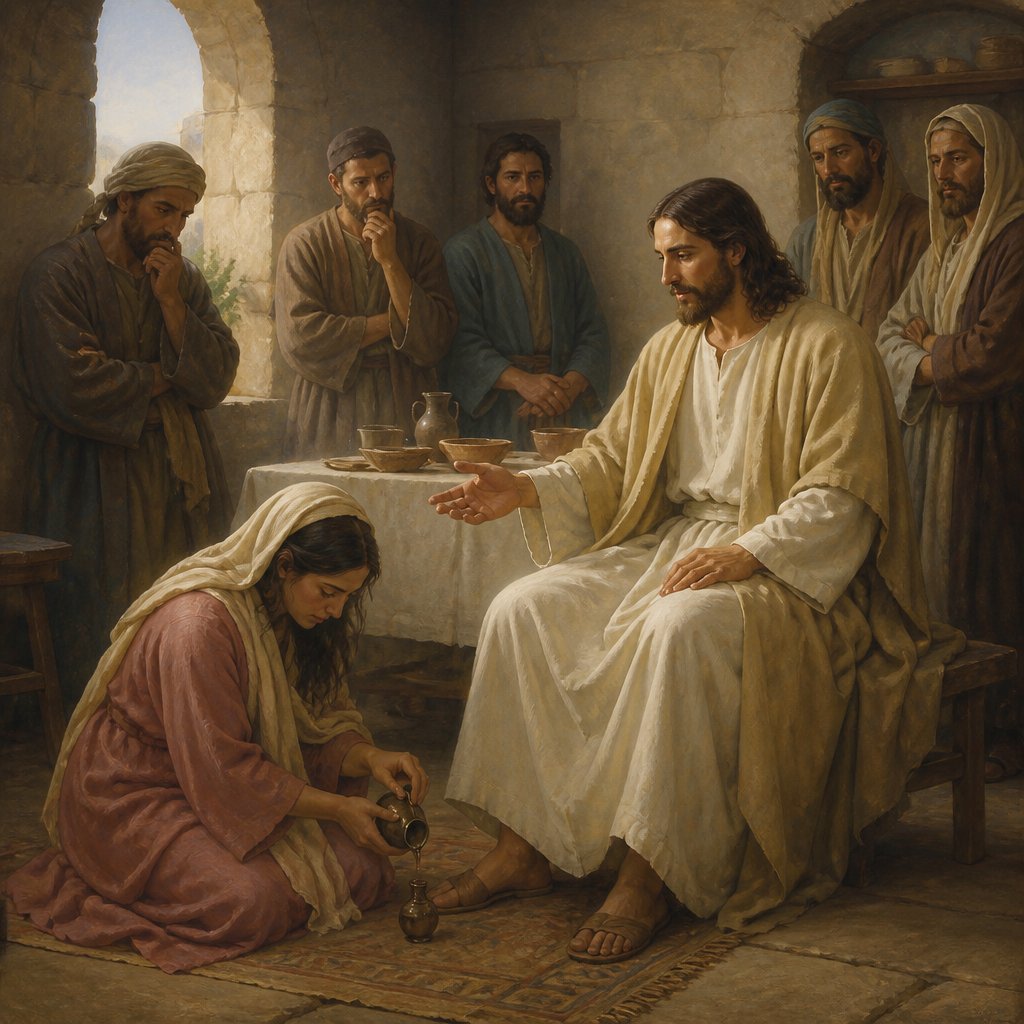
The Bible verse Mark 14:6 in the King James Version (KJV) states, "And Jesus said, Let her alone; why trouble ye her? she hath wrought a good work on me." This verse is part of a larger story that takes place in Bethany at the house of Simon the Leper. Jesus is present at the house when a woman approaches Him with an alabaster box of very precious ointment. She breaks the box and pours the ointment on Jesus' head, prompting some of the people present to criticize her actions. Jesus, however, defends her, declaring that what she has done is a good work.
The context of this verse is important to understand its deeper meaning. The story takes place just a few days before Jesus' crucifixion. He is in Bethany to prepare for His upcoming death, and this act of anointing may be seen as a foreshadowing of His impending burial. The woman's act of pouring expensive ointment on Jesus' head can be interpreted as an act of love, devotion, and sacrifice. Her willing display of humility and reverence for Jesus demonstrates her understanding of the significance of His impending death and burial.
One of the central themes in this verse is the concept of sacrificial love and devotion. The woman's actions exemplify a selfless generosity and a willingness to give up something precious for the sake of honoring Jesus. Her act serves as a powerful example of how our love for God and for others should be expressed through sacrificial actions. This theme is consistent with the overarching message of the gospel, which emphasizes the importance of selfless love and service to others.
Another important theme in this verse is the concept of recognizing and honoring the value of Jesus. The woman's actions demonstrate her deep understanding of Jesus' worth and significance. In pouring the expensive ointment on His head, she shows that she values and honors Jesus above all worldly possessions. This theme underscores the idea that true devotion to Jesus requires us to recognize His supreme worth and to honor Him accordingly.
Symbolically, the alabaster box and the precious ointment can represent the woman's heart and her innermost being. By breaking the box and pouring out the ointment, she is offering her very self to Jesus. This symbolic act illustrates the idea of total surrender and self-emptying before God. It is a representation of how we should approach Jesus with nothing held back, fully giving ourselves over to Him in devotion and service.
Additionally, the verse demonstrates Jesus' compassion and appreciation for the woman's actions. In telling the critics to leave her alone and acknowledging her good work, Jesus validates her act of devotion and reinforces the importance of showing love and honor to Him. His response serves as a reminder that God recognizes and appreciates the sacrificial love and service of His people, and He will defend and uphold those who seek to honor Him in such ways.
In conclusion, Mark 14:6 in the King James Version presents a powerful and meaningful account of sacrificial love, devotion, and honor. The woman's act of pouring precious ointment on Jesus' head serves as a powerful example of selfless love and reverence for Him. It also demonstrates the significance of recognizing the worth of Jesus and offering Him our full devotion. This verse reminds us of the importance of expressing our love for God through sacrificial actions and the value of honoring Jesus above all else.
Have questions about Mark 14:6?
Dive deeper into this scripture with Bible Chat — an AI-powered tool for exploring God's Word through conversation. Ask questions, get context, and grow in your understanding of the Bible.
Get Our Apps


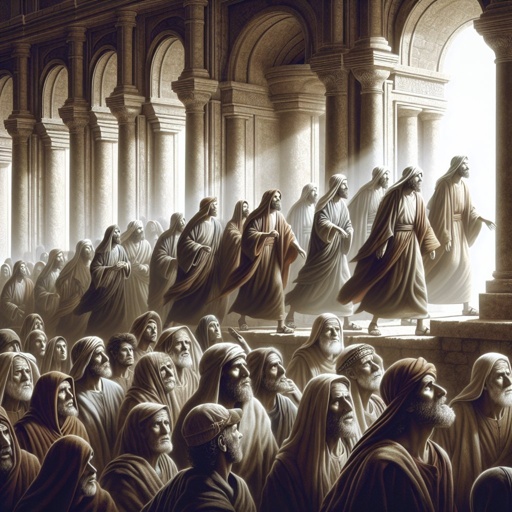
Mark 14:6 Artwork

Mark 14:6 - "And Jesus said, Let her alone; why trouble ye her? she hath wrought a good work on me."
"And Jesus said, Let her alone; why trouble ye her? she hath wrought a good work on me." - Mark 14:6

Mark 6:14 - "And king Herod heard of him; (for his name was spread abroad:) and he said, That John the Baptist was risen from the dead, and therefore mighty works do shew forth themselves in him."

Mark 6:1-6

Mark 14:51

Mark 4:14 - "¶ The sower soweth the word."

Mark 14:17 - "And in the evening he cometh with the twelve."

Mark 14:50 - "And they all forsook him, and fled."

Mark 14:46 - "¶ And they laid their hands on him, and took him."

Mark 16:6-8

Mark 16:6-8

Mark 6:6 - "And he marvelled because of their unbelief. And he went round about the villages, teaching."

Mark 16:6-8

Mark 14:59 - "But neither so did their witness agree together."

Mark 14:2 - "But they said, Not on the feast day, lest there be an uproar of the people."
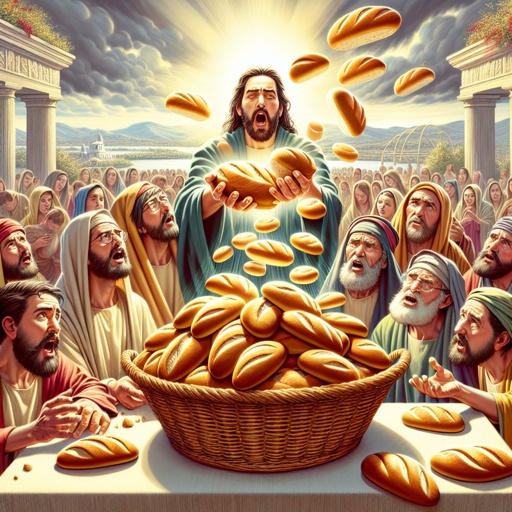
Mark 6:52 - "For they considered not the miracle of the loaves: for their heart was hardened."

Mark 6:32 - "And they departed into a desert place by ship privately."

Mark 6:9 - "But be shod with sandals; and not put on two coats."

Mark 6:40 - "And they sat down in ranks, by hundreds, and by fifties."

"¶ The sower soweth the word." - Mark 4:14

Mark 14:39 - "And again he went away, and prayed, and spake the same words."

Mark 14:57 - "And there arose certain, and bare false witness against him, saying,"

Mark 6:42 - "And they did all eat, and were filled."

Mark 14:26 - "¶ And when they had sung an hymn, they went out into the mount of Olives."

Mark 14:66 - "¶ And as Peter was beneath in the palace, there cometh one of the maids of the high priest:"

Mark 14:52 - "And he left the linen cloth, and fled from them naked."
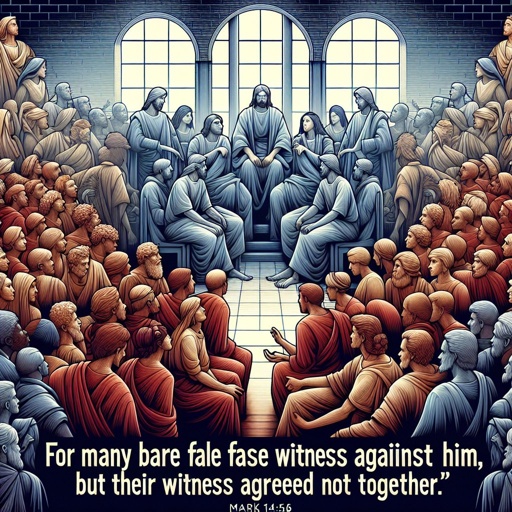
Mark 14:56 - "For many bare false witness against him, but their witness agreed not together."

Mark 2:6 - "But there were certain of the scribes sitting there, and reasoning in their hearts,"
Mark 6:12 - "And they went out, and preached that men should repent."

Mark 14:14 - "And wheresoever he shall go in, say ye to the goodman of the house, The Master saith, Where is the guestchamber, where I shall eat the passover with my disciples?"