What does Mark 14:5 mean?
"For it might have been sold for more than three hundred pence, and have been given to the poor. And they murmured against her." - Mark 14:5
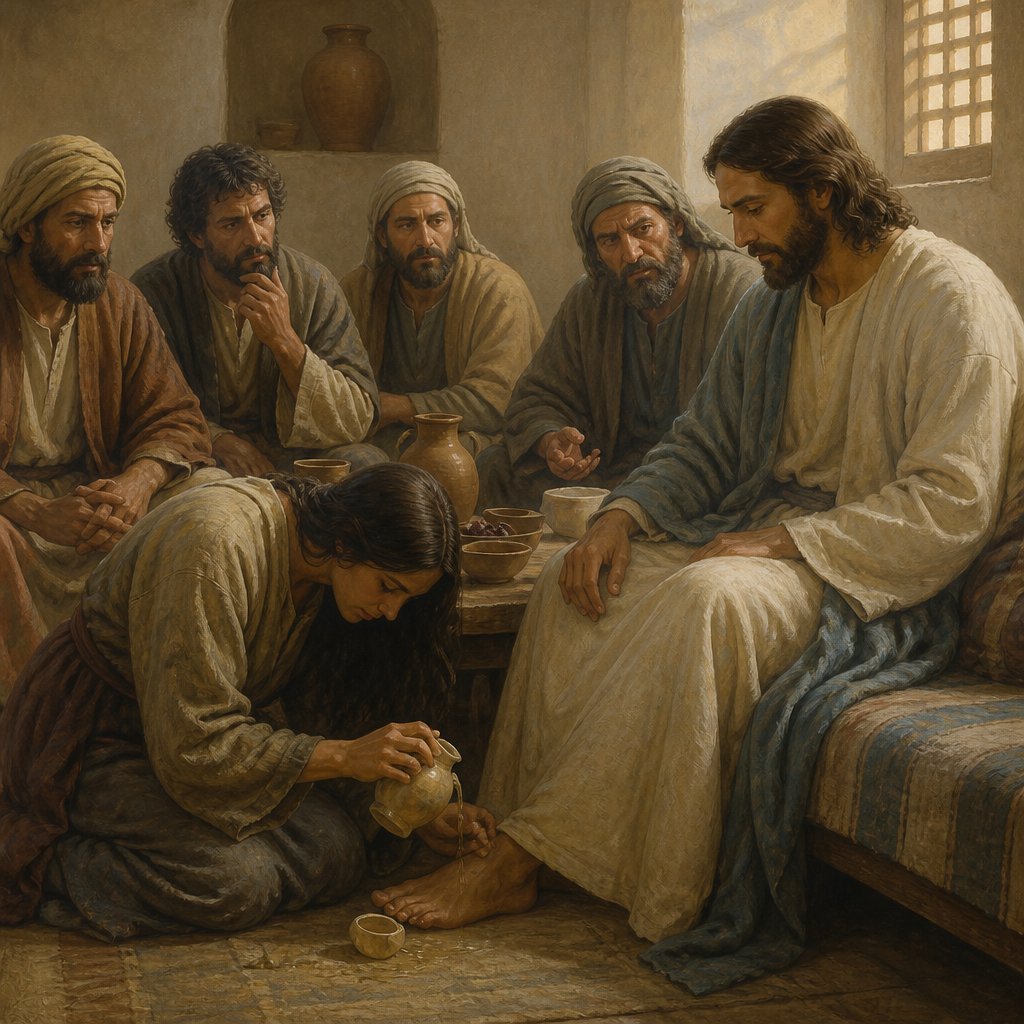
Mark 14:5 (KJV) states: "For it might have been sold for more than three hundred pence, and have been given to the poor. And they murmured against her."
This verse is part of the larger story in the Gospel of Mark, where a woman comes to Jesus with an alabaster box of very precious ointment of spikenard and pours it on His head. This action sparks a debate among the disciples about the value of the ointment and whether it should have been sold and the money given to the poor.
The context of this verse is important to understanding its deeper meaning. Jesus and His disciples are gathered in the house of Simon the leper when the woman approaches Him with the alabaster box. The ointment is extremely expensive, and the disciples, particularly Judas Iscariot, express disapproval at the waste of such a valuable resource. They argue that the ointment could have been sold for a high price and the money given to the poor. The verse ends with the disciples murmuring against the woman for her actions.
The themes presented in this verse are multi-faceted and provide insight into the attitudes of the disciples, the actions of the woman, and the response of Jesus. One of the key themes is the contrast between material wealth and spiritual significance. The disciples focus on the monetary value of the ointment and the potential for it to benefit the poor. On the other hand, the woman's actions reflect a deep sense of devotion and sacrificial love towards Jesus, prioritizing her spiritual connection with Him over material possessions.
The verse also addresses the issue of judgment and criticism. The disciples' murmuring against the woman suggests a lack of empathy and understanding of her actions. Instead of recognizing the sincerity and love behind her gesture, they choose to focus on the perceived wastefulness of her actions. This speaks to the human tendency to judge others without fully understanding their motivations and intentions, and the importance of recognizing and appreciating acts of love and devotion.
Additionally, the verse touches on the concept of caring for the poor and marginalized. While the disciples' concern for the poor is commendable, their criticism of the woman's actions raises questions about the balance between practical charity and personal acts of devotion. Jesus ultimately defends the woman's actions, emphasizing the importance of recognizing and honoring acts of love and sacrifice, even in the midst of poverty and need.
From a symbolic perspective, the alabaster box of ointment represents both the value of the woman's expression of love and the costliness of Jesus' impending sacrifice. The ointment was a precious and costly substance, much like the love and devotion that the woman poured out on Jesus. By pouring the ointment on His head, the woman foreshadowed Jesus' future anointing for burial, symbolizing the deep spiritual significance of her actions.
In conclusion, Mark 14:5 captures a pivotal moment in the Gospel narrative, highlighting the contrast between material wealth and spiritual significance, the tendency to judge without understanding, the balance between practical charity and personal acts of devotion, and the symbolic foreshadowing of Jesus' sacrifice. This verse serves as a powerful reminder to recognize and honor acts of love and sacrifice, and to consider the deeper spiritual significance behind material possessions.
Have questions about Mark 14:5?
Dive deeper into this scripture with Bible Chat — an AI-powered tool for exploring God's Word through conversation. Ask questions, get context, and grow in your understanding of the Bible.
Get Our Apps


Mark 14:5 Artwork

Mark 14:5 - "For it might have been sold for more than three hundred pence, and have been given to the poor. And they murmured against her."

"For it might have been sold for more than three hundred pence, and have been given to the poor. And they murmured against her." - Mark 14:5

Mark 5:14 - "And they that fed the swine fled, and told it in the city, and in the country. And they went out to see what it was that was done."
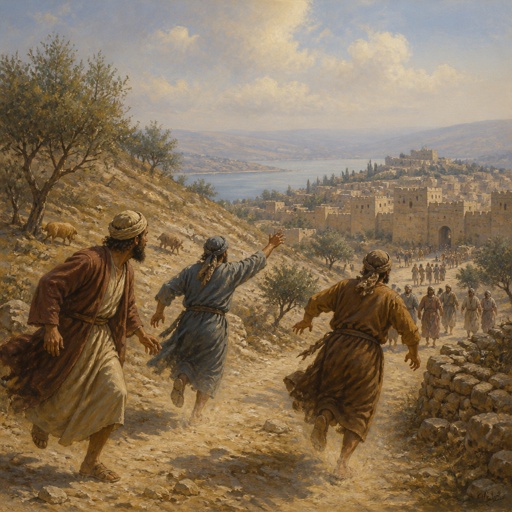
"And they that fed the swine fled, and told it in the city, and in the country. And they went out to see what it was that was done." - Mark 5:14

Mark 14:51

Mark 4:14 - "¶ The sower soweth the word."

Mark 2:5

Mark 14:17 - "And in the evening he cometh with the twelve."

Mark 14:50 - "And they all forsook him, and fled."

Mark 14:46 - "¶ And they laid their hands on him, and took him."

Mark 16:4-5

Mark 16:4-5

Mark 16:4-5

Mark 14:59 - "But neither so did their witness agree together."

Mark 14:2 - "But they said, Not on the feast day, lest there be an uproar of the people."

"¶ The sower soweth the word." - Mark 4:14

Mark 14:39 - "And again he went away, and prayed, and spake the same words."

Mark 14:57 - "And there arose certain, and bare false witness against him, saying,"

Mark 14:26 - "¶ And when they had sung an hymn, they went out into the mount of Olives."

Mark 14:66 - "¶ And as Peter was beneath in the palace, there cometh one of the maids of the high priest:"

Mark 14:52 - "And he left the linen cloth, and fled from them naked."

Mark 5:17 - "And they began to pray him to depart out of their coasts."

Mark 14:56 - "For many bare false witness against him, but their witness agreed not together."

Mark 14:14 - "And wheresoever he shall go in, say ye to the goodman of the house, The Master saith, Where is the guestchamber, where I shall eat the passover with my disciples?"

Mark 15:5 - "But Jesus yet answered nothing; so that Pilate marvelled."

Mark 14:28 - "But after that I am risen, I will go before you into Galilee."

"And in the evening he cometh with the twelve." - Mark 14:17

Philippians 3:14 - "I press toward the mark for the prize of the high calling of God in Christ Jesus."

Mark 14:29 - "But Peter said unto him, Although all shall be offended, yet will not I."

"And they all forsook him, and fled." - Mark 14:50