What does Mark 14:46 mean?
"¶ And they laid their hands on him, and took him." - Mark 14:46

The verse Mark 14:46 from the King James Version of the Bible reads, "And they laid their hands on him, and took him." This verse is a part of the larger narrative of Jesus's betrayal and arrest in the Garden of Gethsemane. This event plays a crucial role in the overall story of Jesus's crucifixion and serves as a significant turning point in the narrative of the gospels.
In order to truly understand the depth and significance of this verse, it is important to examine the broader context in which it occurs. In the preceding verses, Jesus and his disciples are in the Garden of Gethsemane, where Jesus has been praying fervently, knowing that his arrest and subsequent crucifixion are imminent. This is a moment of intense spiritual and emotional struggle for Jesus, as he grapples with the weight of his impending sacrifice.
It is in this vulnerable and emotionally charged moment that the events of Mark 14:46 unfold. Judas Iscariot, one of Jesus's disciples, arrives in the garden accompanied by a crowd armed with swords and clubs. He approaches Jesus and greets him with a kiss, a signal to the soldiers indicating that Jesus is the one they seek. The soldiers then lay their hands on Jesus and take him into custody, leading to his eventual trial and crucifixion.
The significance of this verse lies in its portrayal of Jesus's arrest as a moment of betrayal and abandonment. Despite the loyalty and devotion of his disciples, Jesus is ultimately handed over to his captors by one of his own followers. This act of betrayal not only serves as a pivotal plot point in the narrative but also carries powerful symbolic and thematic undertones.
One of the central themes that emerges from this verse is the concept of betrayal and faithlessness. The image of Judas's kiss as a means of identifying Jesus to the soldiers encapsulates the notion of betrayal through deceit and manipulation. This theme of betrayal reverberates throughout the larger narrative of Jesus's trial and crucifixion, as he is subjected to further acts of treachery and denial by those closest to him.
In addition to betrayal, this verse also touches upon the broader theme of suffering and sacrifice. Jesus's arrest in the Garden of Gethsemane marks the beginning of his journey towards crucifixion, a path that is paved with intense physical and emotional suffering. The image of Jesus being seized and taken into custody underscores the sense of powerlessness and vulnerability that permeates this pivotal moment in the gospel narrative.
Furthermore, the symbolism inherent in this verse extends to the larger Christian theology of redemption and salvation. The act of Jesus willingly submitting to his arrest and eventual crucifixion is often interpreted as a profound expression of self-sacrifice and atonement for the sins of humanity. The laying of hands on Jesus and his subsequent capture serves as a decisive juncture in the unfolding of God's redemptive plan for humanity, signaling the beginning of the ultimate act of divine love and grace.
In conclusion, Mark 14:46 from the King James Version of the Bible encapsulates a moment of profound significance in the narrative of Jesus's betrayal and arrest. It engages with themes of betrayal, suffering, and sacrifice, while also carrying deep symbolic resonance within the broader theological framework of Christian faith. This verse serves as a poignant reminder of the complexities and depths of the human experience, and the enduring significance of Jesus's ultimate act of redemption and salvation.
Have questions about Mark 14:46?
Dive deeper into this scripture with Bible Chat — an AI-powered tool for exploring God's Word through conversation. Ask questions, get context, and grow in your understanding of the Bible.
Get Our Apps


Mark 14:46 Artwork

Mark 14:46 - "¶ And they laid their hands on him, and took him."

"¶ And they laid their hands on him, and took him." - Mark 14:46
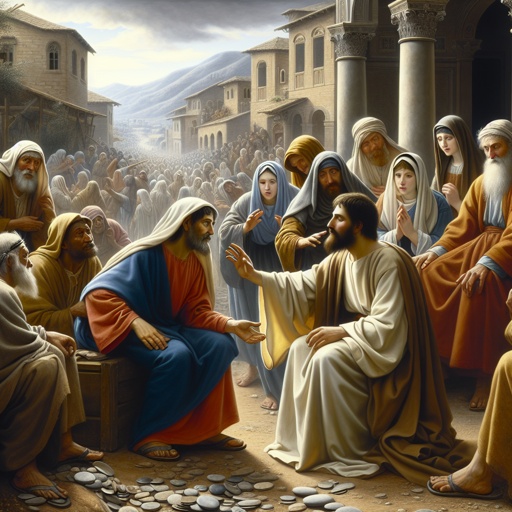
Mark 10:46
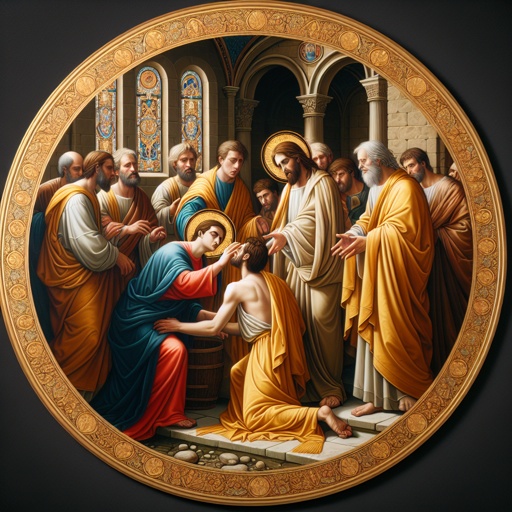
Mark 10:46

Mark 10:46

Mark 9:46 - "Where their worm dieth not, and the fire is not quenched."

Mark 6:46 - "And when he had sent them away, he departed into a mountain to pray."

"Where their worm dieth not, and the fire is not quenched." - Mark 9:46

Genesis 46:14 - "¶ And the sons of Zebulun; Sered, and Elon, and Jahleel."

Mark 10:46 (KJVA) 46 And they came to Jericho: and as he went out of Jericho with his disciples and a great number of people, blind Bartimaeus, the son of Timaeus, sat by the highway side begging.

Mark 10:46 - "¶ And they came to Jericho: and as he went out of Jericho with his disciples and a great number of people, blind Bartimaeus, the son of Timaeus, sat by the highway side begging."

"And when he had sent them away, he departed into a mountain to pray." - Mark 6:46

"And when he had sent them away, he departed into a mountain to pray." - Mark 6:46

1 Samuel 14:46 - "Then Saul went up from following the Philistines: and the Philistines went to their own place."

"¶ And the sons of Zebulun; Sered, and Elon, and Jahleel." - Genesis 46:14
Mark 14:51

Mark 15:46 - "And he bought fine linen, and took him down, and wrapped him in the linen, and laid him in a sepulchre which was hewn out of a rock, and rolled a stone unto the door of the sepulchre."

Mark 10:46 Now they came to Jericho. As He went out of Jericho with His disciples and a great multitude, blind Bartimaeus, the son of Timaeus, sat by the road begging.

Mark 4:14 - "¶ The sower soweth the word."

Mark 14:17 - "And in the evening he cometh with the twelve."

Mark 14:50 - "And they all forsook him, and fled."

Jeremiah 46:14 - "Declare ye in Egypt, and publish in Migdol, and publish in Noph and in Tahpanhes: say ye, Stand fast, and prepare thee; for the sword shall devour round about thee."

Mark 14:59 - "But neither so did their witness agree together."

Mark 14:2 - "But they said, Not on the feast day, lest there be an uproar of the people."

"¶ The sower soweth the word." - Mark 4:14

Mark 14:39 - "And again he went away, and prayed, and spake the same words."

Mark 14:57 - "And there arose certain, and bare false witness against him, saying,"

Mark 14:26 - "¶ And when they had sung an hymn, they went out into the mount of Olives."

Mark 14:66 - "¶ And as Peter was beneath in the palace, there cometh one of the maids of the high priest:"

Mark 14:52 - "And he left the linen cloth, and fled from them naked."