What does Mark 13:3 mean?
"And as he sat upon the mount of Olives over against the temple, Peter and James and John and Andrew asked him privately," - Mark 13:3
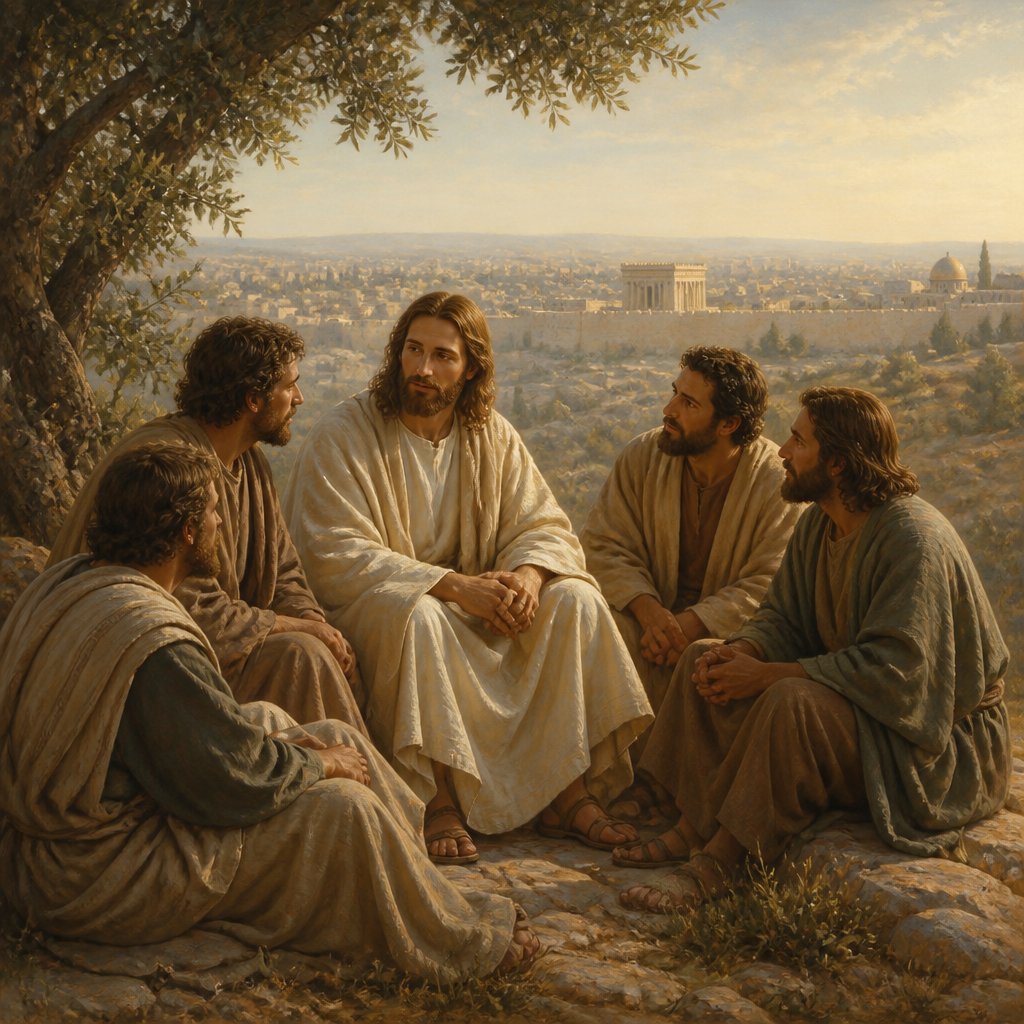
Mark 13:3 in the King James Version of the Bible reads, "And as he sat upon the mount of Olives over against the temple, Peter and James and John and Andrew asked him privately." This verse is part of a larger passage known as the Olivet Discourse, in which Jesus prophesies about the destruction of the temple and the signs of the end times. This particular verse sets the scene for Jesus' teaching and the disciples' eagerness to understand the future events.
The setting of the Mount of Olives holds significant symbolic and historical importance in the Bible. In the Old Testament, King David wept on the Mount of Olives as he fled from his son Absalom, and it is also the location where Ezekiel saw a vision of the glory of the Lord departing from the temple. In the New Testament, Jesus frequently retreated to the Mount of Olives to pray and teach his disciples, and it is the place where he ascended to heaven after his resurrection.
The temple mentioned in the verse is the Second Temple in Jerusalem, which was a central religious and cultural institution for the Jewish people at that time. For the disciples, the temple represented the pinnacle of Jewish worship and identity, so hearing Jesus speak about its destruction would have been extremely unsettling and disturbing. It is no wonder then that Peter, James, John, and Andrew sought to ask Jesus privately about these prophetic events.
The disciples' decision to question Jesus privately reflects their desire to understand the significance of his words and their eagerness to gain insight into the future. They must have been deeply troubled by the prospect of the temple's destruction and the events that Jesus was predicting. This private conversation also shows the disciples' close relationship with Jesus and their trust in him as their teacher.
The larger context of Mark 13 is crucial to understanding the significance of this verse. In the preceding verses, Jesus declares that not one stone of the temple will be left upon another, predicting the temple's destruction. He also warns the disciples about false prophets, wars, earthquakes, and persecution that will precede the end times. Jesus urges them to be vigilant and to keep watch for these signs.
The themes present in this verse and the surrounding passage include the sovereignty of God, the fulfillment of prophecy, the transience of earthly institutions, and the importance of being spiritually prepared for the future. The destruction of the temple serves as a symbol of the old covenant giving way to the new covenant through Jesus' death and resurrection. It also serves as a reminder of the impermanence of earthly structures and the ultimate security found in God's eternal kingdom.
Symbolically, the Mount of Olives represents a place of prayer, revelation, and divine intervention. It is where Jesus gave some of his most profound teachings and where he entered into his passion. The disciples' private questions symbolize their seeking of deeper understanding and their willingness to engage in intimate dialogue with Jesus.
In conclusion, Mark 13:3 captures a pivotal moment in Jesus' ministry, where he prepares his disciples for the future and offers insight into the signs of the end times. The verse also demonstrates the disciples' vulnerability and their need for spiritual guidance as they seek to comprehend the weighty prophecies that Jesus shares with them. The Mount of Olives serves as a potent backdrop for this interaction, underscoring the significance of the events that are about to unfold.
Have questions about Mark 13:3?
Dive deeper into this scripture with Bible Chat — an AI-powered tool for exploring God's Word through conversation. Ask questions, get context, and grow in your understanding of the Bible.
Get Our Apps


Mark 13:3 Artwork

Mark 13:3 - "And as he sat upon the mount of Olives over against the temple, Peter and James and John and Andrew asked him privately,"
"And as he sat upon the mount of Olives over against the temple, Peter and James and John and Andrew asked him privately," - Mark 13:3

Mark 3:13 - "And he goeth up into a mountain, and calleth unto him whom he would: and they came unto him."

Mark 13:7

Mark 13:8
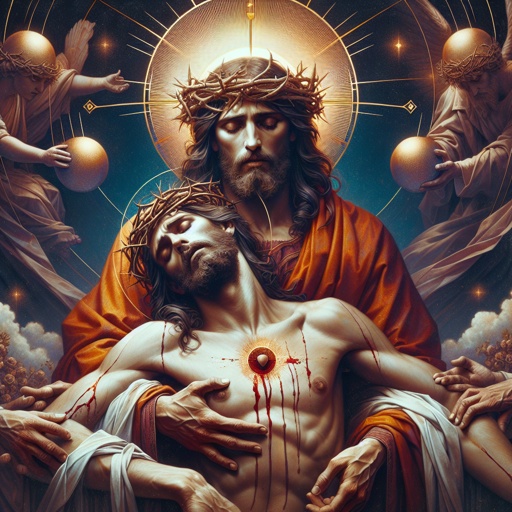
Mark 13:8

Mark 13:7

Mark 13:8

Mark 13:7
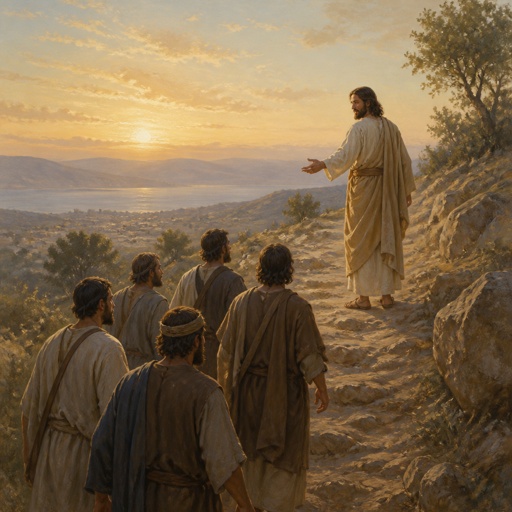
"And he goeth up into a mountain, and calleth unto him whom he would: and they came unto him." - Mark 3:13

Mark 13:28-37

Mark 13:28-37

Mark 10:13–16

Mark 13:28-37

Mark 13:28-37

Mark 15:13 - "And they cried out again, Crucify him."

Mark 13:18 - "And pray ye that your flight be not in the winter."

Mark 13:33 watch and pray

Mark 13:33 watch and pray

Philippians 3:13-14 - "Brethren, I count not myself to have apprehended: but this one thing I do, forgetting those things which are behind, and reaching forth unto those things which are before, I press toward the mark for the prize of the high calling of God in Christ Jesus."

Mark 3:3 - "And he saith unto the man which had the withered hand, Stand forth."

Mark 16:13 - "And they went and told it unto the residue: neither believed they them."

Mark 13:10 - "And the gospel must first be published among all nations."

Mark 13:36 - "Lest coming suddenly he find you sleeping."

Mark 13:13 - "And ye shall be hated of all men for my name's sake: but he that shall endure unto the end, the same shall be saved."

Mark 3:31-34

Revelation 13:18 Mark of the Beast 666

Mark 13:17 - "But woe to them that are with child, and to them that give suck in those days!"

Mark 3:16 - "And Simon he surnamed Peter;"

Mark 13:25 - "And the stars of heaven shall fall, and the powers that are in heaven shall be shaken."