What does Mark 12:3 mean?
"And they caught him, and beat him, and sent him away empty." - Mark 12:3
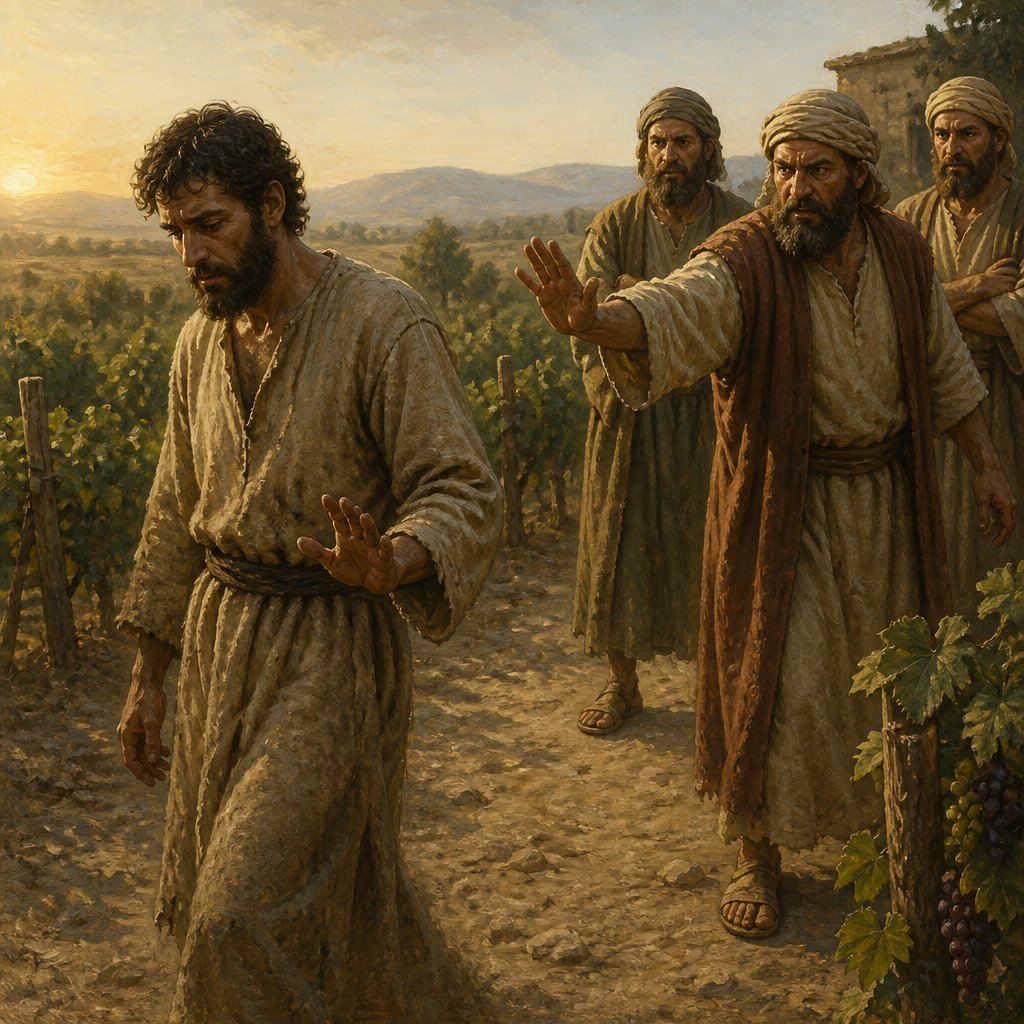
The Bible verse Mark 12:3 in the King James Version (KJV) reads, "And they caught him, and beat him, and sent him away empty." This verse is part of a parable told by Jesus in the Gospel of Mark. In this parable, Jesus is speaking to the religious leaders of the time, using the analogy of a landowner sending servants to collect the fruit of his vineyard. The religious leaders are represented by the tenants of the vineyard who mistreat and ultimately kill the servants sent by the landowner.
In this particular verse, the tenants have caught one of the servants, beaten him, and sent him away empty-handed. This action reflects the cruelty and resistance of the religious leaders to the message that the servants represent. It is significant to note that the servants were simply obeying the orders of the landowner, which parallels the obedience of the prophets and messengers sent by God to deliver His message to the people.
The beating and mistreatment of the servant in this verse symbolize the rejection and persecution that God's messengers and prophets endured throughout history. It is a powerful commentary on the resistance and hostility that the religious leaders of the time showed towards God's word and His messengers. This theme of rejection and mistreatment is a recurring motif in the Bible, as the prophets and messengers often faced adversity and persecution for delivering God's message.
Furthermore, this verse also speaks to the concept of obedience and the consequences of disobedience. The tenants' mistreatment of the servant represents a defiance of authority and a refusal to acknowledge the rightful owner of the vineyard. In a spiritual sense, this can be seen as a metaphor for humanity's rejection of God's authority and refusal to heed His warnings and commands.
The parable as a whole serves as a warning to the religious leaders of the time, as Jesus is essentially foretelling the consequences of their rejection of Him and His teachings. It is a reflection of the spiritual blindness and stubbornness of the religious elite, who were unable to recognize the truth of Jesus' message and instead sought to maintain their own power and authority.
In a broader context, this verse and the entire parable also have implications for believers today. It serves as a reminder of the importance of heeding God's word and the consequences of rejecting His authority. It also offers a sobering warning about the potential consequences of mistreating and rejecting the messengers of God.
Symbolically, the vineyard itself is a recurring motif in the Bible, often representing God's people or His kingdom. The landowner can be seen as a representation of God, sending His servants to care for and gather the fruits of His vineyard. The mistreatment of the servants by the tenants symbolizes the rejection of God's messengers and the resistance to His authority.
In conclusion, Mark 12:3 in the King James Version offers powerful commentary on the themes of rejection, obedience, and consequences of disobedience. It serves as a warning to both the religious leaders of the time and believers today about the importance of heeding God's word and the potential consequences of rejecting His authority. It also provides a powerful insight into the mindset and actions of those who resist and reject the message of God's messengers. This verse ultimately calls for reflection and examination of one's own response to God's word and the messengers He sends.
Have questions about Mark 12:3?
Dive deeper into this scripture with Bible Chat — an AI-powered tool for exploring God's Word through conversation. Ask questions, get context, and grow in your understanding of the Bible.
Get Our Apps


Mark 12:3 Artwork

Mark 12:3 - "And they caught him, and beat him, and sent him away empty."
"And they caught him, and beat him, and sent him away empty." - Mark 12:3

Mark 3:12 - "And he straitly charged them that they should not make him known."

Lamentations 3:12 - "He hath bent his bow, and set me as a mark for the arrow."
"And he straitly charged them that they should not make him known." - Mark 3:12
"He hath bent his bow, and set me as a mark for the arrow." - Lamentations 3:12

Mark 12:8

Mark 12:8

Mark 15:12

mark 2:1-12

Mark 12:41 - 44

Mark 12:41 - 44

Mark 12:41 - 44

Mark 2:1-12

Mark 12:41 - 44

Mark 12:41 - 44

Mark 12:11 - "This was the Lord's doing, and it is marvellous in our eyes?"

Mark 1:12 - "And immediately the Spirit driveth him into the wilderness."

Mark 3:3 - "And he saith unto the man which had the withered hand, Stand forth."

Mark 12:39 - "And the chief seats in the synagogues, and the uppermost rooms at feasts:"
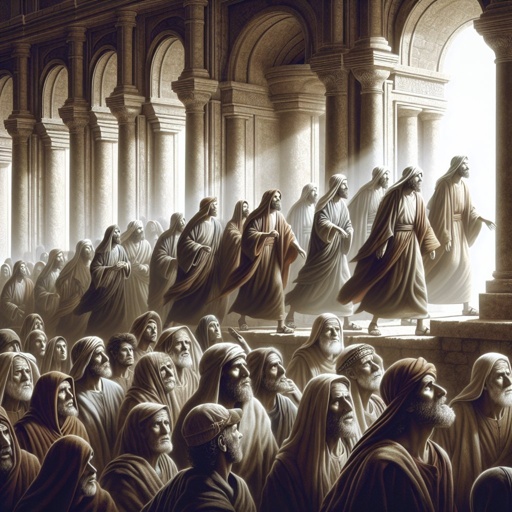
Mark 6:12 - "And they went out, and preached that men should repent."

Mark 3:31-34

Mark 3:16 - "And Simon he surnamed Peter;"

Acts 12:12 - "And when he had considered the thing, he came to the house of Mary the mother of John, whose surname was Mark; where many were gathered together praying."

Mark 12:12 - "And they sought to lay hold on him, but feared the people: for they knew that he had spoken the parable against them: and they left him, and went their way."

Mark 11:12 - "¶ And on the morrow, when they were come from Bethany, he was hungry:"

Mark 12:8 - "And they took him, and killed him, and cast him out of the vineyard."

Mark 4:3 - "Hearken; Behold, there went out a sower to sow:"

Mark 3:30 - "Because they said, He hath an unclean spirit."

Mark 12:18 - "¶ Then come unto him the Sadducees, which say there is no resurrection; and they asked him, saying,"