What does Mark 12:17 mean?
"And Jesus answering said unto them, Render to Caesar the things that are Caesar's, and to God the things that are God's. And they marvelled at him." - Mark 12:17
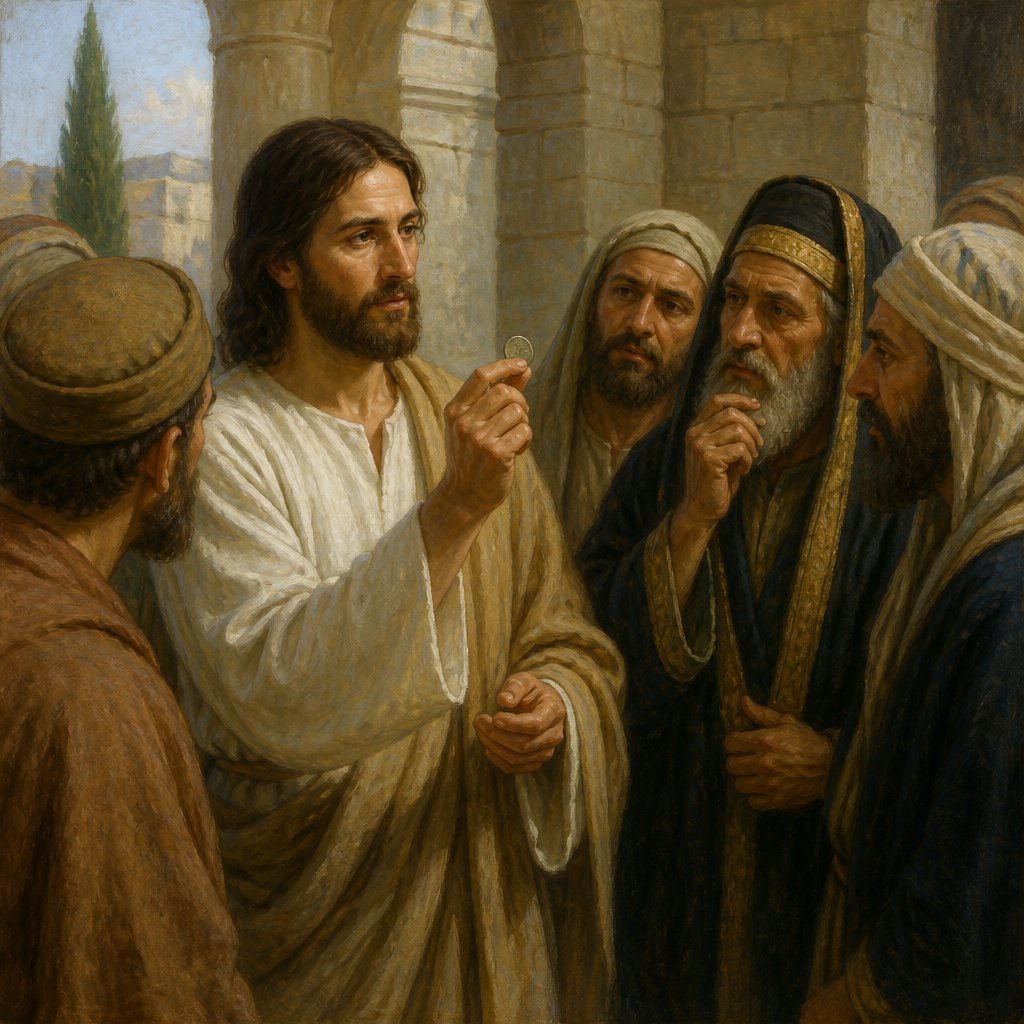
Mark 12:17 (KJV) states, "And Jesus answering said unto them, Render to Caesar the things that are Caesar's, and to God the things that are God's. And they marvelled at him."
This verse is often cited as a response from Jesus to the Pharisees and Herodians who were trying to trap him with a question about paying taxes to Caesar. However, the implications of this verse go far beyond the immediate context and have profound significance for the Christian life.
In its immediate context, Jesus' response is a brilliant and nuanced one. The Pharisees and Herodians thought they had set a trap for Jesus—either he would affirm paying taxes to Caesar and anger the people, or he would deny it and be seen as a rebel against Rome. However, Jesus' response transcends this binary and illustrates the complex relationship between earthly authority and divine authority.
By telling his questioners to "Render to Caesar the things that are Caesar's, and to God the things that are God's," Jesus is not only acknowledging the necessity of obeying civil authority and paying taxes, but also reminding his listeners of their primary allegiance to God. This statement also reflects Jesus’ teachings on the Kingdom of God. His message was not primarily political or revolutionary, but rather about the internal transformation of individuals and their relationship with God.
This verse also has implications for the broader themes of the Christian life. As followers of Jesus, Christians are called to live in the world but not be of the world. This means that while they must submit to earthly authorities and live as responsible citizens, their ultimate allegiance is to God and his kingdom. The tension between the demands of earthly authority and the demands of God is a struggle that all believers face, but this verse provides a framework for navigating that tension.
The symbolic significance of this verse is powerful as well. The image of Caesar on a coin serves as a reminder of the material and temporal concerns of the world, while the call to render to God what is God's directs attention to the spiritual and eternal realm. This verse challenges believers to consider where their ultimate allegiance lies and to prioritize their relationship with God above all else.
Moreover, the verse prompts reflection on the nature of authority and the proper response to it. Whether it is the authority of the state, church, family, or workplace, believers are called to submit to these authorities while also giving ultimate allegiance to God. This can be a challenging balance, but it is essential for maintaining a sense of spiritual integrity and obedience to God.
In terms of historical and cultural context, it is important to note that at the time of Jesus, paying taxes to Caesar was a contentious issue for Jews. The Roman occupation of Israel was deeply resented, and many Jews saw paying taxes to Caesar as a form of submission and betrayal of their national identity. Jesus' response to this question would have been deeply provocative and subversive to the religious and political authorities of the time.
In conclusion, Mark 12:17 has profound implications for the Christian life. It reminds believers of their dual citizenship in the earthly and heavenly realms, prompting them to navigate the demands of both with wisdom and obedience. This verse challenges believers to consider where their ultimate allegiance lies and to prioritize their relationship with God above all else. It is a powerful reminder of the tension between earthly authority and divine authority, and prompts reflection on the nature of authority and the proper response to it.
Have questions about Mark 12:17?
Dive deeper into this scripture with Bible Chat — an AI-powered tool for exploring God's Word through conversation. Ask questions, get context, and grow in your understanding of the Bible.
Get Our Apps


Mark 12:17 Artwork

Mark 12:17 - "And Jesus answering said unto them, Render to Caesar the things that are Caesar's, and to God the things that are God's. And they marvelled at him."
"And Jesus answering said unto them, Render to Caesar the things that are Caesar's, and to God the things that are God's. And they marvelled at him." - Mark 12:17

Mark 10:17-30

Mark 14:17 - "And in the evening he cometh with the twelve."

Mark 10:17-30

Mark 12:8

Mark 12:8

Mark 15:12

mark 2:1-12

Mark 12:41 - 44
Mark 12:41 - 44

Mark 5:17 - "And they began to pray him to depart out of their coasts."

Mark 12:41 - 44

Mark 2:1-12

Mark 12:41 - 44

Mark 12:41 - 44

Mark 13:17 - "But woe to them that are with child, and to them that give suck in those days!"

Mark 12:11 - "This was the Lord's doing, and it is marvellous in our eyes?"

Mark 1:12 - "And immediately the Spirit driveth him into the wilderness."

"And in the evening he cometh with the twelve." - Mark 14:17

Mark 12:39 - "And the chief seats in the synagogues, and the uppermost rooms at feasts:"
Mark 6:12 - "And they went out, and preached that men should repent."

Mark 15:17 - "And they clothed him with purple, and platted a crown of thorns, and put it about his head,"

Mark 3:12 - "And he straitly charged them that they should not make him known."

Mark 12:3 - "And they caught him, and beat him, and sent him away empty."

Acts 12:12 - "And when he had considered the thing, he came to the house of Mary the mother of John, whose surname was Mark; where many were gathered together praying."

Mark 7:17 - "And when he was entered into the house from the people, his disciples asked him concerning the parable."

Mark 12:12 - "And they sought to lay hold on him, but feared the people: for they knew that he had spoken the parable against them: and they left him, and went their way."

Mark 11:12 - "¶ And on the morrow, when they were come from Bethany, he was hungry:"

Mark 12:8 - "And they took him, and killed him, and cast him out of the vineyard."