What does Mark 11:31 mean?
"And they reasoned with themselves, saying, If we shall say, From heaven; he will say, Why then did ye not believe him?" - Mark 11:31
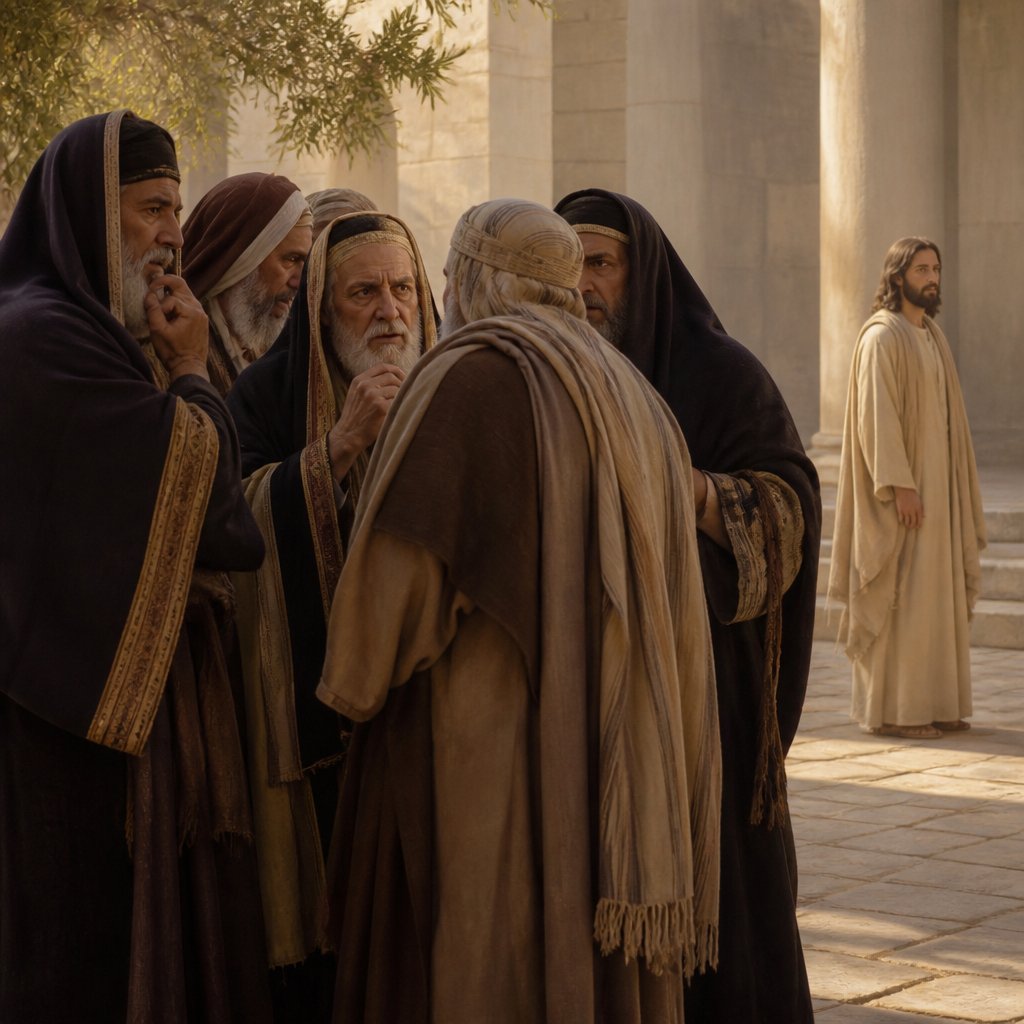
Mark 11:31 in the King James Version of the Bible states, "And they reasoned with themselves, saying, If we shall say, From heaven; he will say, Why then did ye not believe him?" This verse is part of a larger passage in the book of Mark that recounts the events leading up to Jesus' crucifixion and the religious leaders' attempts to discredit him.
In this particular verse, the religious leaders are discussing what to do about Jesus. They are aware of his popularity among the people and are worried about the threat he poses to their own authority and influence. They are trying to find a way to discredit Jesus and are debating the best approach to take.
This verse reveals the religious leaders' deep-seated skepticism and unwillingness to believe in Jesus as the Messiah. They are attempting to find a loophole in Jesus' teachings and actions in order to deny his authority and claim to be the Son of God. Their reasoning reflects their refusal to acknowledge the truth and their desire to maintain their own power and control.
The larger context of this passage is important for understanding the significance of this verse. In the preceding verses, Jesus has entered Jerusalem triumphantly, and the people have hailed him as the Messiah. This enrages the religious leaders, who see Jesus as a threat to their own authority. They question his teachings and try to trap him in his words, but he responds with wisdom and authority. This verse is part of their ongoing attempts to undermine Jesus' authority and justify their own disbelief.
One of the central themes of this passage is the conflict between Jesus and the religious establishment. The religious leaders represent the traditional religious authority and are resistant to Jesus' message of love, forgiveness, and redemption. They are more concerned with maintaining their own power and control than in seeking the truth or acknowledging Jesus' divine authority. This passage highlights the danger of spiritual pride and the consequences of rejecting the truth in favor of personal ambition.
The symbolism in this verse can be seen in the religious leaders' refusal to acknowledge Jesus' authority as the Son of God. They are so focused on their own agenda and maintaining their own power that they are blind to the truth standing right in front of them. Their skepticism and reasoning with themselves reflect the spiritual blindness that comes from pride and self-interest. This verse serves as a warning against the dangers of spiritual pride and the consequences of rejecting the truth.
In conclusion, Mark 11:31 in the King James Version of the Bible provides insight into the conflict between Jesus and the religious establishment and the consequences of spiritual pride and unbelief. The religious leaders' refusal to acknowledge the truth and their attempts to discredit Jesus reveal their spiritual blindness and unwillingness to submit to God's authority. This verse serves as a cautionary tale and a reminder of the dangers of rejecting the truth in favor of personal ambition. It challenges readers to examine their own hearts and motivations and to seek the truth with humility and openness.
Have questions about Mark 11:31?
Dive deeper into this scripture with Bible Chat — an AI-powered tool for exploring God's Word through conversation. Ask questions, get context, and grow in your understanding of the Bible.
Get Our Apps


Mark 11:31 Artwork

Mark 11:31 - "And they reasoned with themselves, saying, If we shall say, From heaven; he will say, Why then did ye not believe him?"
"And they reasoned with themselves, saying, If we shall say, From heaven; he will say, Why then did ye not believe him?" - Mark 11:31

Mark 10:31

Mark 7:31-37

Mark 3:31-34

Mark 7:31-37

Mark 10:31 - "But many that are first shall be last; and the last first."

Mark 13:31 - "Heaven and earth shall pass away: but my words shall not pass away."

Mark 3:31 - "¶ There came then his brethren and his mother, and, standing without, sent unto him, calling him."

Job 33:31 - "Mark well, O Job, hearken unto me: hold thy peace, and I will speak."

Mark 4:31 - "It is like a grain of mustard seed, which, when it is sown in the earth, is less than all the seeds that be in the earth:"

Mark 12:31 - "And the second is like, namely this, Thou shalt love thy neighbour as thyself. There is none other commandment greater than these."

"But many that are first shall be last; and the last first." - Mark 10:31

Mark 5:31 - "And his disciples said unto him, Thou seest the multitude thronging thee, and sayest thou, Who touched me?"

Mark 7:31 - "¶ And again, departing from the coasts of Tyre and Sidon, he came unto the sea of Galilee, through the midst of the coasts of Decapolis."

Mark 15:31 - "Likewise also the chief priests mocking said among themselves with the scribes, He saved others; himself he cannot save."

1 Kings 11:30-31

1 Kings 11:30-31

1 Kings 11:30-31

Mark 12:11 - "This was the Lord's doing, and it is marvellous in our eyes?"

Ecclesiates 3:1

Mark 1:31 - "And he came and took her by the hand, and lifted her up; and immediately the fever left her, and she ministered unto them."

Mark 14:31 - "But he spake the more vehemently, If I should die with thee, I will not deny thee in any wise. Likewise also said they all."

Job 31:11 - "For this is an heinous crime; yea, it is an iniquity to be punished by the judges."

african american mark 16:11

Lamentations 3:1-18

1 John 3:1-3

Mark 11:19 - "And when even was come, he went out of the city."

1 Corinthians 11:31 - "For if we would judge ourselves, we should not be judged."

1 Samuel 3:1-10