What does Mark 11:24 mean?
"Therefore I say unto you, What things soever ye desire, when ye pray, believe that ye receive them, and ye shall have them." - Mark 11:24
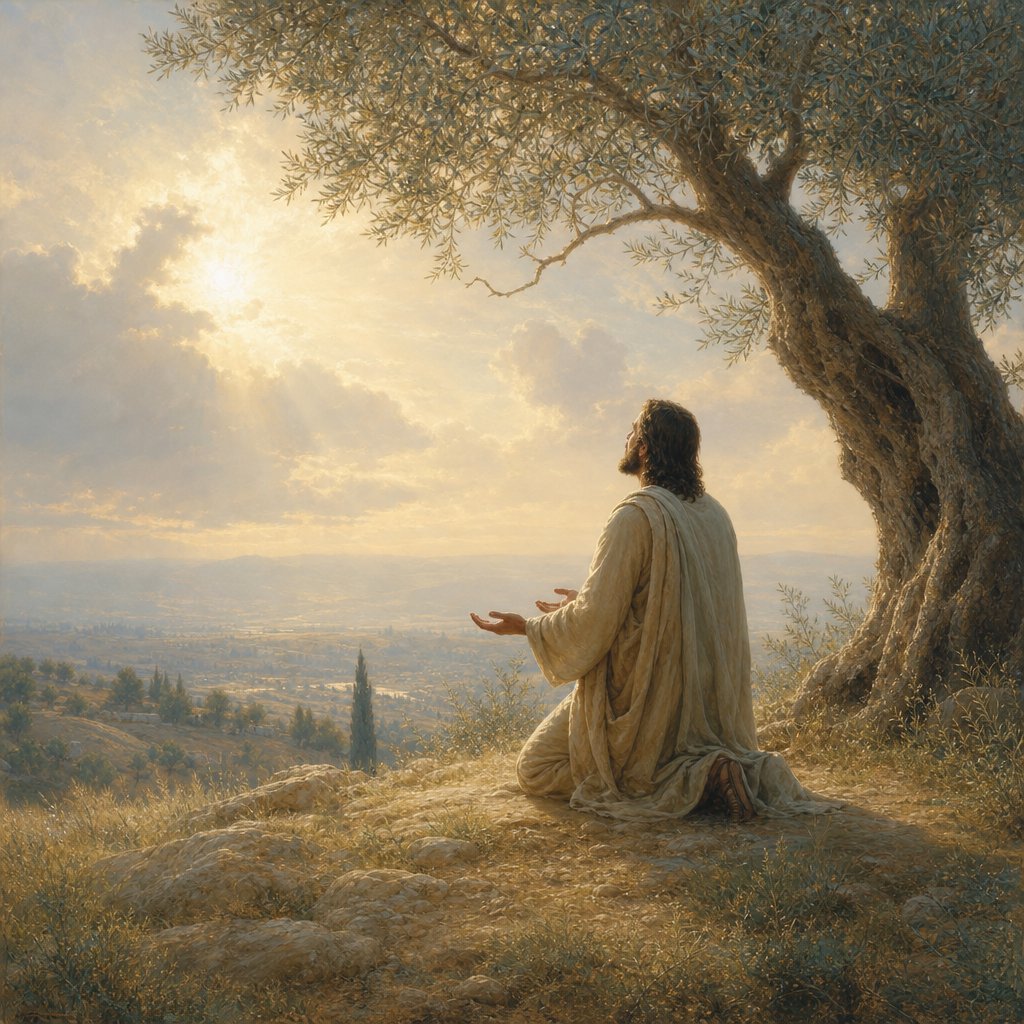
Mark 11:24 in the King James Bible reads, “Therefore I say unto you, What things soever ye desire, when ye pray, believe that ye receive them, and ye shall have them.” Its meaning becomes clearer when it is heard inside its own moment in Mark’s Gospel, because Jesus is not speaking in isolation, but drawing a conclusion from what the disciples have just seen and from what he is teaching them about faith, prayer, and the kind of spiritual authority that belongs to a life set toward God.
The verse stands in the shadow of the withered fig tree. In Mark 11, Jesus comes to Jerusalem, and on the way he approaches a fig tree that has leaves but no fruit, and he speaks a word of judgment over it. The next day the disciples see that the fig tree is “dried up from the roots.” This is not merely a display of power for its own sake. In the flow of the chapter, the fig tree functions as a living sign. A tree full of leaves promises fruit, but delivers none; so it becomes an outward emblem of a religious life that has the appearance of vitality without the reality of what God seeks. Immediately around this account stands Jesus’ cleansing of the temple, where the house of prayer has been treated as a place of traffic and corruption. The fig tree and the temple scene interpret one another: outward show without inward fruitfulness, worship without true reverence, religion without righteousness. Into that setting Jesus speaks of faith and prayer, not as a technique to get what one wants, but as the true alternative to barren appearance: a real, living trust in God that bears fruit.
Mark 11:24 begins with “Therefore,” which ties it directly to what precedes it. Just before this verse, Jesus says, “Have faith in God.” He then speaks of a mountain being removed and cast into the sea to the one who does not doubt in his heart but believes. The “mountain” language carries the force of something immovable, a seemingly impossible obstacle. In biblical imagination a mountain can suggest weighty difficulty, towering opposition, or what appears fixed beyond human strength. Jesus is not inviting fantasies; he is declaring that God is not limited by what overawes men. When he then says, “Therefore I say unto you,” he is applying that principle to prayer: the God who can move what seems unmovable is the God to whom the disciple prays.
The heart of the verse is the relationship between desire, prayer, belief, and receiving. “What things soever ye desire, when ye pray” acknowledges that prayer is not a cold recital but the bringing of real longings before God. Yet the verse does not sanctify every desire merely because it is strong. In Scripture, desire is meant to be schooled and purified in the presence of God. In this very chapter, Jesus has insisted that God’s house is a “house of prayer,” and prayer, by its nature, is not only asking but yielding. The disciple comes with requests, but also with a heart instructed by who God is. The promise is framed for those who truly pray, not those who simply wish.
“Believe that ye receive them” is the crucial demand. Jesus points to a faith that treats God’s hearing as certain at the time of prayer. The wording is striking: belief is to be present not merely after the answer appears, but as one prays. This does not mean pretending, nor does it mean forcing reality by sheer mental strength. It is trust directed toward God’s faithfulness, not confidence in one’s own inner certainty. The emphasis falls on the inward posture—“believe”—because Jesus has just spoken about doubt in the heart. In Mark’s presentation, the battleground is not only circumstances but the heart’s stance toward God: either a divided heart that prays while secretly concluding God will not act, or a trusting heart that prays as one dealing with a living Father who can and will do what is right.
“And ye shall have them” gives the promise its boldness. Taken together with the preceding teaching, the verse proclaims that prayer offered in faith is effective. But its effectiveness must be understood in the atmosphere of Jesus’ whole instruction, including what follows immediately: “And when ye stand praying, forgive, if ye have ought against any: that your Father also which is in heaven may forgive you your trespasses.” That adjoining word about forgiveness shows that Jesus is not offering prayer as a blank check for the self-willed. He binds powerful prayer to a reconciled life. A heart that clings to unforgiveness is a heart out of tune with God’s mercy, and Jesus places that moral reality right next to the promise of answered prayer. In other words, Mark 11:24 is not a standalone slogan about getting whatever one names; it is part of a call to a faith that is genuine, a prayer life that is real, and a character that is being shaped by the Father’s forgiveness.
Symbolically, then, the verse sits between signs of judgment on empty religiosity and a call into the true life of the kingdom. The withered fig tree warns that leaves without fruit end in barrenness. The cleansed temple declares that God intends prayer to be central and pure. Mark 11:24 stands as an invitation to the opposite of barrenness: a faith that reaches to God, a prayer that actually expects him, and a life that aligns with the mercy one asks to receive. Its significance is that Jesus places astonishing confidence in the privilege of prayer for his disciples, while at the same time locating that privilege within the demands of a true heart. It teaches that the disciple is not trapped by the apparent permanence of obstacles, nor condemned to powerless religion; rather, the disciple is called to living faith in God, expressed in prayer that believes God hears, and accompanied by a forgiving spirit that reflects the Father.
Read this way, Mark 11:24 is both promise and summons. It promises that God is not distant and prayer is not empty; and it summons the believer away from show without substance into an inward reality where faith is exercised, forgiveness is practiced, and the life of prayer becomes fruitful.
Have questions about Mark 11:24?
Dive deeper into this scripture with Bible Chat — an AI-powered tool for exploring God's Word through conversation. Ask questions, get context, and grow in your understanding of the Bible.
Get Our Apps


Mark 11:24 Artwork
"Therefore I say unto you, What things soever ye desire, when ye pray, believe that ye receive them, and ye shall have them." - Mark 11:24

Mark 11:24 - "Therefore I say unto you, What things soever ye desire, when ye pray, believe that ye receive them, and ye shall have them."
"Therefore I say unto you, What things soever ye desire, when ye pray, believe that ye receive them, and ye shall have them." - Mark 11:24

Mark 3:24 - "And if a kingdom be divided against itself, that kingdom cannot stand."

James 1:2-4

Mark 8:24 - "And he looked up, and said, I see men as trees, walking."

Mark 5:24 - "And Jesus went with him; and much people followed him, and thronged him."

Mark 2:4

Romans 2:4

Mark 12:11 - "This was the Lord's doing, and it is marvellous in our eyes?"

Mark 14:24 - "And he said unto them, This is my blood of the new testament, which is shed for many."

James 1: 2-4

african american mark 16:11

Mark 2:24 - "And the Pharisees said unto him, Behold, why do they on the sabbath day that which is not lawful?"

Mark 13:24 - "¶ But in those days, after that tribulation, the sun shall be darkened, and the moon shall not give her light,"

Mark 11:19 - "And when even was come, he went out of the city."

James 2:2-4

Genesis 24-11

Mark 11:30 - "The baptism of John, was it from heaven, or of men? answer me."

Mark 9:24 - "And straightway the father of the child cried out, and said with tears, Lord, I believe; help thou mine unbelief."

Mark 11:22 - "And Jesus answering saith unto them, Have faith in God."

Mark 11:12 - "¶ And on the morrow, when they were come from Bethany, he was hungry:"

Mark 5:11 - "Now there was there nigh unto the mountains a great herd of swine feeding."

Exodus 24:9-11

Mark 11:20 - "¶ And in the morning, as they passed by, they saw the fig tree dried up from the roots."

Psalm 24:7-11

Mark 11:10 - "Blessed be the kingdom of our father David, that cometh in the name of the Lord: Hosanna in the highest."

Mark 12:24 - "And Jesus answering said unto them, Do ye not therefore err, because ye know not the scriptures, neither the power of God?"
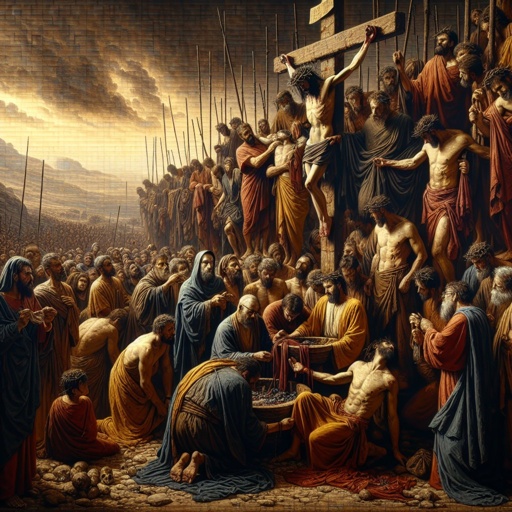
Mark 15:24 - "And when they had crucified him, they parted his garments, casting lots upon them, what every man should take."
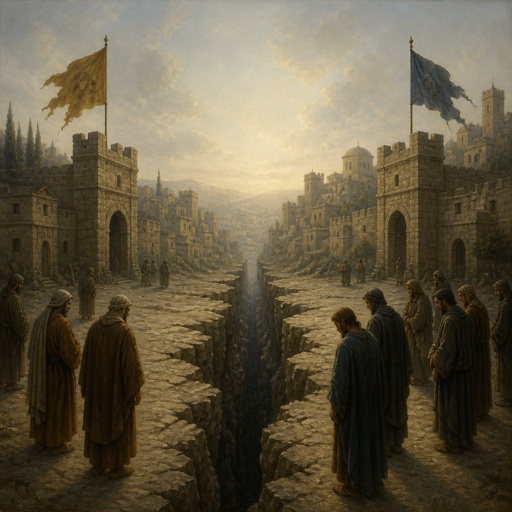
"And if a kingdom be divided against itself, that kingdom cannot stand." - Mark 3:24