What does Mark 11:22 mean?
"And Jesus answering saith unto them, Have faith in God." - Mark 11:22
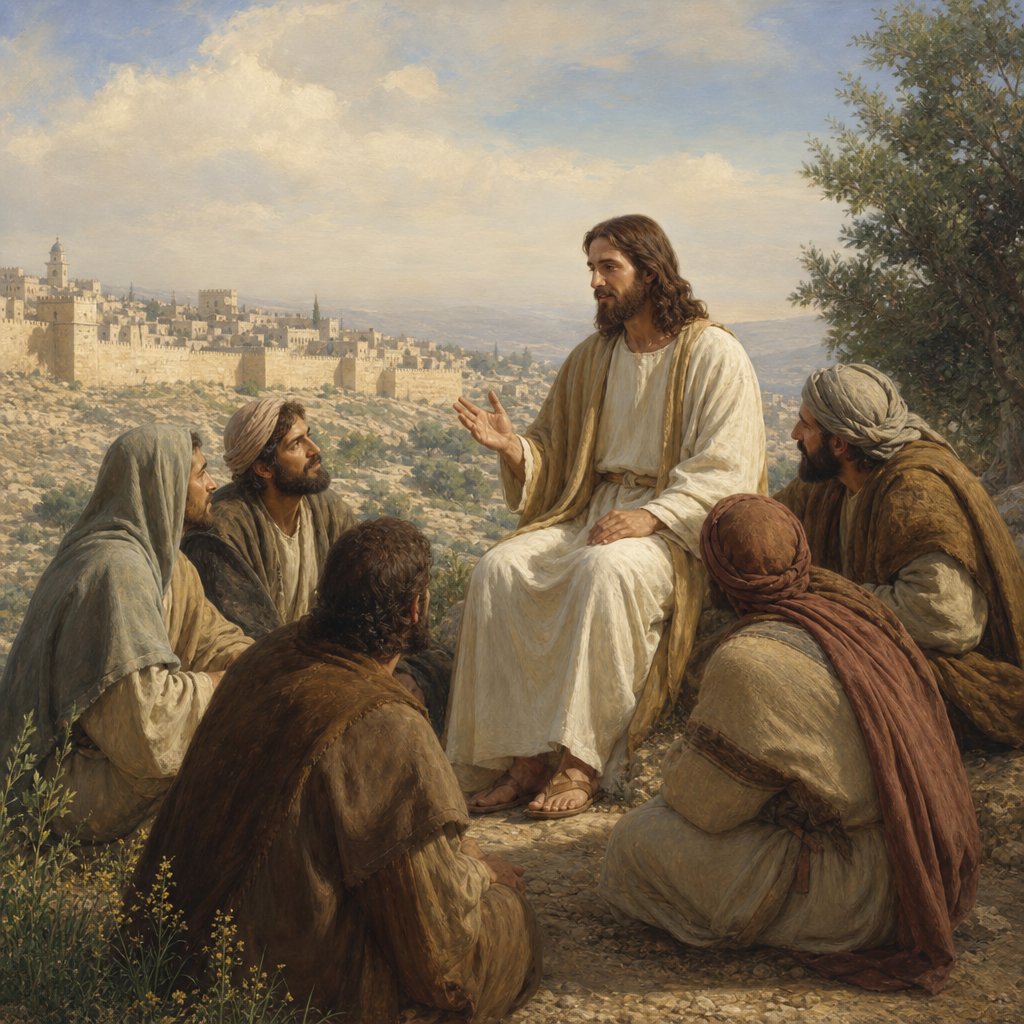
Mark 11:22 in the King James Version reads, “And Jesus answering saith unto them, Have faith in God.” Its meaning is simple in wording and vast in reach. Jesus is not offering a vague religious optimism, nor a technique for getting desired outcomes, but a direct summons to place confidence, reliance, and trust where it properly belongs: in God Himself. The verse is brief because it stands like a hinge between what has just happened and what Jesus is about to teach, and it gathers both into one governing principle.
The immediate context is the incident of the fig tree. In Mark 11, Jesus comes to a fig tree seeking fruit; He finds leaves but no figs and speaks against it. The next day the disciples see that the fig tree has withered away. Their attention is caught by the visible, startling result of Jesus’ word. In that moment, Mark 11:22 is Jesus’ answer to their amazement. He does not center their minds on the tree as a curiosity, nor on His own power as a spectacle. Instead, He turns the moment into instruction: the proper response to what they have witnessed is not fascination but faith—faith directed toward God. In other words, the lesson is not “marvel at what happened,” but “learn what this reveals about the God who acts, and learn how you are to live in relation to Him.”
That placement matters because the withered tree is not an isolated miracle in Mark’s narrative; it is woven around Jesus’ actions in the temple. Mark frames the cleansing of the temple between the two fig tree scenes. This “sandwiching” is part of the meaning: the fig tree and the temple interpret each other. A fig tree full of leaves but barren of fruit becomes a living symbol of outward show without inward reality. Likewise, the temple activity Jesus confronts represents religion that can be bustling and impressive yet corrupted, misdirected, and unfruitful in the purpose God intended. When Jesus says, “Have faith in God,” He is not merely saying, “Believe you can do wonders.” He is calling His disciples away from reliance on appearances, institutions, and impressive “leaves,” and toward the living God who desires true fruit.
The wording “Have faith in God” also corrects a subtle danger. The disciples have seen that Jesus’ spoken word carried decisive authority. They might be tempted to think in terms of power they can wield, or to treat spiritual authority as something that works mechanically. Jesus’ answer refuses that. Faith is not faith in faith. It is not faith in a formula. It is faith “in God.” The object is everything. To have faith in God is to rest on His character, His truth, His holiness, His promises, and His right to judge and to save. That is especially pointed in this part of Mark, where Jesus is moving toward His suffering and the cross. The disciples will soon face events that look like defeat and disorder. “Have faith in God” prepares them to trust God’s purpose even when outcomes are not immediately glorious.
There is symbolism in the fig tree that deepens the verse’s significance. The tree is a picture of a life that advertises vitality but does not yield what it exists to yield. Leaves without fruit are a kind of spiritual deception: they suggest nourishment and life, but when approached closely they disappoint. In that light, “Have faith in God” becomes a call to reality. Faith in God is the opposite of pretending. It is the root of genuine fruitfulness. It is a return to the God who sees beyond leaves to the heart, beyond public display to secret truth. It implies that God is not impressed by appearance; God looks for what is real, and faith is the beginning of what is real.
The verse also opens into what follows immediately afterward. After Mark 11:22, Jesus teaches about prayer, believing, receiving, and forgiveness. That teaching grows directly out of the command to have faith in God. Prayer is not presented as a way to control God, but as the expression of dependence on Him. Believing is not presented as self-confidence, but as confidence in God’s ability and will. Even forgiveness is tied in, because faith in God is never merely an inward feeling; it creates a relationship with God that must shape one’s relationships with others. The command therefore stands at the head of a chain: faith in God leads to prayer that trusts Him, which leads to a heart that releases grudges and lives under God’s mercy.
The phrase “Jesus answering” is also meaningful. The disciples have not asked a formal question in the verse itself, but their astonishment is itself a kind of question. Their reaction to the withered tree invites an “answer,” and Jesus gives one that goes to the root of discipleship. He teaches them how to interpret signs. The miracle is not meant to terminate in amazement; it is meant to drive them to God. Faith becomes the lens through which they are to understand both judgment and mercy, both the cleansing of the temple and the coming sacrifice of Christ.
So Mark 11:22 functions as a compact summary of what true religion is meant to be in the midst of religious systems, visible activity, and even miraculous events: trust placed in God, not in appearances, not in power, not in institutions, not in self. It is Jesus’ call to anchor the heart in God’s reality. In the shadow of a barren fig tree and a troubled temple, the command is sharp: if there is to be fruit, if there is to be true worship, if there is to be prayer that lives, it must begin here—“Have faith in God.”
Have questions about Mark 11:22?
Dive deeper into this scripture with Bible Chat — an AI-powered tool for exploring God's Word through conversation. Ask questions, get context, and grow in your understanding of the Bible.
Get Our Apps


Mark 11:22 Artwork

Mark 11:22 - "And Jesus answering saith unto them, Have faith in God."
"And Jesus answering saith unto them, Have faith in God." - Mark 11:22
"And Jesus answering saith unto them, Have faith in God." - Mark 11:22

Mark 11:22-24 - "And Jesus answering saith unto them, Have faith in God. For verily I say unto you, That whosoever shall say unto this mountain, Be thou removed, and be thou cast into the sea; and shall not doubt in his heart, but shall believe that those things which he saith shall come to pass; he shall have whatsoever he saith. Therefore I say unto you, What things soever ye desire, when ye pray, believe that ye receive them, and ye shall have them."
"And Jesus answering saith unto them, Have faith in God. For verily I say unto you, That whosoever shall say unto this mountain, Be thou removed, and be thou cast into the sea; and shall not doubt in his heart, but shall believe that those things which he saith shall come to pass; he shall have whatsoever he saith. Therefore I say unto you, What things soever ye desire, when ye pray, believe that ye receive them, and ye shall have them." - Mark 11:22-24

James 2:2-4

Mark 12:11 - "This was the Lord's doing, and it is marvellous in our eyes?"

african american mark 16:11

Mark 2:21-22 - "Mark 2:21-22 No one sews a patch of unshrunk cloth on an old garment. Otherwise, the new piece will pull away from the old, making the tear worse. And no one pours new wine into old wineskins. Otherwise, the wine will burst the skins, and both the wine and the wineskins will be ruined. No, they pour new wine into new wineskins."

Mark 15:22 - "And they bring him unto the place Golgotha, which is, being interpreted, The place of a skull."

Mark 10:22 - "And he was sad at that saying, and went away grieved: for he had great possessions."

Mark 12:22 - "And the seven had her, and left no seed: last of all the woman died also."
Mark 7:22 - "Thefts, covetousness, wickedness, deceit, lasciviousness, an evil eye, blasphemy, pride, foolishness:"

Mark 1:22 - "And they were astonished at his doctrine: for he taught them as one that had authority, and not as the scribes."

Mark 11:19 - "And when even was come, he went out of the city."

Mark 11:30 - "The baptism of John, was it from heaven, or of men? answer me."

Mark 8:22 - "¶ And he cometh to Bethsaida; and they bring a blind man unto him, and besought him to touch him."

Genesis 22:11

Mark 11:12 - "¶ And on the morrow, when they were come from Bethany, he was hungry:"

Mark 5:11 - "Now there was there nigh unto the mountains a great herd of swine feeding."
Leviticus 11:22

Mark 11:20 - "¶ And in the morning, as they passed by, they saw the fig tree dried up from the roots."

Mark 4:22 - "For there is nothing hid, which shall not be manifested; neither was any thing kept secret, but that it should come abroad."

Mark 11:10 - "Blessed be the kingdom of our father David, that cometh in the name of the Lord: Hosanna in the highest."

Mark 14:22 - "¶ And as they did eat, Jesus took bread, and blessed, and brake it, and gave to them, and said, Take, eat: this is my body."

Mark 11:16 - "And would not suffer that any man should carry any vessel through the temple."

Mark 11:7 - "And they brought the colt to Jesus, and cast their garments on him; and he sat upon him."

Mark 9:11 - "¶ And they asked him, saying, Why say the scribes that Elias must first come?"

Mark 16:11 - "And they, when they had heard that he was alive, and had been seen of her, believed not."
Mark 11:6 - "And they said unto them even as Jesus had commanded: and they let them go."