What does Mark 10:7 mean?
"For this cause shall a man leave his father and mother, and cleave to his wife;" - Mark 10:7
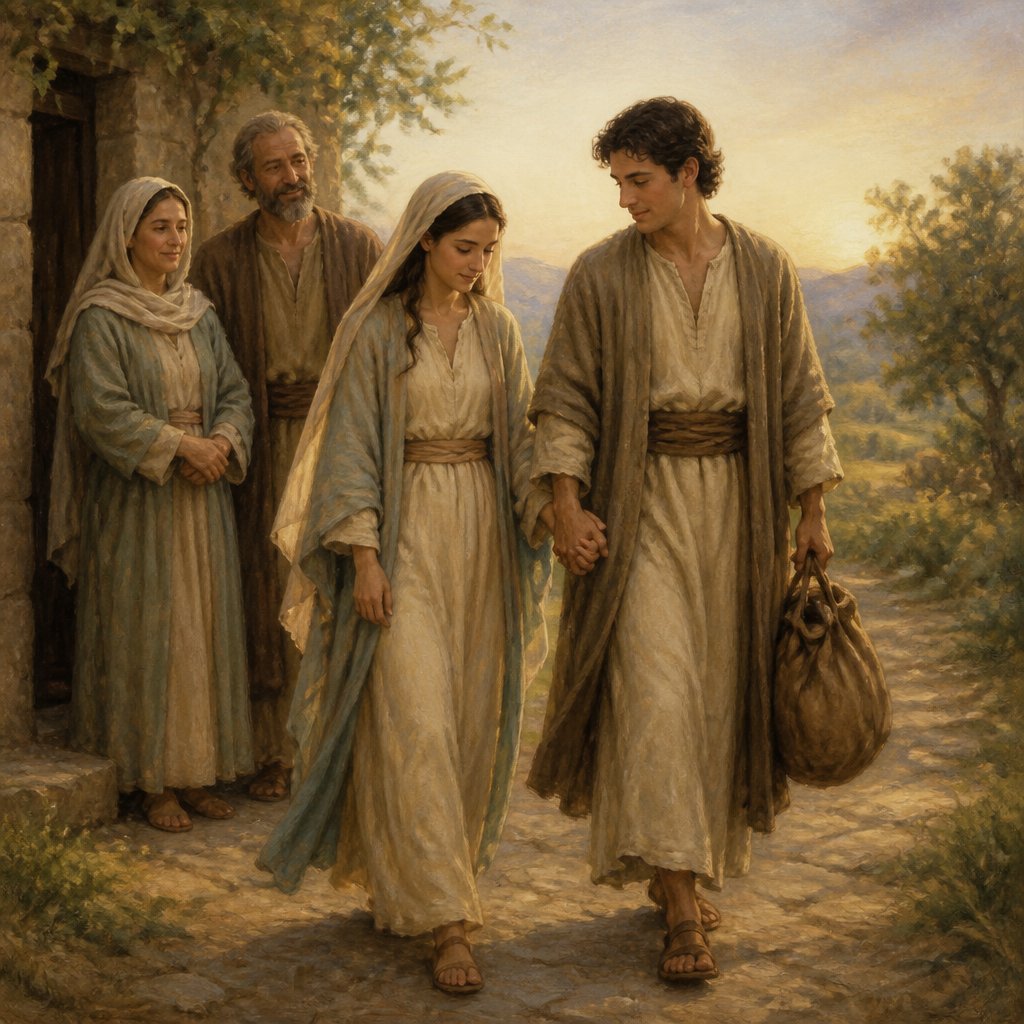
Mark 10:7 (KJV) reads, "For this cause shall a man leave his father and mother, and cleave to his wife." This verse is part of a larger passage in which Jesus discusses the sanctity of marriage and the implications of divorce. In this passage, Jesus responds to a question from the Pharisees about divorce by emphasizing the sacred union of marriage as ordained by God.
The verse is rich in meaning and symbolism, and it holds several important themes that are relevant to both the historical context of the passage and to contemporary discussions about marriage and family.
One of the central themes of this verse is the idea of leaving one's family to cleave to a spouse. In the cultural context of the time, marriage was not just a union between two individuals, but also a merging of two families. The act of leaving one's father and mother to join with a spouse was symbolic of the establishment of a new family unit. This act of leaving and cleaving signifies the priority and commitment to the marriage relationship, above all other earthly relationships.
This idea of leaving and cleaving also carries deep spiritual significance. In Christian theology, marriage is often seen as a reflection of the relationship between Christ and the Church. Just as Christ left His heavenly father to come to earth and cleave to His bride, the church, so too are husbands and wives called to leave their families and cleave to one another in a sacrificial and committed union.
The idea of leaving and cleaving also speaks to the importance of priorities in marriage. By leaving one's family, a person is signifying that their primary allegiance and responsibility is now to their spouse. This highlights the idea of the two becoming one flesh, a concept that is integral to the biblical understanding of marriage.
Another theme present in this verse is the idea of commitment. The word "cleave" denotes a strong, unwavering attachment. This implies that marriage is not to be taken lightly, but rather it requires a steadfast and enduring commitment. This commitment is not only to the other person, but also to the institution of marriage itself, as a sacred and divine covenant.
In the broader context of the passage in which this verse appears, Jesus uses it as a basis for discussing the permanence of marriage. He goes on to say that "what therefore God hath joined together, let not man put asunder" (Mark 10:9, KJV). This statement emphasizes the idea that marriage is not to be easily dissolved, but rather should be approached with reverence and respect for the sacred bond that has been established by God.
The context of this passage is also significant. In the time of Jesus, divorce was a common and easy way for a man to end a marriage, often leaving the woman in a vulnerable and marginalized position. Jesus' teachings on the sanctity of marriage challenged the prevailing attitudes towards divorce and highlighted the importance of upholding the sacredness of the marital union.
In modern times, this verse continues to hold relevance and importance. The themes of commitment, leaving and cleaving, and the sacredness of marriage are timeless and continue to guide Christian beliefs and practices surrounding marriage.
In conclusion, Mark 10:7 is a verse that carries deep spiritual, social, and ethical significance. It speaks to the sacredness of the marital union, the importance of commitment, and the prioritization of the marriage relationship. It also challenges prevailing attitudes towards divorce and upholds the sanctity of marriage as a divine institution. This verse continues to hold relevance and importance in shaping our understanding of marriage and family in a modern context.
Have questions about Mark 10:7?
Dive deeper into this scripture with Bible Chat — an AI-powered tool for exploring God's Word through conversation. Ask questions, get context, and grow in your understanding of the Bible.
Get Our Apps


Mark 10:7 Artwork

Mark 10:7 - "For this cause shall a man leave his father and mother, and cleave to his wife;"
"For this cause shall a man leave his father and mother, and cleave to his wife;" - Mark 10:7
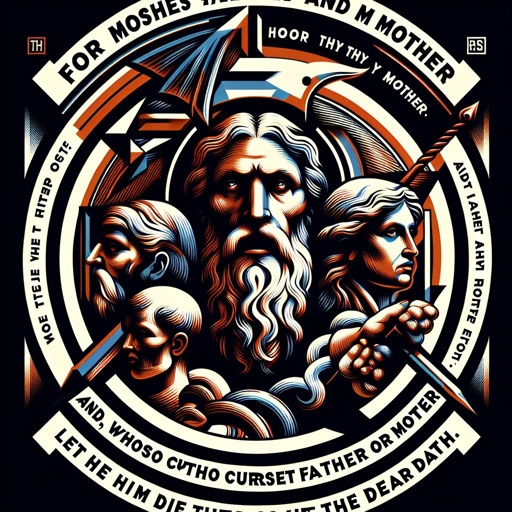
Mark 7:10 - "For Moses said, Honour thy father and thy mother; and, Whoso curseth father or mother, let him die the death:"

Mark 7:10 For Moses said, ‘Honor your father and your mother’; and, ‘He who curses father or mother, let him be put to death.’
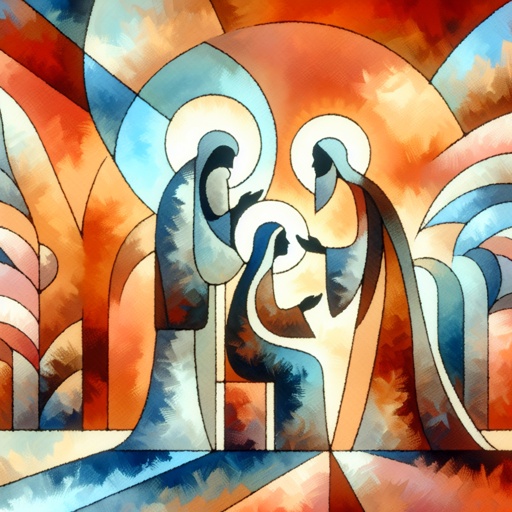
Mark 7:10 For Moses said, ‘Honor your father and your mother’; and, ‘He who curses father or mother, let him be put to death.’

Mark 7:10 For Moses said, ‘Honor your father and your mother’; and, ‘He who curses father or mother, let him be put to death.’

Mark 10
Mark 10
Mark 10
Mark 10

Mark 10:31

Mark 2:10
Mark 10:46

Mark 10:10 - "And in the house his disciples asked him again of the same matter."
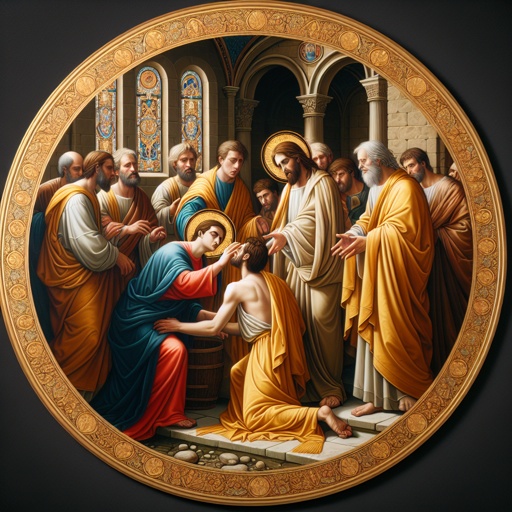
Mark 10:46

Mark 10:46

Mark 13:7

Mark 13:7

Mark 8:7

Mark 13:7

Mark 10:17-30

Mark 10:35-45

Mark 10:35-45

Mark 10:13–16

Mark 7:7 - "Howbeit in vain do they worship me, teaching for doctrines the commandments of men."

Mark 10:17-30

Mark 10:35-45

Mark 10:35-45

Mark 7:31-37

Mark 7:31-37