What does Mark 10:27 mean?
"And Jesus looking upon them saith, With men it is impossible, but not with God: for with God all things are possible." - Mark 10:27
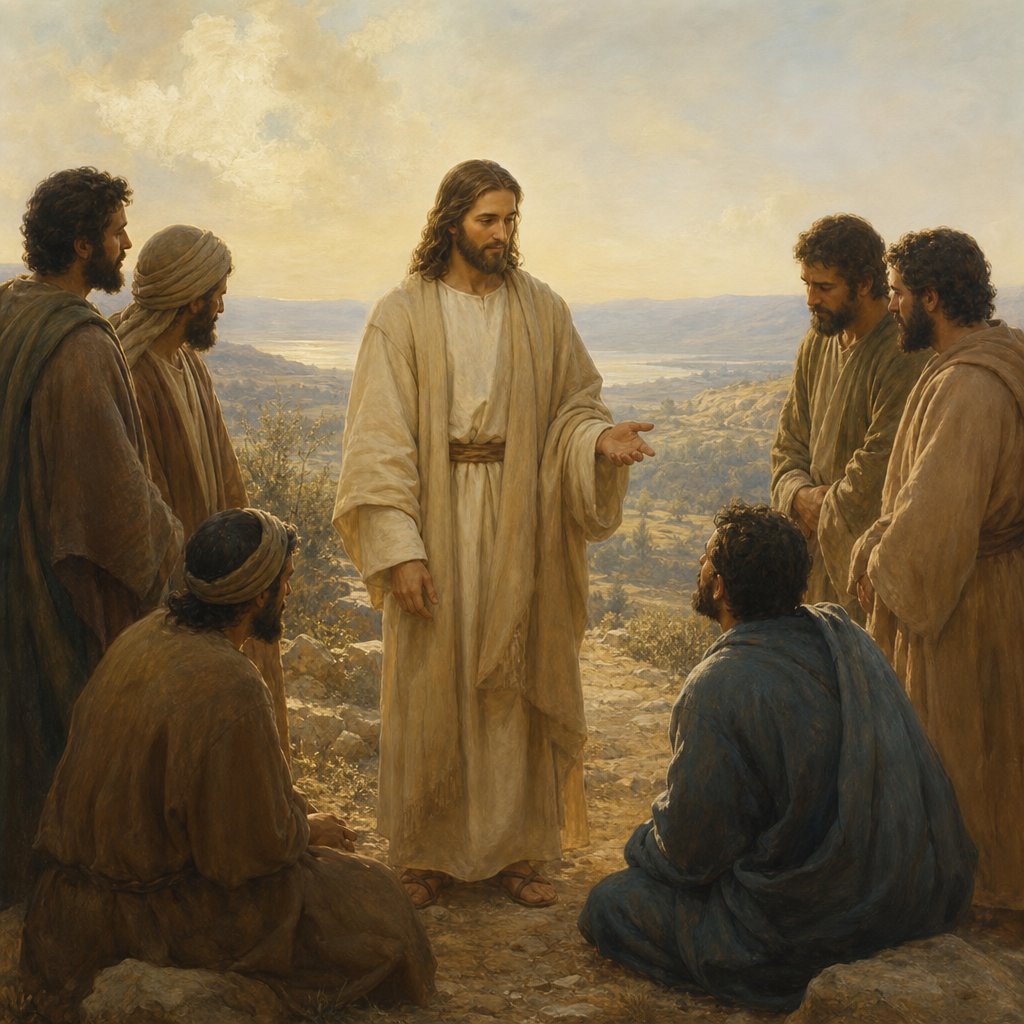
Mark 10:27 in the King James Version reads, “And Jesus looking upon them saith, With men it is impossible, but not with God: for with God all things are possible.”
This sentence sits at a decisive moment in Mark’s Gospel where Jesus has just confronted the rich young ruler’s confident claim to have kept the commandments, and then exposed the one mastery that still ruled him: his “great possessions.” The man “went away grieved,” and Jesus immediately turns from the individual to the wider lesson, saying how hard it is for them that trust in riches to enter into the kingdom of God. The disciples, who like many in their world assumed that wealth often signaled divine favor, are “astonished out of measure” and ask, “Who then can be saved?” Mark 10:27 is Jesus’ answer to that question. It is not a general proverb detached from its setting; it is a salvation statement spoken into the shock of realizing that what humans commonly treat as an advantage can become a spiritual impossibility.
The first thing the verse does is define the limits of human ability in the matter of salvation. “With men it is impossible” does not mean that people cannot accomplish tasks, achieve goals, or change outward habits. In the context, it means that no person can secure entrance into God’s kingdom by human resources, whether those resources are moral effort, religious reputation, social standing, or financial power. The rich man’s story illustrates this: he had sincerity, discipline, and status, yet he could not free himself from the rule of his possessions when Christ laid His finger on it. The disciples’ question, “Who then can be saved?” assumes that if such a man cannot, then no one can. Jesus agrees with the logic, but redirects it: if salvation depended on “men,” it truly would be impossible.
Then Jesus pivots with the gospel’s central contrast: “but not with God.” The impossibility is not in God’s will, nor in God’s power, but in man’s inability. The kingdom is not entered by leverage but by grace. The verse sets God over against every human confidence and establishes that salvation comes from outside man, from God Himself. This is why the line is so sweeping: “for with God all things are possible.” In this immediate setting “all things” is not an open invitation to presume that any desire will be granted in any form; it is the assurance that God can do what man cannot do—bring a soul into the kingdom, break the bondage of false trusts, and create the inward change that mere instruction cannot produce.
The themes running through the verse are therefore the themes of divine omnipotence and human dependence, but specifically as they relate to conversion and entry into the “kingdom of God.” Jesus has just used the picture of a “camel” and the “eye of a needle,” an image meant to impress not difficulty merely, but impossibility on human terms. Whether one hears that image as hyperbole or as a deliberate impossibility illustration, its effect is the same as Mark 10:27: the disciples must be stripped of the notion that the kingdom is accessed by ordinary means. The symbolism of Jesus “looking upon them” also matters. Mark often records Jesus’ gaze to show purposeful attention and compassionate authority. Here it suggests that Jesus does not answer from a distance, as if the disciples’ alarm is foolish; He looks at them and speaks into their astonishment, anchoring them in God’s sufficiency.
Another theme is the exposure of idolatry. The rich man is not condemned for possessing wealth but for being possessed by it, and Jesus’ words about impossibility show that idolatry is not something people can simply outgrow by willpower when it has become a rival trust. “With men it is impossible” means that no amount of self-reformation can dethrone an idol at the root. “But not with God” means God can reorder the heart’s loyalties, making room for true discipleship. That is why the verse is both humbling and hopeful: it denies every ground of boasting and yet refuses despair.
Mark 10:27 also carries a larger contextual weight in Mark’s narrative. The Gospel is moving toward the cross, and Jesus is repeatedly overturning the disciples’ expectations about power, greatness, and the way God saves. Immediately around this section Jesus is teaching that the kingdom belongs to those who receive it “as a little child,” and shortly after He will again speak of His suffering and then teach that true greatness is servanthood. Mark 10:27 fits this pattern: it overturns the idea that the kingdom is for the strong, the advantaged, or the capable. It is for those who cannot purchase it, earn it, or control it, and who therefore must receive salvation as God’s gift and God’s work.
The significance of the verse, then, is that it locates salvation where it truly belongs: not in human possibility but in divine possibility. It tells the startled disciples—and every reader tempted to trust in something “with men”—that the gate into life is too narrow for pride, too narrow for self-sufficiency, and too narrow for confidence in riches, yet it is not shut. God is able to do what the richest man cannot buy and what the most disciplined man cannot achieve: He can save. In that sense, Mark 10:27 is not merely comfort; it is correction. It corrects false assumptions about merit and advantage, and it comforts the hopeless by declaring that the decisive actor in salvation is God, “for with God all things are possible.”
Have questions about Mark 10:27?
Dive deeper into this scripture with Bible Chat — an AI-powered tool for exploring God's Word through conversation. Ask questions, get context, and grow in your understanding of the Bible.
Get Our Apps


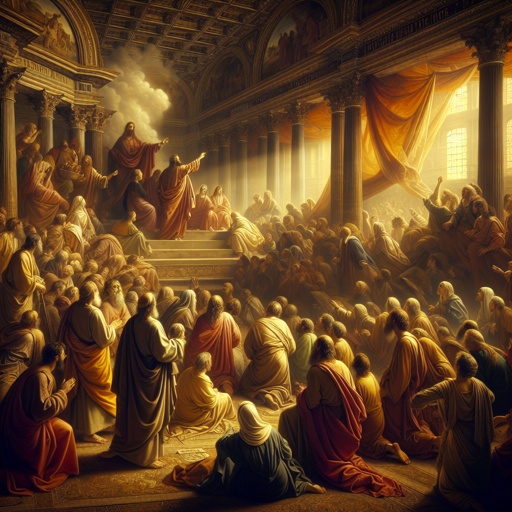
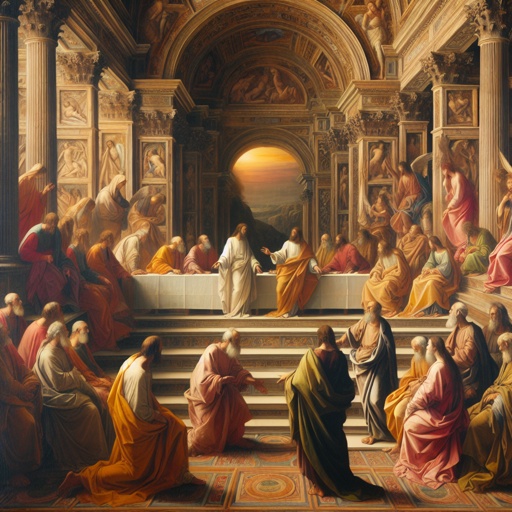
Mark 10:27 Artwork

Mark 10:27 - "And Jesus looking upon them saith, With men it is impossible, but not with God: for with God all things are possible."
"And Jesus looking upon them saith, With men it is impossible, but not with God: for with God all things are possible." - Mark 10:27

"And Jesus looking upon them saith, With men it is impossible, but not with God: for with God all things are possible." - Mark 10:27
"And Jesus looking upon them saith, With men it is impossible, but not with God: for with God all things are possible." - Mark 10:27

Mark 2:27

Mark 8:27 - 35

Mark 8:27 - 35

Mark 8:27 - 35

Mark 8:27 - 35

Mark 8:27 - 35

Mark 10
Mark 10
Mark 10
Mark 10

Mark 9:27 - "But Jesus took him by the hand, and lifted him up; and he arose."

Mark 2:27 - "And he said unto them, The sabbath was made for man, and not man for the sabbath:"

Mark 2:10
Mark 10:46

Mark 10:31

Mark 10:10 - "And in the house his disciples asked him again of the same matter."
Mark 10:46

Mark 10:46

Mark 12:27 - "He is not the God of the dead, but the God of the living: ye therefore do greatly err."

Mark 5:27 - "When she had heard of Jesus, came in the press behind, and touched his garment."

Mark 15:27 - "And with him they crucify two thieves; the one on his right hand, and the other on his left."

Mark 10:35-45

Mark 10:17-30

Mark 10:35-45

Mark 10:13–16

Mark 11:27 - "And they come again to Jerusalem: and as he was walking in the temple, there come to him the chief priests, and the scribes, and the elders,"