What does Luke 8:53 mean?
"And they laughed him to scorn, knowing that she was dead." - Luke 8:53
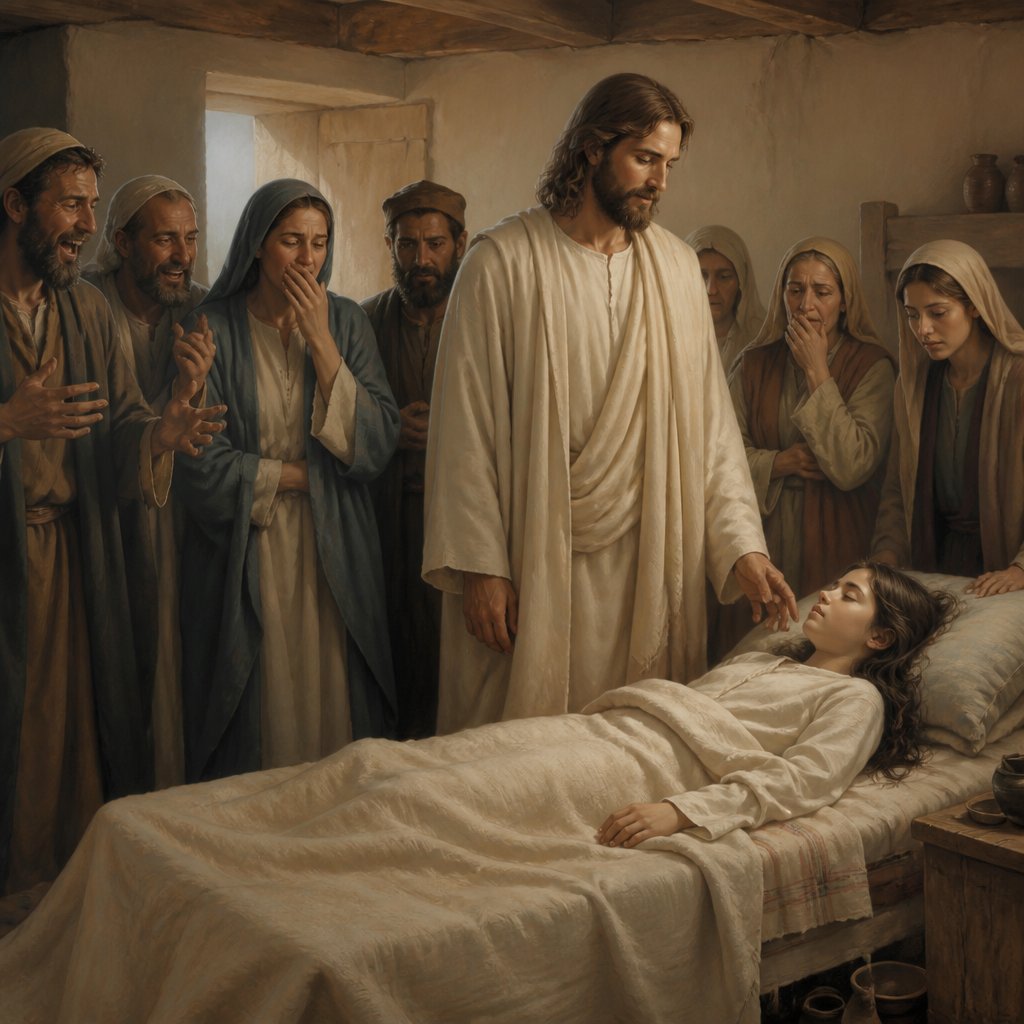
Luke 8:53 in the King James Version reads, "And they laughed him to scorn, knowing that she was dead." This verse is part of the story of Jesus raising Jairus' daughter from the dead. In order to truly understand the meaning and significance of this verse, it is important to examine its context within the larger passage and also consider the themes and symbolism it represents.
The chapter of Luke 8 begins with the parable of the sower, where Jesus explains the different responses people have to the Word of God. It then goes on to describe Jesus casting out demons, healing the sick, and calming a storm. In the middle of these miraculous events, a man named Jairus, a ruler of the synagogue, approaches Jesus and begs him to come to his house to heal his dying daughter. As they are on their way, a woman who had been suffering from a hemorrhage for twelve years touches the fringe of Jesus' garment and is miraculously healed. This delays Jesus, and in the meantime, messengers arrive with the news that Jairus' daughter has died. However, Jesus encourages Jairus not to be afraid, and they continue to his house where Jesus raises the girl back to life.
The specific verse, "And they laughed him to scorn, knowing that she was dead," occurs after Jesus arrives at Jairus' house and declares that the girl is not dead, but merely asleep. The people in the house, including the mourners and professional mourners, mock and ridicule Jesus, as they are aware that the girl is truly dead. However, despite their disbelief, Jesus takes the girl’s hand and commands her to arise, and she comes back to life.
This passage contains several important themes. Firstly, it reveals the power and authority of Jesus over death. The belief that Jesus can bring the dead back to life not only shows His divine nature but also foreshadows His own resurrection. This demonstrates Jesus' ability to give life and overcome the finality of death, which is a central message of Christianity. Secondly, it highlights the concept of faith. Jairus exhibits faith by seeking Jesus' help for his daughter, and Jesus challenges his followers to have faith in the face of skepticism and doubt. Additionally, the passage emphasizes the importance of humility in the face of miracles. The mourners' scornful laughter at Jesus' assertion that the girl is not dead reveals their lack of faith and humility, while Jairus' willingness to seek help from Jesus demonstrates his humility and faith.
The verse also holds symbolic significance. The laughter and scorn directed at Jesus represent the world's skepticism and doubt when confronted with the miraculous power of God. This skepticism is a recurring theme throughout the Bible, as people often struggle to accept God's power and authority. However, despite the world's disbelief and ridicule, Jesus demonstrates His power and triumphs over death, ultimately proving His divine nature. The resurrection of Jairus' daughter serves as a foreshadowing of Jesus' own resurrection and a demonstration of the redemptive power of God.
In conclusion, Luke 8:53 is a powerful and significant verse within the larger narrative of Jesus' miracles. It captures the themes of faith, the power of God over death, and the world's skepticism in the face of the miraculous. It also holds symbolic significance as a representation of the struggle between faith and doubt. Ultimately, this verse serves as a reminder of the miraculous and redemptive power of God, and the importance of having faith in the face of skepticism and doubt.
Have questions about Luke 8:53?
Dive deeper into this scripture with Bible Chat — an AI-powered tool for exploring God's Word through conversation. Ask questions, get context, and grow in your understanding of the Bible.
Get Our Apps


Luke 8:53 Artwork

Luke 8:53 - "And they laughed him to scorn, knowing that she was dead."

"And they laughed him to scorn, knowing that she was dead." - Luke 8:53

Luke 23:53

Luke 24:53 - "And were continually in the temple, praising and blessing God. Amen."

Luke 9:53 - "And they did not receive him, because his face was as though he would go to Jerusalem."

Luke 1:53 - "He hath filled the hungry with good things; and the rich he hath sent empty away."

Luke 23:53 - "And he took it down, and wrapped it in linen, and laid it in a sepulchre that was hewn in stone, wherein never man before was laid."

Luke 22:53 - "When I was daily with you in the temple, ye stretched forth no hands against me: but this is your hour, and the power of darkness."

"And were continually in the temple, praising and blessing God. Amen." - Luke 24:53

Luke 11:53 - "And as he said these things unto them, the scribes and the Pharisees began to urge him vehemently, and to provoke him to speak of many things:"
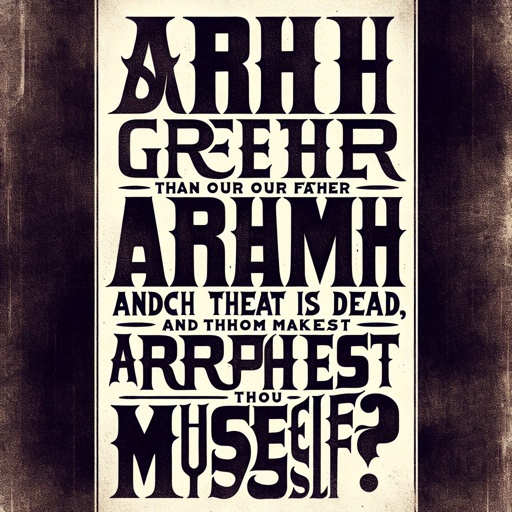
John 8:53 - "Art thou greater than our father Abraham, which is dead? and the prophets are dead: whom makest thou thyself?"

"And they did not receive him, because his face was as though he would go to Jerusalem." - Luke 9:53

Luke 12:53 - "The father shall be divided against the son, and the son against the father; the mother against the daughter, and the daughter against the mother; the mother in law against her daughter in law, and the daughter in law against her mother in law."

"He hath filled the hungry with good things; and the rich he hath sent empty away." - Luke 1:53

Isaiah 53:8 - "He was taken from prison and from judgment: and who shall declare his generation? for he was cut off out of the land of the living: for the transgression of my people was he stricken."

"And he took it down, and wrapped it in linen, and laid it in a sepulchre that was hewn in stone, wherein never man before was laid." - Luke 23:53

"When I was daily with you in the temple, ye stretched forth no hands against me: but this is your hour, and the power of darkness." - Luke 22:53

1 Kings 8:53 - "For thou didst separate them from among all the people of the earth, to be thine inheritance, as thou spakest by the hand of Moses thy servant, when thou broughtest our fathers out of Egypt, O Lord GOD."

Luke 8:5-8

"And as he said these things unto them, the scribes and the Pharisees began to urge him vehemently, and to provoke him to speak of many things:" - Luke 11:53

Luke 8:16

Luke 8:11

Luke 8:17

Luke 8:13

Luke 8:13

Luke 8:13
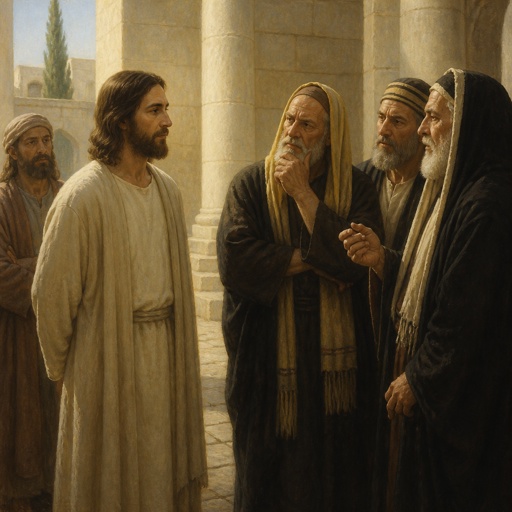
"Art thou greater than our father Abraham, which is dead? and the prophets are dead: whom makest thou thyself?" - John 8:53

Luke 24:50-53 - "And he led them out as far as to Bethany, and he lifted up his hands, and blessed them. And it came to pass, while he blessed them, he was parted from them, and carried up into heaven. And they worshipped him, and returned to Jerusalem with great joy: And were continually in the temple, praising and blessing God. Amen."

Luke 24:8 - "And they remembered his words,"

Luke 2 v 8