What does Luke 7:41-43 mean?
"Luke 7:41-43: "There was a certain creditor which had two debtors: the one owed five hundred pence, and the other fifty. And when they had nothing to pay, he frankly forgave them both. Tell me therefore, which of them will love him most? Simon answered and said, I suppose that he, to whom he forgave most. And he said unto him, Thou hast rightly judged."" - Luke 7:41-43
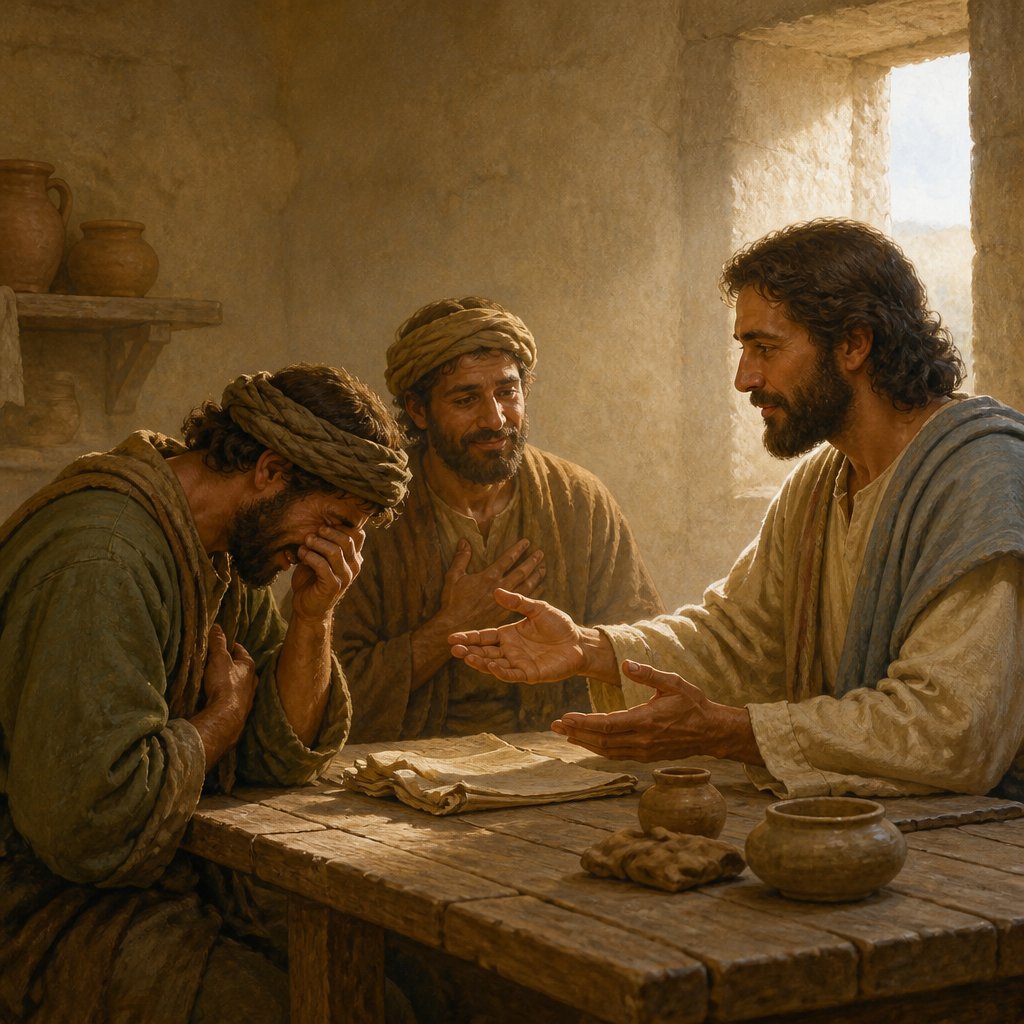
Luke 7:41-43 in the King James Version of the Bible reads: "There was a certain creditor which had two debtors: the one owed five hundred pence, and the other fifty. And when they had nothing to pay, he frankly forgave them both. Tell me therefore, which of them will love him most? Simon answered and said, I suppose that he, to whom he forgave most. And he said unto him, Thou hast rightly judged."
This passage from the Gospel of Luke presents a parable told by Jesus to Simon, a Pharisee who had invited him to his house for dinner. The story of the two debtors is a simple yet powerful illustration of forgiveness and the response of love that comes from a heart that has been forgiven much. The creditor in the parable represents God, who is gracious and merciful in forgiving the debts of those who come to Him in humility and repentance.
The context of this passage is important in understanding its significance. In the preceding verses, a woman known for her sinful lifestyle came to Simon's house and washed Jesus' feet with her tears, wiped them with her hair, and anointed them with costly oil. Simon, the Pharisee, questioned Jesus' decision to allow such a woman to touch him, as he considered her to be a sinner. In response, Jesus used the parable of the two debtors to teach Simon about the nature of forgiveness and love.
The parable is a clear representation of the Gospel message – that all people are sinners in need of forgiveness, and that God offers forgiveness freely to all who come to Him. The two debtors in the parable symbolize humanity, with their varying levels of debt representing the different sins and transgressions committed by individuals. The larger debt of five hundred pence and the smaller debt of fifty pence signify the range of sins and the degree of guilt before God.
The creditor's act of forgiving both debtors when they had nothing to pay is a reflection of God's grace and mercy towards those who are unable to atone for their sins on their own. The forgiveness offered by the creditor is not based on the worthiness of the debtors, but rather on the generosity and compassion of the creditor. This mirrors the biblical truth that God's forgiveness is offered to all, regardless of their past or present circumstances.
The question posed by Jesus to Simon – "which of them will love him most?" – challenges the Pharisee to recognize the depth of love that comes from being forgiven much. Simon's response, acknowledging that the one who was forgiven most would love the creditor most, reveals an understanding of the principle at play in the parable. Jesus affirms Simon's judgment, indicating that the one who has experienced greater forgiveness will respond with a greater love and gratitude.
The themes of forgiveness, grace, and love are central to this passage. The parable highlights the unconditional nature of God's forgiveness and the profound impact it has on the hearts of those who receive it. It serves as a reminder that those who recognize the extent of their own sinfulness and the magnitude of God's forgiveness will respond with deep love and devotion.
In conclusion, Luke 7:41-43 conveys a timeless message about the transformative power of God's forgiveness and the love that springs forth from a heart that has been forgiven much. It challenges readers to reflect on their own response to God's grace and mercy and to consider the depth of love that is born out of a genuine experience of forgiveness. As such, this passage serves as an invitation to humble ourselves before God, to acknowledge our need for His forgiveness, and to respond with a love that is reflective of the immense grace we have received.
Have questions about Luke 7:41-43?
Dive deeper into this scripture with Bible Chat — an AI-powered tool for exploring God's Word through conversation. Ask questions, get context, and grow in your understanding of the Bible.
Get Our Apps


Luke 7:41-43 Artwork

Luke 7:41-43 - "There was a certain creditor who had two debtors. One owed five hundred denarii, and the other fifty. And when they had nothing with which to repay, he freely forgave them both. Tell Me, therefore, which of them will love him more? Simon answered and said, “I suppose the one whom he forgave more.” And He said to him, “You have rightly judged.”"
"There was a certain creditor who had two debtors. One owed five hundred denarii, and the other fifty. And when they had nothing with which to repay, he freely forgave them both. Tell Me, therefore, which of them will love him more? Simon answered and said, “I suppose the one whom he forgave more.” And He said to him, “You have rightly judged.”" - Luke 7:41-43

LUKE 24:41-43

Luke 7:41-47

LUKE 24:41-43 41 And while they still did not believe it because of joy and amazement, he asked them, “Do you have anything here to eat?” 42 They gave him a piece of broiled fish, 43 and he took it and ate it in their presence.

LUKE 24:41-43 41 And while they still did not believe it because of joy and amazement, he asked them, “Do you have anything here to eat?” 42 They gave him a piece of broiled fish, 43 and he took it and ate it in their presence.

Luke 7:41 - "There was a certain creditor which had two debtors: the one owed five hundred pence, and the other fifty."

Luke 7:43 - "Simon answered and said, I suppose that he, to whom he forgave most. And he said unto him, Thou hast rightly judged."
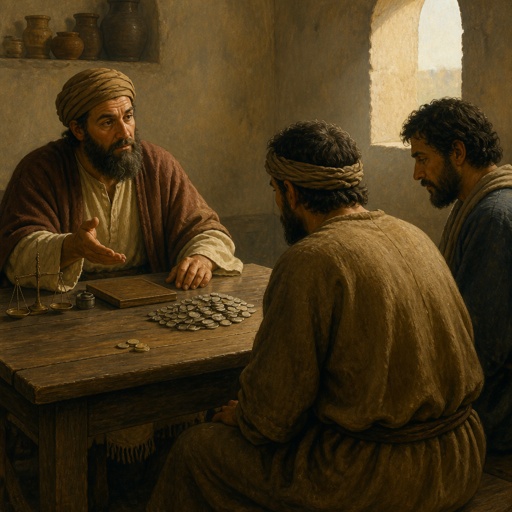
"There was a certain creditor which had two debtors: the one owed five hundred pence, and the other fifty." - Luke 7:41

Luke 24:43 - "And he took it, and did eat before them."

Luke 2:41-52

Luke 1:43 - "And whence is this to me, that the mother of my Lord should come to me?"

Luke 20:43 - "Till I make thine enemies thy footstool."

Luke 22:43 - "And there appeared an angel unto him from heaven, strengthening him."

Genesis 41:43 - "And he made him to ride in the second chariot which he had; and they cried before him, Bow the knee: and he made him ruler over all the land of Egypt."

John 7:43 - "So there was a division among the people because of him."

Luke 12:43 - "Blessed is that servant, whom his lord when he cometh shall find so doing."

Luke 11:43 - "Woe unto you, Pharisees! for ye love the uppermost seats in the synagogues, and greetings in the markets."

Luke 19:41 - "¶ And when he was come near, he beheld the city, and wept over it,"

Luke 20:41 - "And he said unto them, How say they that Christ is David's son?"

1 Kings 7:43 - "And the ten bases, and ten lavers on the bases;"

Luke 22:41 - "And he was withdrawn from them about a stone's cast, and kneeled down, and prayed,"

Luke 2:41 - "Now his parents went to Jerusalem every year at the feast of the passover."
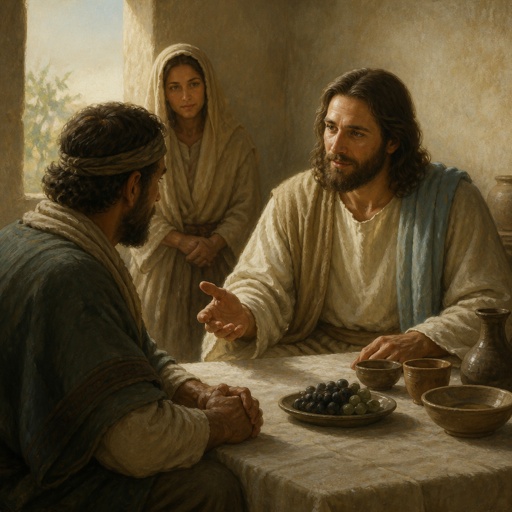
"Simon answered and said, I suppose that he, to whom he forgave most. And he said unto him, Thou hast rightly judged." - Luke 7:43

Nehemiah 7:43 - "¶ The Levites: the children of Jeshua, of Kadmiel, and of the children of Hodevah, seventy and four."

Luke 2:43 - "And when they had fulfilled the days, as they returned, the child Jesus tarried behind in Jerusalem; and Joseph and his mother knew not of it."

"And he took it, and did eat before them." - Luke 24:43

Luke 23:43 - "And Jesus said unto him, Verily I say unto thee, To day shalt thou be with me in paradise."

Luke 6:43 - "For a good tree bringeth not forth corrupt fruit; neither doth a corrupt tree bring forth good fruit."

Luke 6:41 - "And why beholdest thou the mote that is in thy brother's eye, but perceivest not the beam that is in thine own eye?"